
Drop and Drink: Your Guide to Travel Purification Tablets
Water purification tablets travel is one of the smartest, lightest solutions for staying safe when you’re far from a clean tap. If you just need the quick answer, here it is:
Best water purification tablets for travel at a glance:
| Tablet Type | Treatment Time | Best For | Safe For All Travelers? |
|---|---|---|---|
| NaDCC (e.g., Aquatabs) | 30 minutes | Hiking, travel, emergencies | Yes, including children and pregnant women |
| Chlorine Dioxide (e.g., Aquamira) | 20-30 minutes | Backpacking, best taste | Yes |
| Iodine (e.g., Potable Aqua) | 30-35 minutes | Budget, long shelf life | No — avoid if pregnant or have thyroid issues |
You’ve found a clean-looking stream. Your water bottle is empty. Your filter just clogged.
This is exactly the moment a small foil packet of purification tablets earns its place in your pack.
Water purification tablets are tiny, featherlight, and devastatingly effective. A single tablet can make a liter of questionable water safe to drink in 30 minutes — killing up to 99.9999% of bacteria and 99.99% of viruses in the process.
For minimalist travelers, that’s a near-perfect trade-off: almost zero weight, zero bulk, and a real safety net in places where clean water isn’t guaranteed.
But not all tablets work the same way. Different active ingredients target different pathogens. Some leave a strong chemical taste. Some aren’t safe for kids or pregnant travelers. And none of them handle every threat on their own.
This guide breaks it all down so you can pick the right tablet, pack light, and drink with confidence.
How Water Purification Tablets for Travel Work
When we talk about water purification tablets travel, we are essentially talking about portable chemistry sets. These tablets are designed to deactivate the microscopic “bad guys” that live in untreated water sources. But how do they do it without turning your stomach into a science experiment?
The magic lies in the active ingredients. The three most common are Sodium Dichloroisocyanurate (NaDCC), Chlorine Dioxide, and Iodine.
The Science of Inactivation
Most modern tablets, like those using NaDCC, work by releasing a precise dose of hypochlorous acid when they hit the water. This acid is a powerful oxidant. It penetrates the cell walls of microorganisms like bacteria and viruses, essentially scrambling their internal systems so they can no longer function or reproduce.
Since 1984, brands using NaDCC have treated over 10 billion gallons of water. That is a lot of safe sips! These tablets are engineered to be effervescent, meaning they dissolve quickly and distribute the purifying agent evenly throughout your container.
Targeted Pathogens
What exactly are we trying to kill?
- Bacteria: Think E. coli, Salmonella, and Cholera. These are usually the easiest to knock out.
- Viruses: This includes Norovirus and Hepatitis A. Many portable filters actually struggle with viruses because they are so small, but chemical tablets excel at neutralizing them.
- Protozoa (Cysts): These are the tough guys, like Giardia lamblia. They have a hard outer shell, but most quality tablets can handle them with a 30-minute wait time.
Choosing the Best Water Purification Tablets Travel for Your Trip
Choosing the right tablet depends on where you’re going and who is in your group. If you’re a minimalist traveler, you want something that balances weight, safety, and effectiveness.
NaDCC (Sodium Dichloroisocyanurate) is often considered the “gold standard” for international travel. It’s iodine-free, which makes it safe for everyone (including pregnant women and children), and it doesn’t leave that harsh “swimming pool” taste that older methods were famous for.
Chlorine Dioxide is the heavy hitter. It is one of the few chemical treatments effective against Cryptosporidium, though it usually requires a much longer wait time (up to 4 hours) to kill those specific, ultra-tough parasites.
Iodine is the old-school choice. It’s cheap and has an almost indefinite shelf life if unopened, but it makes water look like weak tea and taste like a hospital wing. Plus, it’s not recommended for long-term use or for people with thyroid conditions.
Efficacy Comparison Table
| Feature | NaDCC | Chlorine Dioxide | Iodine |
|---|---|---|---|
| Bacteria Kill Rate | 99.9999% | 99.9999% | 99.9999% |
| Virus Kill Rate | 99.99% | 99.99% | 99.99% |
| Giardia Kill Rate | 99.9% | 99.9% | 99.9% |
| Cryptosporidium | No | Yes (4-hour wait) | No |
| Taste | Mild to none | Very mild | Strong chemical |
| Safety | High (safe for all) | High | Restricted (no thyroid/pregnancy) |
Proper Usage: Dosage and Wait Times
Using water purification tablets travel isn’t just about dropping a pill in and chugging. If you rush the process, you might end up with a very unpleasant souvenir from your trip (and we don’t mean a keychain).
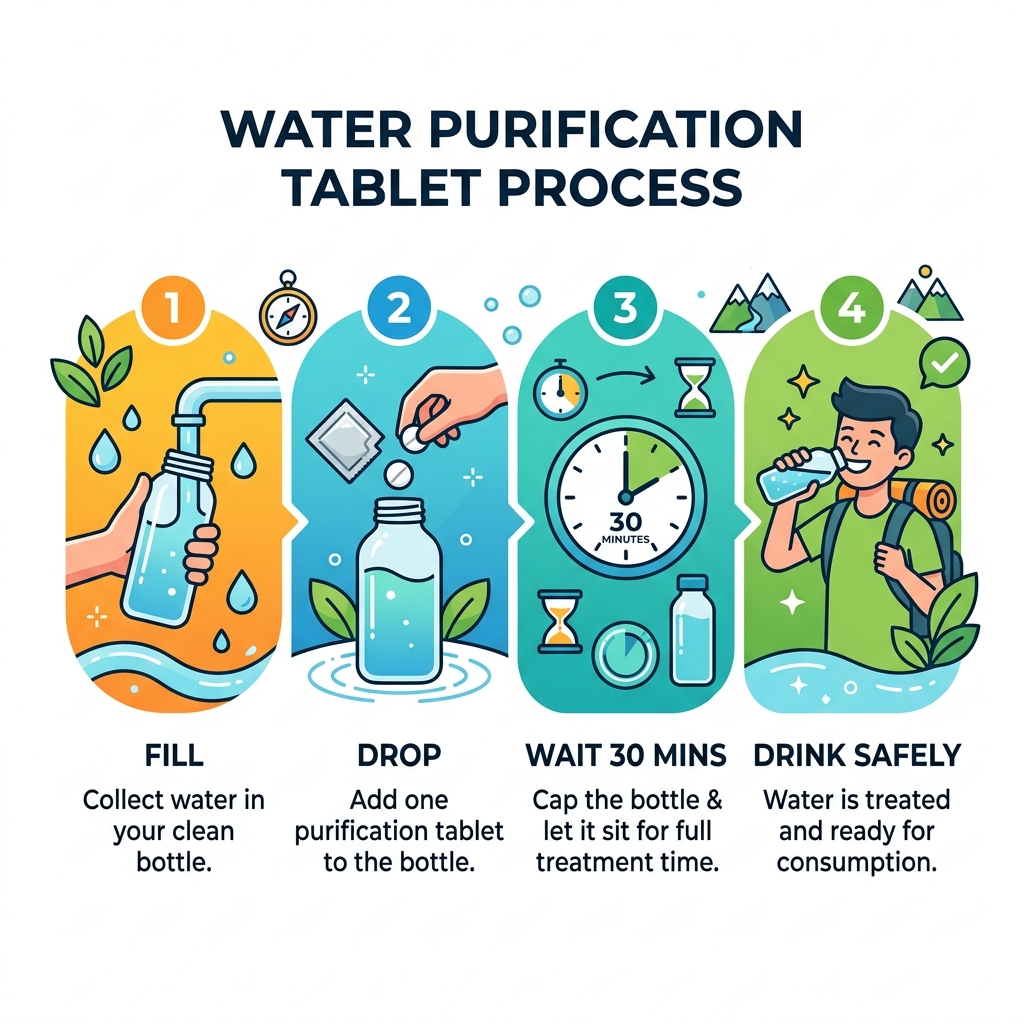
Step-by-Step Instructions
- Fill your container: Use the clearest water available. If you’re at a stream, try to find a spot where the water is moving but not churning up mud.
- Pre-filter (if necessary): If the water is cloudy or full of “floaties,” strain it through a clean cloth, a coffee filter, or even a bandana. Tablets struggle to penetrate solid particles, so getting the big stuff out first is vital.
- Add the tablet: Most standard tablets (like the 49mg size) are designed for 0.75 to 2 liters of water. Check your packaging! For very dirty or very cold water, you may need to double the dosage or wait longer.
- Agitate: Give your bottle a good shake to ensure the tablet dissolves and the chemical reaches every drop of water, including the threads of the bottle cap.
- The 30-Minute Rule: This is the non-negotiable part. The chemicals need time to work. Set a timer. Use this time to set up your tent, check your map, or take some photos.
- Drink: After 30 minutes, your water is purified and ready.
Factors That Affect Wait Time
Temperature plays a huge role in how fast these tablets work. In freezing alpine lakes, the chemical reaction slows down significantly. If your water is near 4°C (40°F), we recommend doubling the wait time or the dosage to ensure those stubborn cysts are neutralized.
For more tips on staying prepared with minimal gear, check out our curated travel essentials. We believe that having the right basics can make or break a trip.

Benefits and Limitations for Minimalist Travelers
At Pleno Comercio, we are obsessed with the “less is more” philosophy. We believe your gear should empower you, not weigh you down. water purification tablets travel fit this mission perfectly.
The Benefits
- Ultralight: A 30-pack of tablets weighs about 0.02 pounds. You could carry a year’s supply of safe water in your pocket and barely notice it.
- Reliability: Unlike mechanical filters, tablets have no moving parts to break and no membranes to clog. They are the ultimate backup.
- Space-Saving: They take up less room than a pack of gum. This leaves more space in your bag for things that actually matter, like a comfortable travel pillow or an extra pair of socks.
- Longevity: Most tablets are individually foil-sealed, giving them a shelf life of up to 5 years. You can toss them in your emergency kit or “bug out bag” and forget about them until they’re needed.
The Limitations
While we love them, tablets aren’t magic. They have a few “Achilles heels” that every traveler should know:
- The Cryptosporidium Gap: Most standard chlorine and NaDCC tablets do not kill Cryptosporidium. If you are in an area where this parasite is a known threat, you’ll need chlorine dioxide or a high-quality filter.
- Turbid Water: If your water looks like chocolate milk, tablets won’t work well. The pathogens can “hide” inside the sediment. You must filter out the dirt before treating the water.
- No Chemical Removal: Tablets kill living organisms, but they don’t remove heavy metals, pesticides, or fuel runoff. If you’re worried about industrial pollution, you need a filter with activated carbon.
Safety of Water Purification Tablets Travel for Families
One of the most common questions we get is: “Are these safe for my kids?”
The answer is a resounding yes, provided you choose the right type. NaDCC-based tablets are used by major humanitarian organizations (like UNICEF and the Red Cross) specifically because they are safe for long-term use by children and pregnant women.
Because they are iodine-free, they don’t interfere with thyroid function, which is a major concern with older iodine-based products. They are even safe for your four-legged travel companions! If you’re traveling with pets, having a few tablets on hand ensures they don’t pick up a nasty parasite from a local puddle.
Comparing Taste, Odor, and Effectiveness
Let’s be honest: nobody wants to drink water that smells like a public swimming pool. This was the biggest complaint about water treatment for decades.
The Taste Test
Old-school iodine tablets make water taste metallic and bitter. Modern NaDCC and Chlorine Dioxide tablets have come a long way. Most users report a very faint “clean” smell, similar to city tap water, but no strong aftertaste.
If you are particularly sensitive to the taste of chlorine, here’s a pro tip: after the 30-minute wait time is up, leave your bottle open for a few minutes. The chlorine will naturally dissipate into the air. Alternatively, you can add a few drops of lemon juice or a drink mix like Mio to completely mask any lingering flavor.
Recontamination Protection
One huge advantage of chemical tablets over UV light pens or filters is residual protection. Once you treat a bottle of water with a tablet, it stays protected from recontamination for up to 24 hours, provided you keep it in a closed container. If you accidentally touch the rim with dirty hands or a few drops of raw water get in, the remaining chlorine in the water will continue to keep it safe.
Frequently Asked Questions about Water Purification Tablets Travel
Can I use purification tablets in cloudy or muddy water?
Yes, but with caveats. You should always try to settle or filter the water first. If you absolutely have to treat “chunky” water, double the dosage and double the wait time. The sediment uses up the chlorine quickly, so you need more of it to ensure the pathogens are actually killed.
Do water purification tablets expire?
They do, but they are incredibly shelf-stable. Most foil-sealed tablets have a 5-year lifespan from the date of manufacture. Always check the expiration date on the box before a big trip. If the foil is punctured or the tablet looks discolored or crumbly, toss it and get a fresh pack.
Are these tablets effective against all parasites?
They are effective against the vast majority, including Giardia. However, as mentioned, Cryptosporidium is the big exception for most standard tablets. If “Crypto” is a concern in your destination, look specifically for Chlorine Dioxide tablets and be prepared to wait 4 hours for full disinfection.
Conclusion
When you’re traveling light, every gram counts. But safety should never be the thing you sacrifice to save weight. Water purification tablets travel offer the perfect middle ground for the minimalist: they are small enough to forget you’re carrying them, but powerful enough to save your trip from a waterborne disaster.
Whether you’re backpacking through the Andes, exploring remote villages in Southeast Asia, or just building a “just-in-case” kit for your car, these tablets are a non-negotiable essential. They provide peace of mind in a tiny, foil-wrapped package.
Ready to streamline your pack? Explore our curated travel gear at Pleno Comercio and find the lightweight necessities that make every journey smoother, safer, and more comfortable. Safe travels and happy hydrating!
