
Why Compression Socks for Swelling Belong in Every Traveler’s Pack
Compression socks for swelling are one of the simplest, most effective tools you can pack for long-haul travel — and they take up almost no space.
Quick answer: How to reduce swelling with compression socks:
- Choose the right level — 15-20 mmHg for mild travel swelling; 20-30 mmHg for moderate edema
- Put them on in the morning — before your legs swell, ideally before boarding
- Wear them throughout your flight or long travel day — remove at night
- Get the right fit — measure your ankle and calf at their smallest point
- Replace every 3-6 months — elasticity fades and so does the compression benefit
Here’s the problem most travelers don’t think about: sitting for hours on a plane slows blood flow in your legs. Fluid pools in your ankles and feet. By the time you land, your shoes feel tight and your legs feel heavy.
That’s edema — and it’s extremely common during long trips.
Compression socks work by applying gentle, graduated pressure — tightest at the ankle, gradually loosening up the leg. This pushes blood and fluid back toward the heart instead of letting it pool in your feet.
They’re lightweight, packable, and reusable. For minimalist travelers, that’s a rare combination of small footprint and big payoff.

How Compression Socks for Swelling Work
To understand how compression socks for swelling work, we have to look at the “plumbing” in our legs. Our hearts are great at pumping blood down to our toes, but getting that blood back up against gravity is a tough job.
This is where graduated compression comes in. Unlike regular socks that just sit on your skin, these specialized garments are engineered to be tightest at the ankle and gradually decrease in pressure as they move up the calf. This creates a “squeezing” effect that mimics the natural pumping action of your muscles.
Supporting Your Vein Valves
Inside your veins are tiny one-way valves. Their job is to keep blood moving upward. When we sit for too long (like on a 10-hour flight to Tokyo) or stand all day, these valves can struggle. Blood pools, pressure increases, and fluid starts leaking out of the capillaries into the surrounding tissue. We call this fluid retention “edema.”
By applying external pressure, compression socks support these vein valves, keeping them closed and functioning properly. This reduces capillary leakage and encourages the fluid to move back into the circulatory system. If you want a simple medical overview of swelling, edema is the standard term used for this type of fluid buildup.
The Science of mmHg
You’ll notice that compression is measured in “mmHg” (millimeters of mercury). This is the same scale used for blood pressure.
- Graduated pressure supports vascular health by ensuring blood doesn’t stagnate.
- Improved blood flow means more oxygen reaches your muscles, reducing that heavy, achy feeling.
- Fluid reduction prevents the “cankle” effect many of us experience after travel.
Whether you are dealing with Chronic Venous Insufficiency (CVI), lymphedema, or just the occasional puffiness from a long road trip, the mechanical support of a compression sock is a game-changer for your circulation.
Choosing the Right Compression Level and Fit
Not all compression socks for swelling are created equal. If you pick a pair that’s too loose, you’re just wearing expensive socks. If they’re too tight, you might feel like your legs are in a vice. Finding the “Goldilocks” zone is essential.
Understanding Compression Levels
Compression levels are categorized by the amount of pressure they apply. Here is a quick breakdown to help you choose:
| Compression Level | Description | Best Use Cases |
|---|---|---|
| 8-15 mmHg | Mild/Low | Everyday comfort, minor tired legs, or very mild swelling. |
| 15-20 mmHg | Moderate | The traveler’s sweet spot. Great for flying, pregnancy, and beginners. |
| 20-30 mmHg | Firm (Medical-grade) | Moderate varicose veins, edema, post-surgical recovery, and DVT prevention. |
| 30-40 mmHg | Extra-Firm | Severe swelling, lymphedema, and chronic venous diseases (usually requires a prescription). |
| 40-50 mmHg | Severe | Advanced medical conditions; only used under strict doctor supervision. |
For most of us at Pleno Comercio, we find that 15-20 mmHg is the perfect entry point. It provides enough “hug” to keep the swelling at bay without being a struggle to put on in a cramped airplane bathroom. However, if you have a medical condition like Deep Vein Thrombosis (DVT) or significant varicose veins, a firm 20-30 mmHg support is often the gold standard recommended by experts.
Finding Your Size for Compression Socks for Swelling
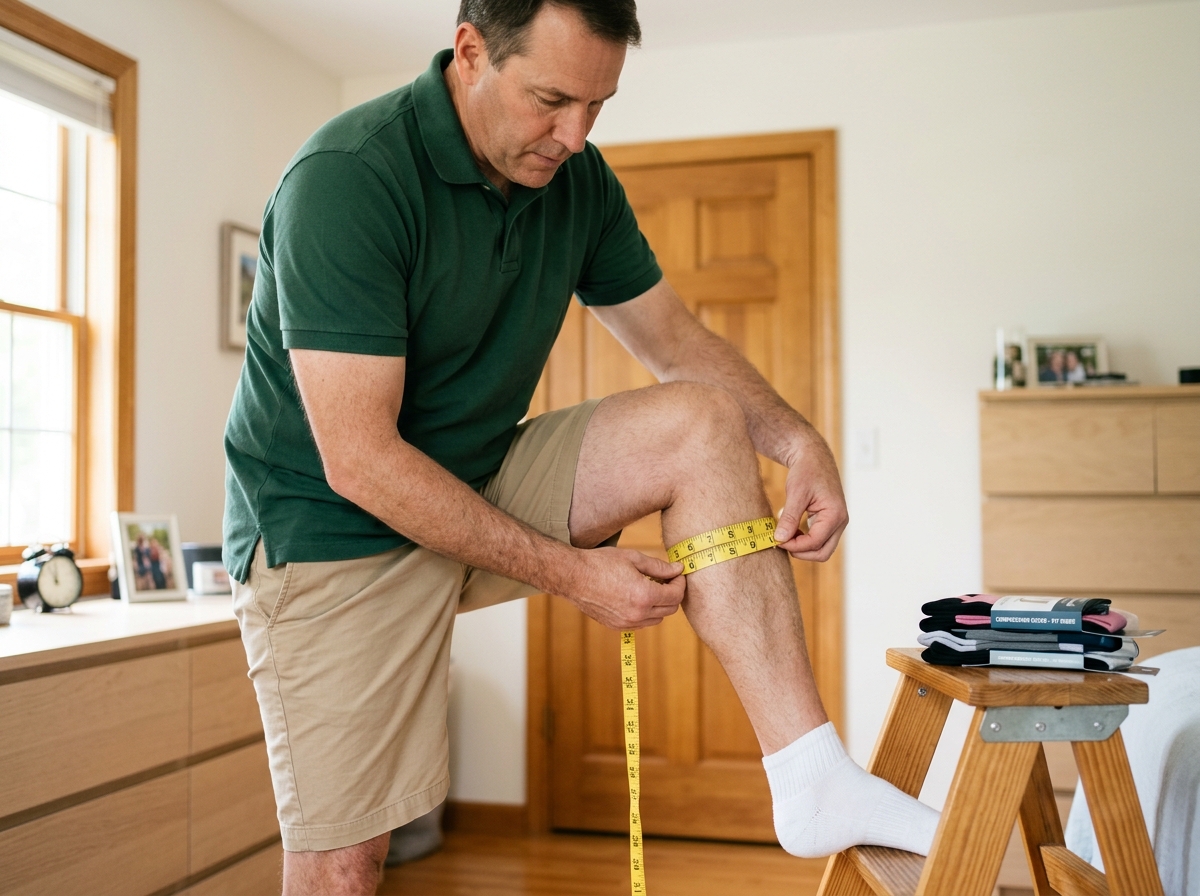
Sizing isn’t just about your shoe size. Because the goal is graduated pressure, the circumference of your leg matters more than the length of your foot.
To get an accurate fit, we recommend taking measurements first thing in the morning when swelling is at its lowest. You will need:
- Ankle circumference: Measure at the narrowest part of the ankle, just above the ankle bone.
- Calf width: Measure at the widest part of your calf muscle.
- Calf length: Measure from the floor to the bend of your knee (for knee-high styles).
Pro Tip for Plus-Size Travelers: Finding a fit can be tough if you have larger calves. Look for specialized wide-calf compression socks which can accommodate calf sizes up to 26 inches. These designs are engineered to provide that medical-grade pressure without pinching at the top.
Step-by-Step: How to Wear and Care for Your Socks
Let’s be honest: putting on compression socks for swelling can feel like a workout. Because they are designed to be tight, you can’t just bunch them up like a regular gym sock. If you do, you’ll likely get stuck at the heel and end up frustrated.
The “Inside-Out” Method
This is the most effective way to don your socks without breaking a sweat:
- Reach in: Put your hand into the sock and grab the heel.
- Flip it: Pull the top of the sock down and over your hand, turning the leg portion inside out while keeping the foot portion tucked in.
- Step in: Slide your foot into the foot portion until your heel is perfectly aligned with the sock’s heel.
- The Roll-Up: Gradually pull the rest of the sock up over your ankle and calf. Never pull from the top band; instead, use the palms of your hands to “smooth” the fabric upward.
- Check for wrinkles: Ensure there are no bunches or folds. A wrinkle can create a high-pressure point that actually restricts circulation rather than helping it!
Care and Maintenance
Compression socks are an investment in your health, and like any high-performance gear, they need proper care to maintain their elasticity.
- Hand-washing is king: Use cool water and a mild soap. Harsh detergents and hot water can break down the elastic fibers.
- Air dry only: Never put your compression socks in the dryer. The heat will destroy the “squeeze.” Hang them up or lay them flat.
- The 3-6 Month Rule: Statistics show that compression stockings lose their effective pressure after 3 to 6 months of regular wear. Even if they don’t have holes, if they feel “easy” to put on, it’s probably time for a new pair.
When to Wear Compression Socks for Swelling
Timing is everything. For maximum benefit, you should put your socks on first thing in the morning before you even get out of bed. This catches the legs before gravity has a chance to start the swelling process.
When to wear them:
- During Travel: Put them on before you head to the airport.
- At Work: If you’re a nurse, teacher, or office worker on your feet (or in a chair) for 12-hour shifts.
- During Pregnancy: To help manage the extra fluid volume.
- Post-Surgery: As directed by your doctor to prevent clots.
When NOT to wear them: Generally, we do not recommend wearing compression socks while sleeping unless specifically instructed by a healthcare provider. When you are lying flat, gravity isn’t working against your circulation in the same way, and the pressure isn’t usually necessary.
Safety Precautions and Potential Side Effects
While compression socks for swelling are safe for most people, they aren’t a “one size fits all” solution for every medical condition. There are a few things to watch out for to ensure you’re helping your body rather than hindering it.
Watch for Red Flags
If your socks are too tight or improperly fitted, you might experience:
- Skin irritation or redness: Often caused by the fabric or by moisture trapped against the skin. Ensure your legs are dry before putting them on.
- Numbness or tingling: This is a sign that the socks are restricting arterial blood flow. If your toes feel cold or turn blue, take the socks off immediately.
- Pressure points: If the socks bunch up or the top band rolls down, it can create a “tourniquet effect.” Always keep the fabric smooth and flat.
Who Should Consult a Doctor?
Before starting a compression routine, especially with firm (20-30 mmHg) or higher pressure, talk to a professional if you have:
- Advanced peripheral neuropathy (loss of sensation in feet).
- Peripheral artery disease (PAD).
- Congestive heart failure.
- Massive exudating dermatosis (weeping skin infections).
Prescription vs. Over-the-Counter
You can easily buy moderate compression socks (15-20 mmHg) over-the-counter. However, for higher levels like 30-40 mmHg, a prescription is often required to ensure the pressure is appropriate for your specific vascular needs. Experts suggest that for chronic conditions like lymphedema or severe CVI, a professional fitting is the best way to avoid complications.
Frequently Asked Questions about Compression Socks
Can I wear compression socks to bed?
For the average traveler or person with mild swelling, the answer is usually no. Compression is designed to fight gravity. When you’re horizontal, your blood flows more easily to your heart. Wearing them at night can sometimes be counterproductive or even uncomfortable. If you have severe lymphedema, your doctor might suggest a specific nighttime garment, but “daytime” socks should usually come off when the pajamas go on.
What is the difference between graduated and regular compression?
Regular compression (like what you find in tight athletic leggings or standard socks) provides the same amount of pressure throughout the garment. Graduated compression is specifically engineered to be tighter at the bottom (ankle) and looser at the top. This gradient is what actually “pumps” the fluid upward. Without that gradient, you risk trapping fluid in your feet.
How often should I replace my compression stockings?
We recommend replacing them every 3 to 6 months. The elastic fibers are under constant tension while you wear them. Over time, they stretch out and lose their “rebound.” If your “firm” socks start feeling like “mild” socks, they are no longer doing their job!
Conclusion
At Pleno Comercio, we believe that minimalist travel is about having the right gear, not the most gear. Compression socks for swelling are the ultimate minimalist travel essential. They are lightweight, they fit in the smallest corner of your carry-on, and they ensure that when you arrive at your destination, you’re ready to explore rather than nursing swollen, achy feet.
Whether you choose a stylish pair of high-compression socks or a specialized wide-calf fit, the key is consistency. Wear them on the plane, wear them on long walks, and take care of them so they can take care of you.
Your legs do a lot of work to carry you around the world. Giving them a little “hug” with graduated compression is the least you can do to say thanks.
Ready to streamline the rest of your travel kit? Check out our other guides on essential travel gear to keep your adventures light and comfortable. Safe travels!
