
The Best Small Dry Bags for Travel: Quick Answer
Dry bag small travel gear keeps your phone, passport, wallet, and other essentials protected from water, dust, and sweat — without adding bulk to your pack.
Best small dry bags for travel, at a glance:
| Type | Best For | Typical Size |
|---|---|---|
| Roll-top dry sack | Kayaking, hiking, beach days | 2L – 10L |
| Waterproof phone pouch | Swimming, snorkeling, rain | Under 1L |
| Dry packing cube | Luggage organization, toiletries | 2L – 5L |
| Waterproof waist pack | Hands-free city or trail use | 1L – 3L |
What to look for:
- IPX4 or higher waterproof rating
- Welded seams (not sewn and taped)
- Roll-top or YKK Aquaguard zipper closure
- Lightweight TPU or ripstop nylon material
- Weight under 3 oz for true minimalist packing
You’re already packing light. But one unexpected rainstorm, a splashing boat ride, or a beach bag left near the waves can ruin your phone, passport, or cash in seconds.
That’s where a small dry bag earns its place. It weighs almost nothing, takes up almost no space, and can save you hundreds of dollars in damaged gear.
The market has exploded — there are over 100,000 dry bag options on major e-commerce platforms alone. Sizes range from under 1L (just big enough for a phone and cards) up to 10L for a full day’s worth of gear.
This guide cuts through the noise. We’ve rounded up the best small dry bags for travel so you can pack smart, stay light, and keep your essentials dry — no matter where you’re headed.

Why Every Minimalist Needs a Dry Bag Small Travel Solution
When we talk about minimalist travel, we often focus on what to leave behind. However, a dry bag small travel solution is one of those rare items that justifies its weight ten times over. If you are carrying a single bag, every square inch of space is a premium. You don’t want a massive, heavy-duty river bag; you need something “small but mighty.”
The primary reason to carry a small dry bag is gear protection. Think about your most valuable travel items: your smartphone, your passport, and perhaps a backup battery or camera. These are the “trip-enders” if they get wet. A small 1L or 2L pouch acts as a insurance policy against tropical downpours or a leaky water bottle inside your backpack.
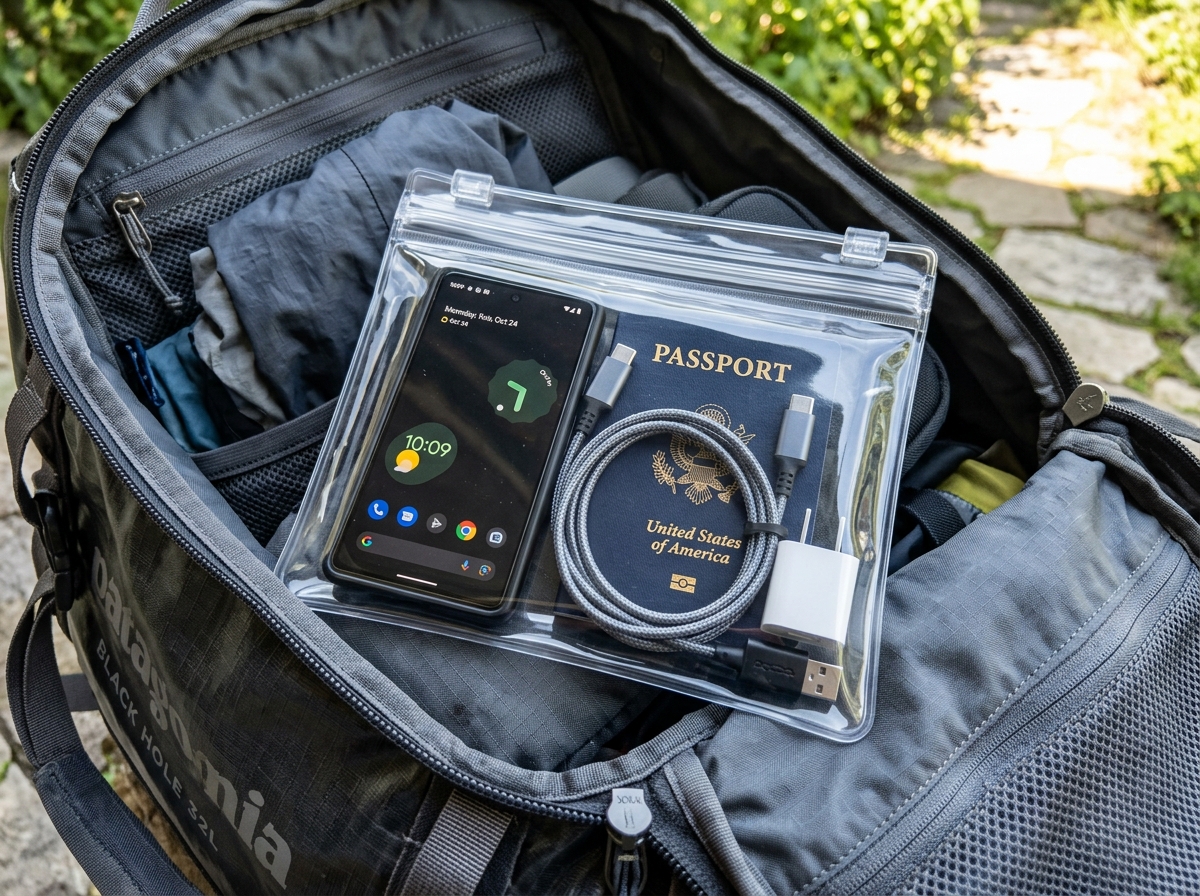
Beyond just water protection, these bags are incredible for organization. Instead of digging through a dark backpack for your charging cables or lip balm, you can use a translucent or color-coded dry bag to keep everything grouped together. This is a core tenet of essential-gear-for-the-minimalist-traveller strategies—everything should have a place, and that place should be protected.
Furthermore, a small dry bag is a multi-tool for the road. We’ve used them as:
- A makeshift pillow: Just trap some air inside and roll it shut.
- A laundry bag: Keep those damp socks away from your clean t-shirts.
- An ice pack: Fill it with ice to soothe a hiking injury without soaking your bedsheets.
By integrating these into your setup, you’re embracing space-saving-travel-accessories-you-need that provide comfort and peace of mind without the “just in case” clutter.
Essential Features of High-Quality Small Dry Bags
Not all waterproof bags are created equal. If you’re shopping for a dry bag small travel accessory, you need to understand the technical specs that separate a “splash-proof” bag from a “submersible” one.
Understanding IP Ratings
The most important metric is the IP (Ingress Protection) rating. You’ll often see terms like IPX4, IPX6, or IPX8.
- IPX4: Protects against splashes from any direction. Great for light rain or beach spray.
- IPX6: Protects against high-pressure water streams. This is usually what you want for kayaking or heavy storms.
- IPX8: Designed for prolonged submersion (often up to 6 meters for 1 hour). This is essential for phone pouches used while swimming.
For a deeper dive into these standards, you can check out the official Understanding the IP Code for waterproofing guide.
Materials and Construction
Minimalist travelers should look for TPU (Thermoplastic Polyurethane) or high-denier Ripstop Nylon (like 70D). TPU is generally more durable and flexible than cheap PVC, and it doesn’t crack as easily over time.
Look for welded seams. Traditional bags are sewn together and then taped. Over time, that tape can peel, and the needle holes will leak. Welded seams use heat or radio frequency to fuse the fabric into a single, permanent bond. This construction is a hallmark of travel-gear-essentials-every-minimalist-traveler-should-have because it ensures longevity.
Closures and Attachments
The roll-top closure is the industry standard. It works by rolling the top of the bag down three times and clipping the buckle. This creates a seal that also traps air, allowing the bag to float if it falls overboard.
Other features to look for include:
- D-Rings: Small plastic loops that let you clip the bag to the outside of your pack or the inside of a boat.
- Clear Windows: Some bags, like the Zenbivy Ditty Sack, feature a transparent panel so you can see your gear without opening the bag.
- Mechanical Valves: These allow you to squeeze out excess air after sealing, turning your dry bag into a compression sack.
Top Types of Dry Bag Small Travel Options for Every Adventure
Choosing the right dry bag small travel setup depends on your specific itinerary. Are you hitting the rainy streets of London or the turquoise waters of Thailand?
| Feature | Roll-Top Sacks | Tech Pouches | Dry Packing Cubes |
|---|---|---|---|
| Best Use | Bulkier gear, clothes | Phones, Passports | Luggage organization |
| Waterproof Level | High (Splash/Submersion) | Very High (Submersible) | Moderate (Splash-proof) |
| Ease of Access | Moderate (Must unroll) | High (Zippers/Snaps) | Very High (Zippers) |
| Durability | Rugged | Delicate (Clear plastic) | Lightweight |
Roll-Top Dry Sacks for Maximum Versatility
These are the classic “dry tubes.” For travel, we recommend staying in the 2L to 5L range. A 2L bag is perfect for your “essentials kit”—wallet, keys, phone, and a small power bank. A 5L bag can usually hold a lightweight down jacket or a change of clothes.
Brands like Sea to Summit offer lightweight 70D nylon versions that weigh as little as 1.2 oz (34g). These are excellent for organize-your-one-bag-travel-backpack-like-a-pro because they are pliable and can be squished into the corners of your bag. Using different colors for different categories of gear (electronics in blue, first aid in red) makes finding things a breeze.
Waterproof Phone Pouches and Tech Cases
If your primary concern is your phone, a dedicated pouch is better than a general dry bag. High-rated options like the Hiearcool Waterproof Phone Pouch (which has over 105,000 ratings!) offer an IP68 rating.
These pouches allow for full touchscreen compatibility, meaning you can take photos underwater or check your maps in a torrential downpour. They usually come with a lanyard, which is a great space-saving-travel-accessories-you-need-2 feature—you can wear your “wallet” around your neck while swimming at the beach.
Dry Packing Cubes for Luggage Organization
A relatively new innovation is the dry packing cube. These combine the structured shape of a packing cube with the waterproof materials of a dry bag. Eagle Creek’s Pack-It Dry series, for instance, uses a YKK Aquaguard zipper and welded seams to provide an IPX4 rating.
These are perfect for storing toiletries. If your shampoo bottle explodes at 30,000 feet, the mess stays inside the cube and doesn’t ruin your entire wardrobe. This is a pro-tip from our guide on using-packing-cubes-to-organize-luggage-a-guide.
How to Choose and Care for Your Small Dry Bag
Buying a high-quality dry bag small travel accessory is only half the battle; you also need to know how to use it properly.
The 3-Fold Rule
For a roll-top bag to be waterproof, you must fold the top at least three times. Don’t just fold it once and buckle it. Each fold creates a new barrier that water has to navigate. Before you trust your expensive camera to a bag, do a “sink test”: fill the bag with air, seal it, and submerge it in a sink. If you see bubbles escaping, you don’t have a good seal.
Managing Air and Compression
If you are using the bag inside a backpack, you probably want to squeeze the air out to save space. Some bags have one-way mechanical valves that let you purge air after the bag is sealed. If yours doesn’t, try to squeeze as much air out as possible before you start your three folds. However, if you are on a boat, leave some air inside—that air is what makes the bag float!
Long-Term Maintenance
Waterproof coatings and polymers can degrade over time if not cared for. You can read more about the chemistry of Scientific research on polymer degradation to understand how UV rays and heat affect these materials.
To keep your bag in top shape:
- Rinse after salt water: Salt crystals are abrasive and can “eat” through coatings and weaken seams. Always rinse with fresh water after a beach day.
- Dry completely: Never store a dry bag while it’s still damp. Mold can grow on the interior coating, causing it to delaminate (peel off).
- Avoid UV exposure: Don’t leave your bags sitting in the direct sun for days. The heat can weaken the welded seams.
- Lubricate zippers: If your bag uses a waterproof zipper (like a YETI Panga or Eagle Creek pouch), use a specialized zipper lubricant occasionally to keep it sliding smoothly.
Frequently Asked Questions about Dry Bag Small Travel Gear
What size dry bag is best for a phone and wallet?
For just the basics, a 1L or 2L bag is ideal. A 1L pouch is roughly the size of a large envelope and fits easily into a jacket pocket or a small daypack. If you want to include a passport and a small power bank, step up to the 2L size.
Can I submerge a roll-top dry bag?
Generally, no. Most roll-top dry bags are rated for “quick submersion” (IPX6). If you hold a roll-top bag under three feet of water for several minutes, the pressure will eventually force water through the folds of the closure. For activities like snorkeling or diving, you need a bag with a dedicated waterproof zipper or a hard-plastic “press and seal” closure rated IPX8.
Are dry bags better than plastic zip bags?
While a plastic sandwich bag is better than nothing, a dedicated dry bag small travel solution is far superior. TPU and nylon are puncture-resistant, whereas a single key or coin can easily poke a hole in a plastic bag. Furthermore, dry bags are reusable and eco-friendly, lasting for years of travel rather than being tossed after one trip.
Conclusion
At Pleno Comercio, we believe that travel is better when you aren’t weighed down by “stuff.” But we also believe that the gear you do choose to carry should be the best version of that item. A dry bag small travel solution perfectly fits our philosophy: it is a lightweight, basic necessity that prioritizes your comfort and convenience without excess.
Whether you’re protecting your passport from a monsoon in Vietnam or keeping your phone dry while kayaking in the Mediterranean, a small dry bag is the ultimate minimalist companion. It’s about more than just keeping water out—it’s about the freedom to explore without worrying about your gear.
Ready to upgrade your travel setup? Explore our curated selection of essentials in our category/travel-gear section and start packing smarter today. Safe travels!
