
The Honest Truth About Surviving Long Flights in Economy
How to survive long flights in economy comes down to a handful of smart decisions — most of which you make before you board.
Here’s the short answer:
- Pick the right seat — aisle or exit row, never middle
- Wear loose, layered clothing — comfort over style, always
- Pack a lean personal bag — essentials within arm’s reach
- Hydrate constantly — aim for 8 oz of water per hour
- Move every 1-2 hours — walk the aisle, do ankle circles
- Block out noise and light — earplugs or headphones plus an eye mask
- Download your entertainment — never rely on the in-flight screen
- Skip the alcohol — it dehydrates you and wrecks your sleep
- Time your sleep to your destination — not your departure city
- Pack light — less stuff means less stress, from gate to landing
A flight from JFK to Nairobi runs 14-15 hours. Economy costs around $1,200 round trip. Business Class? Over $8,400. For most of us, the math is simple: economy it is.
The problem isn’t the price. It’s the 10-20% cabin humidity (drier than the Sahara), the 30-32 inch seat pitch, and the recycled air that leaves you stiff, foggy, and parched by hour six.
But here’s the thing — with the right prep, a 14-hour flight in economy doesn’t have to wreck you. It’s not about spending more. It’s about packing smarter and planning ahead.

Strategic Seat Selection: Your First Line of Defense
When we talk about how to survive long flights in economy, your seat is your primary real estate. You are going to be living in these few square feet for potentially 14 to 19 hours. Choosing the wrong spot—like a middle seat in the back row next to the lavatory—is a recipe for a miserable journey.
To win the seating game, we recommend using tools like SeatGuru or AeroLOPA. These sites provide aircraft-specific maps that highlight “yellow” or “red” seats (those with limited recline, misaligned windows, or proximity to noisy galleys).
| Seat Type | Pros | Cons | Best For |
|---|---|---|---|
| Aisle | Freedom of movement, easy bathroom access, extra leg stretch. | Disturbed by seatmates, bumped by carts. | Solo travelers, frequent movers. |
| Window | Wall support for sleeping, no disturbances, great views. | Trapped by seatmates, limited legroom. | Deep sleepers, view lovers. |
| Bulkhead | Extra knee room, no one reclining into you. | No under-seat storage, narrower seats (fixed armrests). | Tall passengers, parents with infants. |
| Exit Row | Massive legroom (often 35-38 inches). | Can be cold, fixed armrests, tray in armrest. | Tall passengers on a budget. |
The “Poor Folk’s Lie-Flat” Strategy
One of our favorite hacks is what frequent flyers call the “poor folk’s lie-flat.” This involves securing an entire row of three seats to yourself. While it requires luck, you can increase your odds by downloading the airline’s app and obsessively checking the seating chart in the 24 hours leading up to departure. If you see an empty row toward the back of the plane, move yourself there. Most passengers cluster at the front; the back is often where the “empty row” magic happens.
Couples Seating Secrets
If you are traveling as a duo, don’t just book side-by-side. Try the “window and aisle” gamble: book the window and the aisle in a three-seat row, leaving the middle seat empty. Middle seats are the last to be assigned. If the flight isn’t full, you get a whole row for two people. If someone does show up in that middle seat, they will be more than happy to swap for either the window or the aisle so you can sit together.
How to Survive Long Flights in Economy: The Comfort and Clothing Strategy
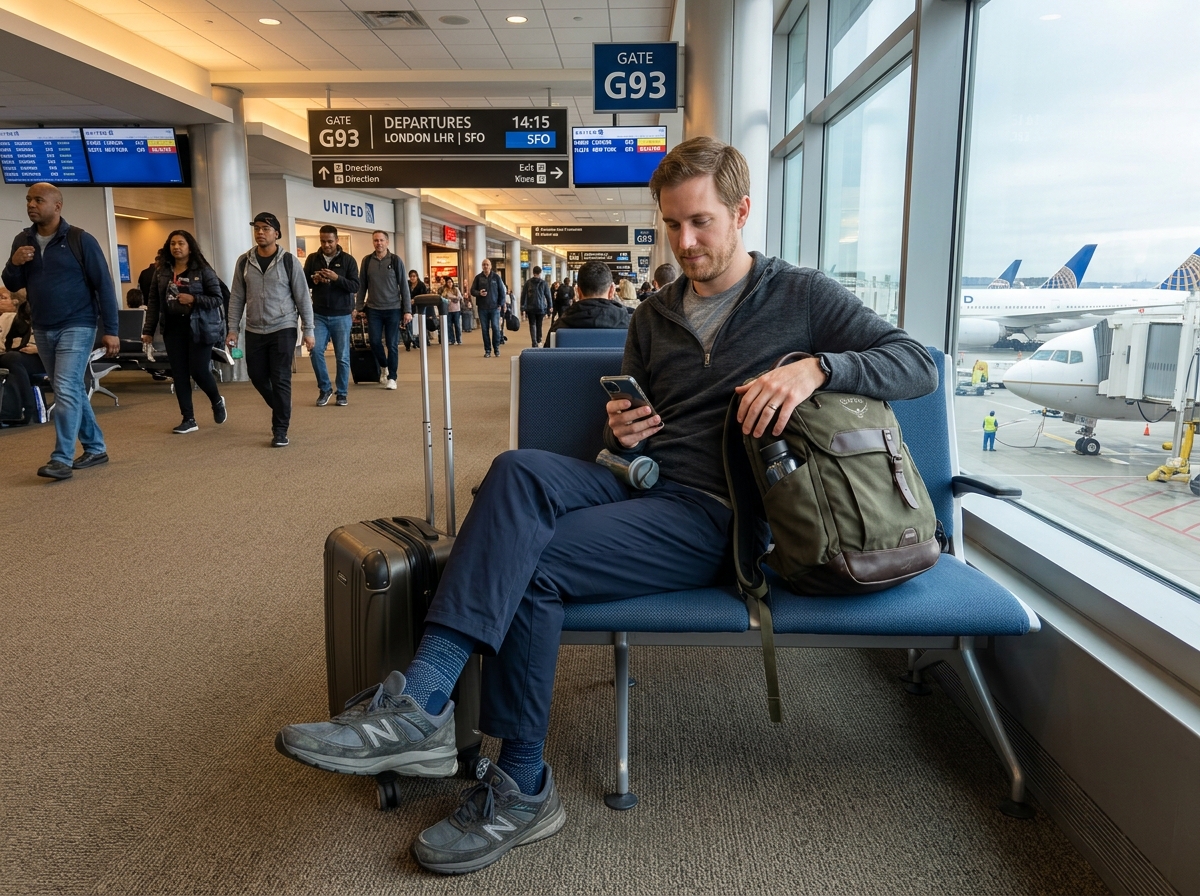
Your outfit is your pajamas, your walking gear, and your climate control system all in one. We’ve seen travelers board in tight jeans and high heels, and by hour four, they look like they’re in a medieval torture device.
The golden rule for how to survive long flights in economy is simple: layers. Cabin temperatures are notoriously erratic. You might be sweating during boarding and shivering over the Atlantic.
- The Base: Breathable fabrics like cotton, bamboo, or merino wool (which is naturally odor-resistant).
- The Mid: A zip-up hoodie or a cardigan.
- The Outer: A large scarf or pashmina that can double as a blanket.
- The Bottoms: Loose-fitting joggers or leggings with a soft waistband. Avoid anything that digs into your stomach, as bloating is a common side effect of cabin pressure changes.
For more detailed inspiration, check out these 29 Tips for Making a Long-haul Flight More Comfortable.
Sleep Hacks: How to Survive Long Flights in Economy Overnight
Sleeping in a vertical position is an art form. To succeed, you need to signal to your body that it’s nighttime. Establish “sleep triggers”—rituals like brushing your teeth or applying a specific lavender-scented lotion.
A crucial safety and comfort tip: buckle your seatbelt over your blanket. If the pilot turns on the “Fasten Seatbelt” sign due to turbulence, the flight attendants can see you are secured without waking you up to check. Use a high-quality neck pillow (like the TRTL or a memory foam wrap) and a contoured eye mask that doesn’t press against your eyelids.
Footwear and Circulation
Your feet will likely swell due to the altitude and lack of movement. Wear slip-on shoes so you can easily kick them off (but please, keep your socks on for the sake of your neighbors).
More importantly, wear compression socks. These are non-negotiable for flights over six hours. They apply gentle pressure to your lower legs, helping maintain blood flow and reducing the risk of Deep Vein Thrombosis (DVT). If you find the floor too cold, bring a pair of thick, fuzzy socks or cheap slippers with rubber soles for those inevitable trips to the lavatory. For shorter travelers, a “foot hammock” that clips onto the tray table can help elevate your legs and reduce pressure on your thighs.
The Ultimate In-Flight Survival Kit: Packing for 14+ Hours
When space is at a premium, your carry-on needs to be a masterpiece of efficiency. We believe in the “bag within a bag” method. Keep your large carry-on in the overhead bin, but have a small “essentials kit” that stays under the seat in front of you. This prevents you from constantly getting up and rummaging through the bins.
Start with the best carry-on luggage for minimalist travellers to ensure you aren’t weighed down by excess bulk. Within that bag, your electronics should be organized and easily accessible; see our guide on efficient-packing-of-electronics-a-how-to-guide for the best ways to manage cables and power banks.
Your Essentials Kit should include:
- Noise-canceling headphones (a total game-changer for blocking engine drone).
- A high-capacity power bank (airplane USB ports are notoriously slow or broken).
- A seatback organizer to keep your phone, water, and snacks off the floor.
- A universal headphone adapter (to use your own headphones with the plane’s system).
Entertainment Without In-Flight Screens
In-flight entertainment (IFE) systems fail more often than you’d think. We’ve all been on that flight where the screen freezes ten minutes into the movie. Don’t let your sanity depend on the airline’s tech.
Download at least 10-15 hours of content to your own device. This includes movies, podcasts, and even TikTok videos (you can save up to 200 for offline viewing). Use this time for a “digital detox” or intentional disconnection—bring a physical journal or a Kindle loaded with books you’ve been meaning to read. For more tips on packing light while staying entertained, read about mastering-the-art-of-carry-on-only-packing.
Hygiene and Freshening Up
Halfway through a 14-hour flight, you will start to feel “airplane grimy.” A mini-amenity kit can make you feel human again. Pack travel-friendly-toiletries-for-your-next-one-bag-trip like:
- Face wipes or a small bottle of micellar water.
- A toothbrush and travel-sized toothpaste (brushing your teeth is the ultimate “refresh” button).
- Heavy-duty moisturizer and lip balm (the cabin air will suck the moisture right out of you).
- Nasal spray or saline drops to keep your sinuses from drying out.
Wellness in the Air: Hydration, Nutrition, and Movement
The physiological stress of flying is real. At 35,000 feet, the cabin pressure is equivalent to being on a mountain 6,000-8,000 feet high. This reduces blood oxygen levels by 6-25%, which is why you feel that “brain fog.”
To combat this, hydration is your best friend. The Aerospace Medical Association recommends drinking 8 ounces of water for every hour you are in the air. Bring a large, empty reusable water bottle through security and fill it at the gate. Avoid alcohol and excessive caffeine; both are diuretics that will worsen dehydration and fragment your sleep. For a deeper dive into the science of staying well, read How to Survive Long-Haul Flights: Science-Backed Comfort Strategies That Actually Work.
Movement and Circulation: How to Survive Long Flights in Economy Without Pain
Sitting still for 10+ hours isn’t just uncomfortable; it’s a health risk. We recommend getting up every 2 hours to walk the length of the aisle. If you’re stuck in a window seat, you can still do “seat yoga”:
- Ankle Circles: Rotate your feet in both directions.
- Heel/Toe Raises: Keep your toes on the floor and lift your heels, then vice versa.
- Knee Tucks: Lift one knee toward your chest and hold.
- Forward Folds: Lean forward to stretch your lower back.
Don’t be afraid to hang out in the galley for a few minutes (as long as you aren’t in the way of the crew). It’s a great place to “forage” for extra water or snacks that are often left out for passengers.
Smart Snacking and Meal Timing
Airline food is notoriously high in sodium to compensate for your dulled sense of taste at high altitudes. This leads to bloating and thirst. We suggest bringing your own “clean” snacks: raw almonds, protein bars, or fruit.
To beat jet lag, start eating on the schedule of your destination as soon as you board. If it’s breakfast time where you are going, eat your snack then, even if the plane is serving dinner. This helps reset your internal clock before you even touch the ground.
Frequently Asked Questions about Long-Haul Travel
Should I use sleep aids like Benadryl or Melatonin?
Melatonin is generally recommended by frequent flyers as it helps regulate your circadian rhythm. Take a low dose (0.5mg to 5mg) about 30-60 minutes before you want to sleep, timed to the sunset of your destination. As for Benadryl or prescription aids, always consult your doctor first and test them at home before your flight. Some people have a “paradoxical reaction” to antihistamines, making them hyper instead of sleepy—the last thing you want in a middle seat!
How can I get airport lounge access as an economy passenger?
You don’t need a first-class ticket to enjoy a lounge. Programs like Priority Pass offer access to over 1,200 lounges for a yearly fee (around $99) plus a per-visit charge. Alternatively, apps like LoungePass allow you to buy one-time entries. For a 6-hour layover, paying $35 for a shower, a quiet seat, and “free” food is often a better value than sitting at a crowded gate.
Is it worth paying for an Economy Plus upgrade?
On flights over 10 hours, the answer is usually yes. Extra legroom seats (Economy Plus or Main Cabin Select) typically cost between $50 and $200. If you are tall or prone to back pain, that breaks down to about $10-$15 per hour for significantly higher comfort. Always check SeatGuru first to ensure the “upgrade” actually offers more pitch and isn’t just a seat closer to the front.
Conclusion
Learning how to survive long flights in economy is a rite of passage for the modern traveler. It requires a shift in mindset: seeing the flight not as a “misery to be endured,” but as a pocket of time to disconnect, rest, and prepare for your adventure.
At Pleno Comercio, we specialize in helping you master this transition. We believe that travel should be about the destination, not the struggle of getting there. By focusing on essential-gear-for-the-minimalist-traveller, we provide the curated, lightweight necessities that prioritize your comfort without the excess.
Ready to gear up for your next long-haul journey? Visit us at https://plenocomercio.com/ to find the minimalist essentials that make economy feel like a breeze. Safe travels!
