Best Flowers for Pots in Full Sun: 10 Reliable Choices
Ten widely sold flowers that suit sunny containers, with the growth habit, rough size and one thing to know about each, plus a table of deadheading needs and tips for buying healthy plants.
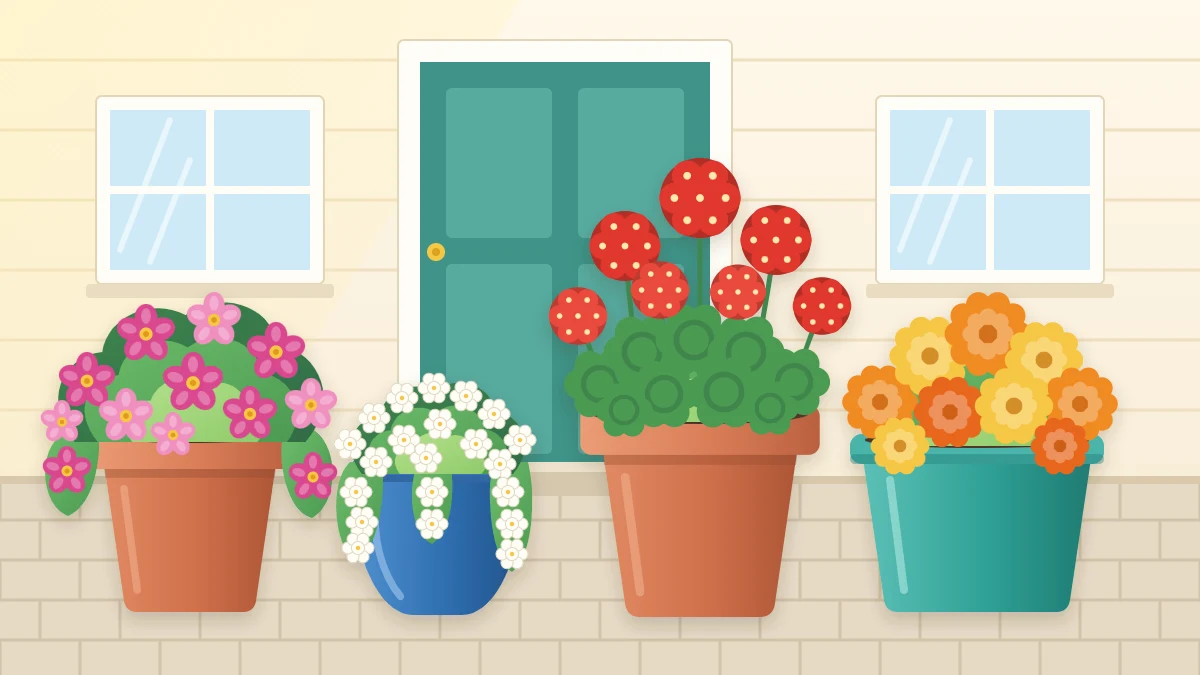
A sunny patio, a flight of steps or a bright doorstep is a fine place for color, as long as you choose plants that enjoy the heat and light that come with it. The best flowers for pots in full sun stay fairly compact, keep making buds for months and cope with a root zone that warms up and dries out faster than a garden bed.
The ten plants below are widely sold in spring and are popular with beginners. None is difficult, but each has a habit and one quirk worth knowing before you buy. In cold-winter climates most of them are grown as annuals: planted once frost danger has passed, enjoyed through the warm months and replaced the following year.
First, confirm the spot is really full sun
On a plant tag, full sun usually means about six hours or more of direct sun a day. A spot that looks bright at noon may be shaded by a wall or a tree for much of the afternoon, so it is worth learning how to read the light where your pots will stand before you spend money on plants.
If the count comes out at only a few hours, these ten will grow leggy and flower thinly. In that case, pick from the container flowers that keep their color in shade instead.
Three habits: upright, mounding and trailing
Habit is the natural shape a plant grows into. Upright plants give height, mounding plants form a rounded dome that fills the middle of a pot, and trailing plants spill over the rim and soften the edge. Knowing the habit tells you where a plant belongs and how much room it will take.
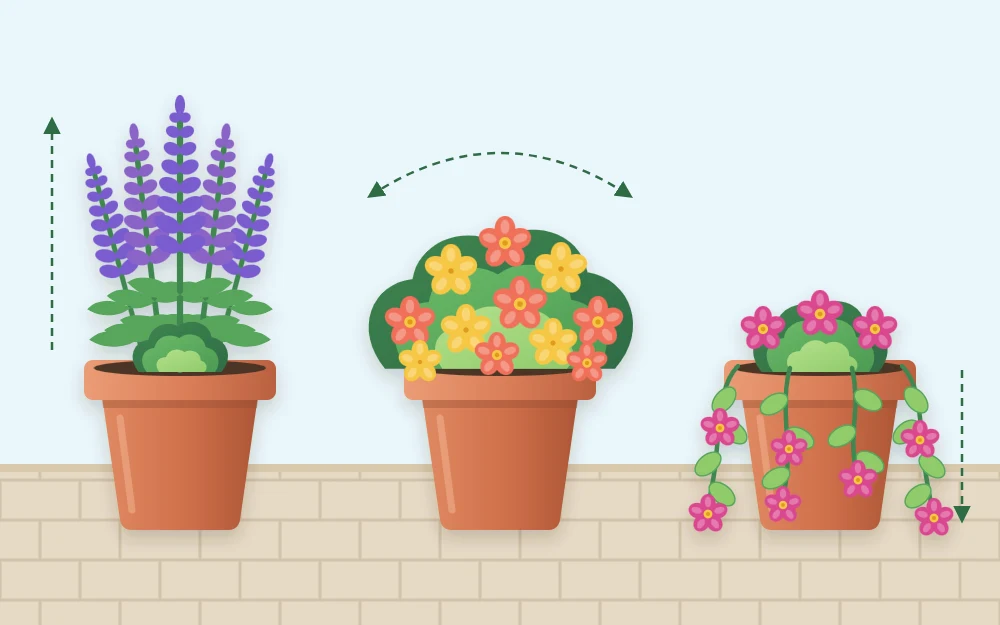
A single habit in a pot looks tidy and simple. Combining all three in one large container is the idea behind the thriller, filler, spiller recipe for mixed pots, which is a good next step once you know your plants.
Upright flowers for height
- Geraniums (pelargoniums). Sturdy, upright plants with rounded flower clusters held above the leaves, often reaching about 12 to 18 in (30 to 45 cm) in a pot. They tolerate the mix drying a little between waterings better than most, and they dislike sitting wet.
- Salvia (annual bedding types). Upright spikes in red, purple, blue or white on bushy plants. The spikes add a vertical line among rounder flowers. Size varies a good deal by type, so check the plant tag.
- Zinnias (compact types). Daisy-like or pompom flowers in strong colors on stiff stems. Choose types described as compact or dwarf for pots. Crowded plants with damp leaves are prone to powdery mildew, so give them space and water the mix, not the foliage.
Mounding flowers that fill a pot
- Marigolds. Neat domes of yellow, orange and rust flowers. The smaller French types, commonly about 6 to 12 in (15 to 30 cm) tall, suit pots best; the tall African types need a large, heavy container to stay upright.
- Lantana. Clusters of tiny flowers that often shift color as they age. It thrives in heat. Some types mound and others spread wide, and in cool weather growth is slow.
- Petunias. Trumpet flowers in nearly every color. Depending on the type they mound or trail, so read the tag. Stems tend to grow long and bare by midsummer, and a trim brings them back.
Trailing flowers for the rim
- Calibrachoa. Looks like a miniature petunia and carries a great many small flowers on trailing stems. It needs a freely draining mix and does poorly in a pot that stays soggy.
- Verbena. Flat clusters of small flowers on spreading stems. Good air movement around the plant helps, since verbena can also get powdery mildew when crowded.
- Sweet alyssum. A low, fine-textured edging plant with tiny honey-scented flowers, usually white, pink or purple. It often slows down in the hottest weeks and picks up again when nights cool.
- Nasturtiums. Round leaves and bright orange, yellow or red flowers, easy to grow from large seeds pushed straight into the pot. They flower better in a lean mix; rich feeding tends to produce leaves at the expense of blooms.
Habit and deadheading at a glance
Deadheading means removing faded flowers so the plant keeps making new ones instead of seed. Some of these plants need it regularly and some tidy themselves.
| Plant | Habit | Deadheading need |
|---|---|---|
| Petunias | Mounding or trailing | Helps older types; many newer trailing types need little |
| Calibrachoa | Trailing | Little or none |
| Geraniums | Upright | Regular; snap off the whole faded stalk |
| Marigolds | Mounding | Regular |
| Zinnias | Upright | Regular |
| Lantana | Mounding or spreading | Little; an occasional trim |
| Verbena | Trailing | Occasional trim of spent clusters |
| Sweet alyssum | Low and trailing | None; shear lightly if it stalls |
| Salvia | Upright | Remove spent spikes |
| Nasturtiums | Trailing or mounding | Optional; pick off faded flowers |
For exactly where to cut, see the guide to deadheading and pinching container flowers.
How to buy good plants
The tallest plant in full bloom is rarely the best one on the bench. Look for these signs instead:
- A compact, bushy shape with several stems, not one long one.
- Plenty of buds still to open, with only a few flowers out.
- Leaves that are evenly green, with no spots, stickiness or insects underneath.
- Roots that hold the mix together without circling in a tight, matted mass.
Read the plant tag for mature height and spread. Named types of the same flower can differ widely, and the tag is the only reliable guide to the one in your hand.
Good to know
All ten are tender or only lightly frost tolerant. Wait until the danger of frost has passed in your area before setting them outside; your local extension service can tell you the average last frost date.
What sun pots need from you
Full sun means faster drying. How quickly a pot dries depends on its size and material, the plants, the wind and the weather, so conditions vary from pot to pot. Feel the mix a couple of inches down and water thoroughly when it is dry at that depth.
Flowering plants in a limited volume of mix also use up nutrients. If you feed, follow the fertilizer label and do not exceed it.
Tip
Start with three or four of these plants, not all ten. Repeating the same few flowers across several pots looks more deliberate than one of everything.
Frequently asked questions
Which flowers handle the hottest, sunniest spots in pots?
Lantana, zinnias, marigolds and geraniums are well known for taking heat and strong sun in containers. Heat tolerance still depends on the pot: a small or dark container on hot paving dries and warms quickly, so a larger pot and regular checks of the mix matter as much as the plant you choose.
Will these flowers come back next year?
In cold-winter climates most of them are grown as annuals and are replaced the following spring, because frost ends their season. Some, such as lantana and geraniums, are perennial where winters are mild. Your local extension service can tell you what is realistic for the area where you live.
How many flowering plants should go in one pot?
It depends on the width of the pot and the mature spread printed on each plant tag. A common starting point is one plant in a small pot and three or so in a pot about 12 to 14 inches wide. Leave gaps at planting time, because young plants fill out quickly in warm weather.


