How to Plant a Hanging Basket Step by Step
A step-by-step guide to planting your own hanging basket: choosing the basket and liner, picking plants that trail, planting the center and the edge, hanging it securely and keeping it from drying out.
At a glance
What you need
- Hanging basket with chains or hanger
- Liner, for a wire basket
- Potting mix
- Bucket or large pot to steady the basket
- One upright plant and several trailing plants
- Hand trowel
- Bracket or hook rated for the load
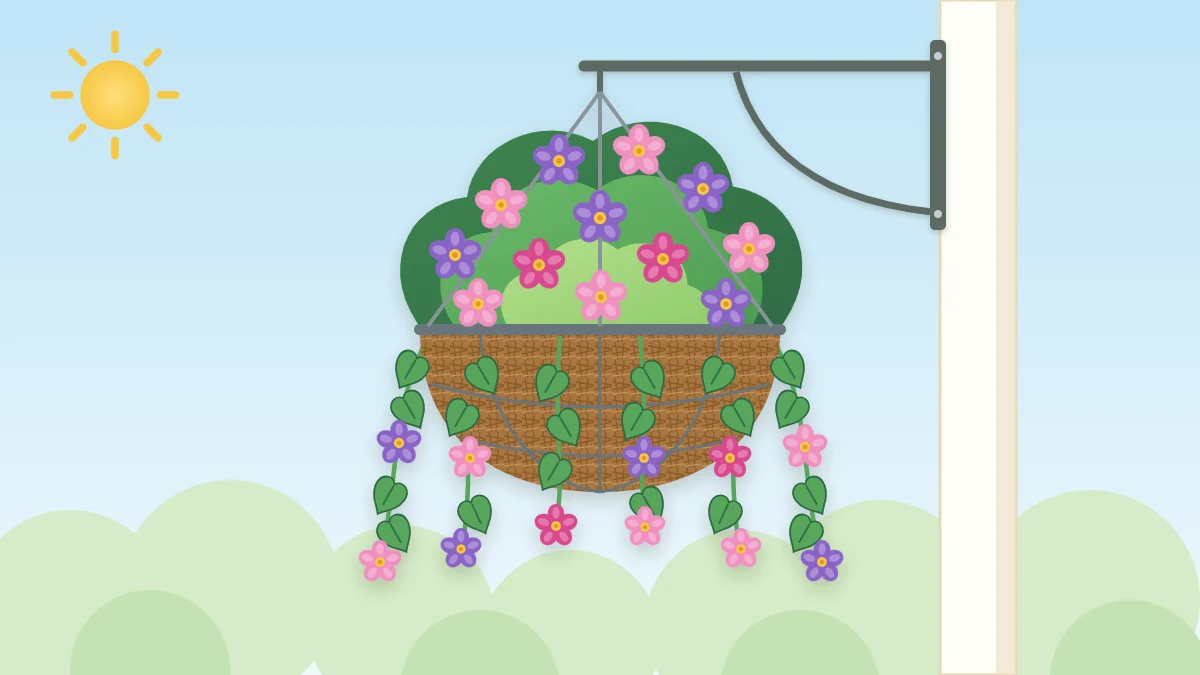
A finished basket from the garden center is convenient, but planting your own lets you choose the colors, use a bigger basket and start with young plants that settle in well. Once you know how to plant a hanging basket, the job takes less than an hour and uses the same skills as any other pot.
The differences are all down to position. A basket hangs in moving air with sun on every side, so it dries faster than a pot on the ground, and it has to be held up safely. Both points shape the choices below.
Choose the basket
Size matters more than style. A larger basket holds more potting mix, which stores more water and dries more slowly. About 12 to 14 in (30 to 35 cm) across is a common starting size.
There are two main kinds:
- Wire baskets need a liner to hold the mix. Coir fiber, moss and preformed liners all work. They look natural and drain freely, and they also lose moisture through the sides.
- Solid plastic baskets need no liner and hold moisture longer. Many have a clip-on saucer, and all should have drainage holes.
Baskets are only one of several types of plant containers, and it is worth comparing them if you have not settled on one yet.
Pick plants that suit a basket
Trailing plants are the heart of a basket, because the sides and underside are what you see from below. Choose plants that all want the same light.
- For sun: trailing petunias, calibrachoa, ivy geraniums and trailing verbena.
- For part shade or mild weather: lobelia, which often fades in summer heat.
- For shade: fuchsia and trailing begonias.
- Edible options: trailing cherry tomatoes or strawberries, in a large basket in full sun.
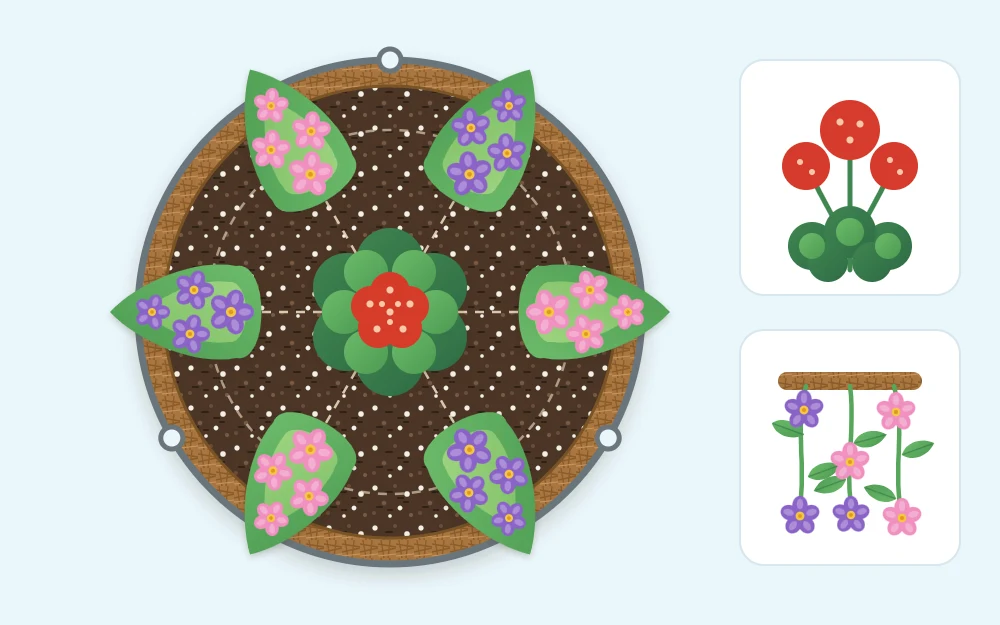
The list of reliable flowers for sunny pots describes the habit of several of these in more detail. How many plants you need depends on the basket and the mature spread on each plant tag. One upright plant in the center with five or six trailing plants around the edge is a common pattern for a basket of the size above, and fewer is fine with vigorous plants.
Gather what you need
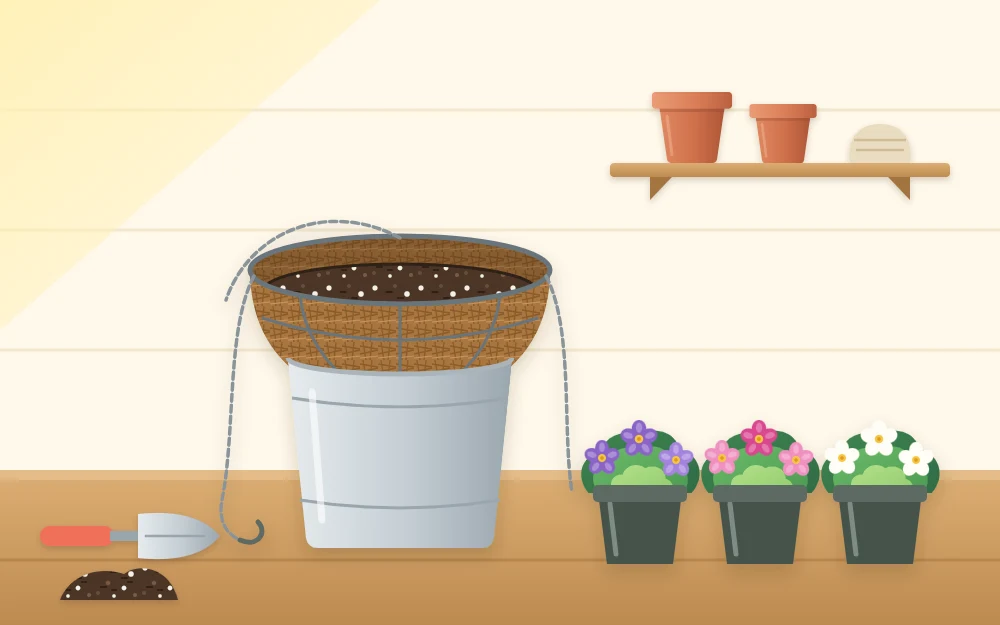
- A basket with its chains or hanger, and a liner if it is a wire basket
- Bagged potting mix, not garden soil
- A bucket or large empty pot to hold the basket steady
- Your plants, watered an hour or so beforehand
- A hand trowel and a watering can
Plant the basket, step by step
Plant tender annuals once the danger of frost has passed in your area and nights are mild.
- Steady the basket. Rest it in the top of a bucket or large pot so it cannot roll, and move the chains out of the way or unclip them.
- Fit the liner. Press it into the wire frame so it sits snugly against the sides, with its top edge level with the rim.
- Dampen the mix. Tip potting mix into a tub and stir in water until it is evenly moist but not dripping. This also keeps dust down.
- Fill partway. Add mix until the basket is about half to two-thirds full, leaving room for the root balls.
- Plant the center. Slide the upright plant from its pot, loosen any circling roots and set it in the middle.
- Plant the edge. Space the trailing plants evenly around the rim, tilted slightly outward so they spill over the side.
- Fill and firm. Add mix between the root balls and press gently to remove hollows. Each plant should sit at the depth it grew at in its pot.
- Leave watering room. Stop with the surface about 1 in (2.5 cm) below the rim, so water can pool and soak in.
- Water until it drips. Water slowly at the surface until it runs from the base, then top up any places where the mix has settled.
Tip
If you can, leave the planted basket in a sheltered, lightly shaded spot at ground level for a few days before hanging it. The plants get a chance to root into the new mix before they face wind and full sun.
Hang it safely
A basket that has just been watered weighs far more than it did dry, and it gets heavier as the plants grow. Plan the hanging point around the wet weight.
- Use a bracket or hook rated for the load, and follow the maker’s instructions for fitting it.
- Fix it into something solid, such as a wall stud, a beam or sound masonry, not into thin trim or siding alone.
- Check the chains, the clips and the basket’s own hanger as well as the hook.
- Choose a spot out of strong wind, which dries the mix and batters trailing stems.
- Hang it where you can reach it comfortably with a watering can, and clear of heads and door swings.
Good to know
If you rent or share a building, check its rules before fixing brackets to walls or ceilings, and think about where the drips will fall after you water.
Looking after a basket
Baskets dry faster than any other container, and how fast depends on basket size, liner, plants, sun, wind and temperature, so conditions vary from one basket to the next. A small basket in hot, windy weather may need water more than once in a day, while a large one in cool shade can stay moist much longer.
Check before you water. Lift the base with one hand: a dry basket feels noticeably light. Or push a finger into the mix; if it is dry a couple of inches down, water slowly until it drips from the bottom. If water runs straight off dried-out mix, come back a few minutes later and water again. The full method is in the guide to watering container plants.
Frequent watering washes nutrients out of the mix, so feed as you would other containers: follow the fertilizer label and do not exceed it. Give the basket a quarter turn now and then so every side gets light and growth stays even.
If you grow edibles in a basket
Trailing tomatoes and strawberries need the biggest basket you can hang securely, full sun and steady moisture. Use a basket and liner that have not held chemicals or unknown substances, expect a modest crop, and wash the fruit before eating.
Frequently asked questions
How many plants go in a hanging basket?
It depends on the width of the basket and how large the plants grow. For a basket about 12 to 14 inches across, one upright plant in the center with five or six trailing plants around the edge is a common pattern. Vigorous plants need fewer. Check the spread on each plant tag.
Do I need a liner in a hanging basket?
A wire basket needs one, because nothing else holds the potting mix in. Coir fiber, moss and preformed liners are the usual choices. A solid plastic basket needs no liner, as its sides hold the mix and it has drainage holes in the base. Plastic also tends to hold moisture longer than a lined wire basket.
Why does my hanging basket dry out so fast?
A basket is exposed to sun and moving air on all sides and usually holds a fairly small volume of mix for the number of plants in it. As the plants grow they use more water too. A larger basket, a spot out of strong wind and checking the mix by weight all help.