Sun or Shade? How to Read the Light for a Container Garden
Find out how much direct sun your patio, porch or steps really get. Learn a one-day way to measure it, what full sun, part shade and shade mean on a plant tag, and the signs that a pot should be moved.
Every plant tag tells you how much sun the plant wants, but very few people know how much sun their own patio actually gets. Guessing is where many disappointing pots begin. Measuring the light for a container garden takes one clear day and a notepad, and it is worth doing before you buy a single plant.
Once you know your numbers, the terms on plant tags stop being vague. You can match plants to the spot with some confidence, and you can use the great advantage of pots: if the light is wrong, you can move them.
Measure the Light Instead of Guessing
A space that feels bright is not necessarily sunny. What plants respond to is direct sun, meaning the sun’s rays fall on the leaves and cast a sharp shadow. Here is a simple way to measure it.
- Pick a clear day during the growing season.
- Stand where the pots will go and note the time when direct sun first reaches that spot.
- Check again every hour or two and note when the sun leaves, and whether it comes back later.
- Add up the hours of direct sun.
- Repeat for each place you plan to use. Two ends of the same porch can differ by several hours.
Write the result down along with the time of day the sun arrives. Both the total and the timing matter, as you will see below.
What the Plant Tag Terms Mean
Plant tags sort plants into a few light groups. The groups are rough bands rather than exact measurements, and growers do not all use them in precisely the same way, but these are the usual meanings.
| Term on the tag | Rough amount of direct sun | Notes |
|---|---|---|
| Full sun | About six hours or more | Most fruiting vegetables and many summer flowers |
| Part sun or part shade | Roughly three to six hours | Afternoon shade is kinder in hot climates |
| Shade | Little direct sun | Still needs bright, open sky overhead |
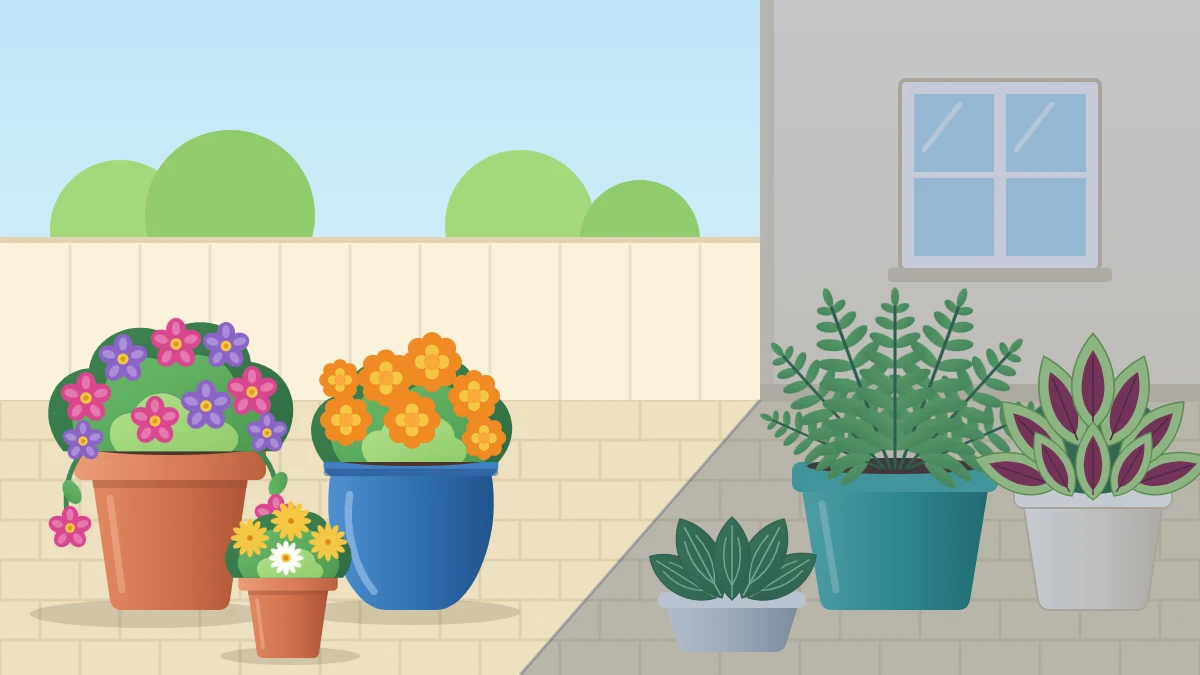
Shade on a plant tag does not mean darkness. A spot under an open sky that simply misses the direct rays can grow a good range of plants. A deep recess under a low roof or dense evergreens is a different matter, and very little will thrive there.
Morning Sun and Afternoon Sun Are Not Equal
Four hours of sun before noon and four hours after it do not feel the same to a plant. Morning sun arrives while the air is still cool. Afternoon sun comes at the hottest part of the day, when leaves are already losing water quickly.
In the Northern Hemisphere, which the directions in this guide assume, an east-facing spot gets the gentler morning sun, a west-facing spot gets the hotter afternoon sun, a south-facing spot gets sun for much of the day and a north-facing spot gets the least. Plants labeled for part shade often do best with morning sun and afternoon shade, especially where summers are hot.
What Moves the Shade Around
Shade is not fixed. It shifts through the day and through the year, and a few features are usually responsible.
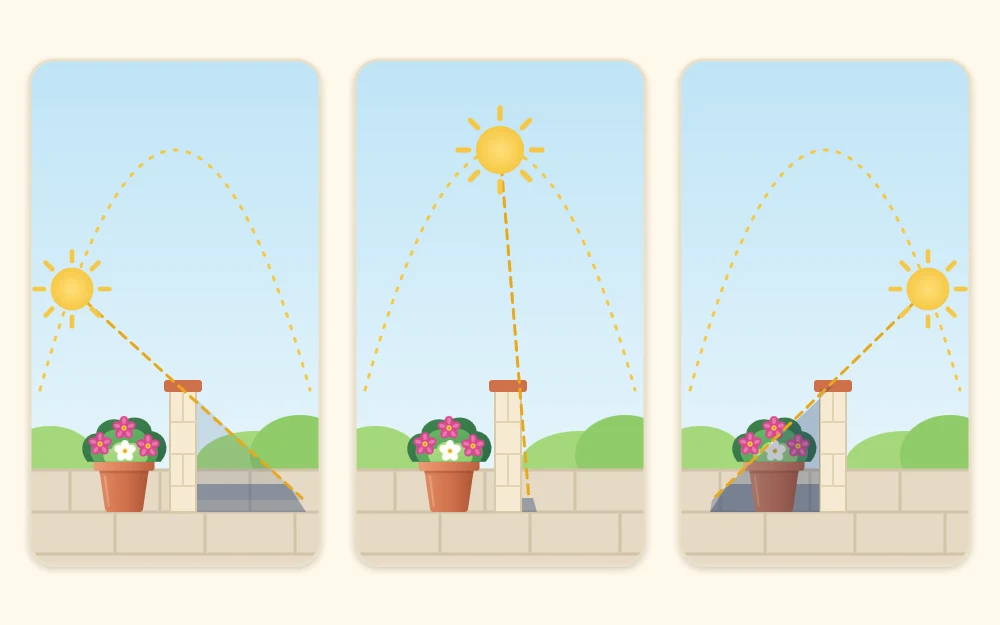
- Walls and fences cast long shadows when the sun is low and short ones at midday.
- Roof overhangs and porch ceilings may block high summer sun while letting in lower sun in spring and fall.
- Deciduous trees let light through in early spring and cast full shade once they leaf out.
- The season itself changes the sun’s path. It rides higher in summer and lower in winter, so a spot that is sunny in midsummer can be shaded at other times.
If you measured in early spring, measure again in summer. The answer may surprise you.
Reflected Heat From Paving and Walls
Light hours are only part of the picture. Paving, brick and pale walls reflect light and give off stored heat, so a pot standing against a sunny wall on a paved patio can be in a much harsher place than the same pot on a lawn.
Plants there use water faster and may scorch even when their tag says full sun. If that describes your space, the guide to keeping container plants going in summer heat covers ways to ease the stress.
The Advantage of Pots: You Can Move Them
A plant in the ground has to live with its spot. A plant in a pot does not. If a container is struggling, shift it a few feet and watch what happens over the next couple of weeks. You can also move pots as the seasons change the light.
Large containers full of moist mix are heavy. A wheeled plant caddy placed under the pot before you fill it makes moving much easier, and it saves your back.
Tip
Move a plant into stronger light in stages over a week or so. Leaves that grew in shade can scorch if they are put straight into full afternoon sun.
Signs a Plant Wants More or Less Light
Plants give hints when the light does not suit them. Treat these as clues rather than proof, because each one has other possible causes too.
Often associated with too little light
- Leggy growth, with long gaps between the leaves
- Stems leaning toward the brightest side
- Few flowers, or none
- Mix that stays wet for a long time
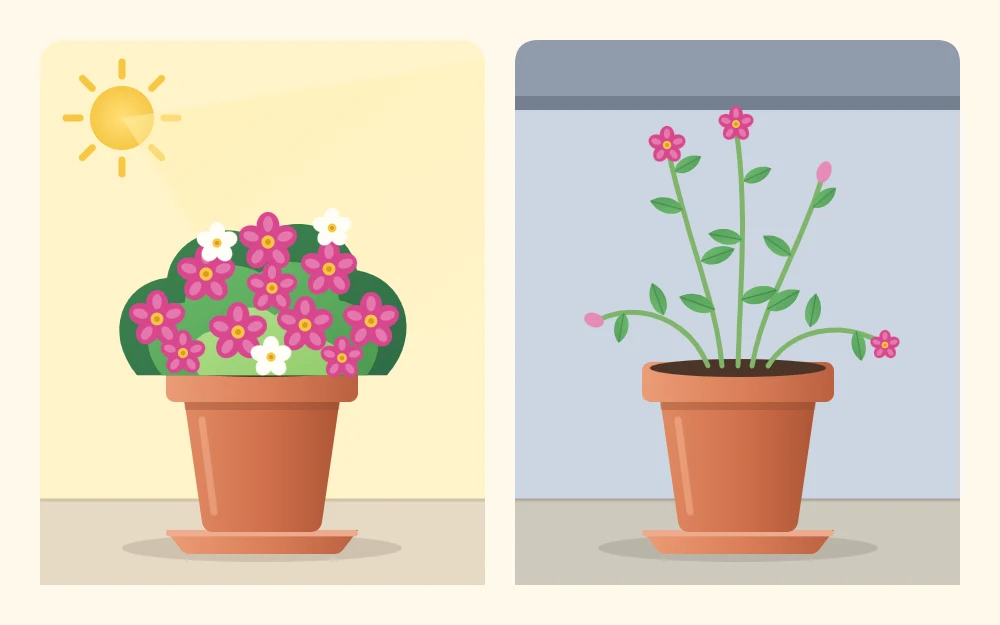
Often associated with too much sun or heat
- Scorched brown patches on the leaves that face the sun
- Bleached or faded leaf color
- Wilting during the hottest hours even though the mix is moist
Before you blame the light, feel the mix a couple of inches down and check that the drainage holes are clear. Dry mix, waterlogged roots and lack of feeding can produce similar symptoms.
Choosing Plants for the Light You Have
With your hours of sun written down, shopping becomes simple: read the tag and buy only what fits. The overview of the best plants for container gardening sorts beginner choices into sun and shade groups.
If your count came out low, do not give up on color. Plenty of plants flower or carry bright foliage without much direct sun, and the list of container flowers for shade is the place to start.
Frequently asked questions
How many hours of sun count as full sun?
Plant tags generally use full sun to mean about six hours or more of direct sun on a clear day. It is a rough band rather than a precise threshold. In very hot climates, some full sun plants still appreciate a little shade during the hottest part of the afternoon.
Is bright shade enough for flowering plants?
For some, yes. A spot with little direct sun but an open, bright sky overhead suits plants such as begonias and impatiens, along with many foliage plants. Sun-loving flowers and fruiting vegetables usually flower and crop poorly there. Deep shade under dense cover supports very little.
Does the light on a patio change during the year?
Usually it does. The sun travels higher in summer and lower in winter, so shadows from walls, fences and roof overhangs fall in different places. Deciduous trees add shade once they leaf out. Measuring once in spring and again in summer gives a truer picture.