Best Herbs for Containers: 9 Easy Herbs to Grow in Pots
Nine cooking herbs that grow well in pots, sorted into the ones that like steady moisture and the Mediterranean ones that like it drier, so you know which can share a container.
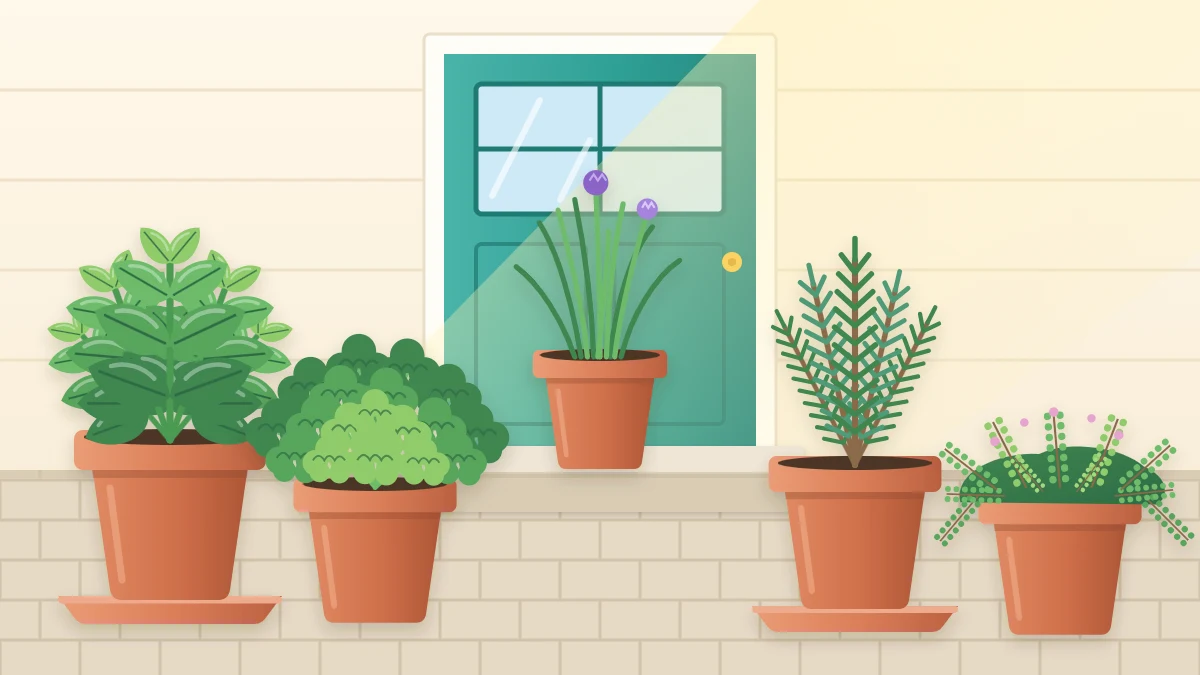
A few pots of herbs by the kitchen door may be the most useful container garden there is. The plants are small, most are easy to please, and you only ever need a sprig or a handful at a time.
The best herbs for containers are the familiar cooking ones, and nine of them are described below. Before the list, though, comes the single idea that makes herb pots succeed or fail: not all herbs want the same amount of water.
Two groups: moist-loving and dry-loving
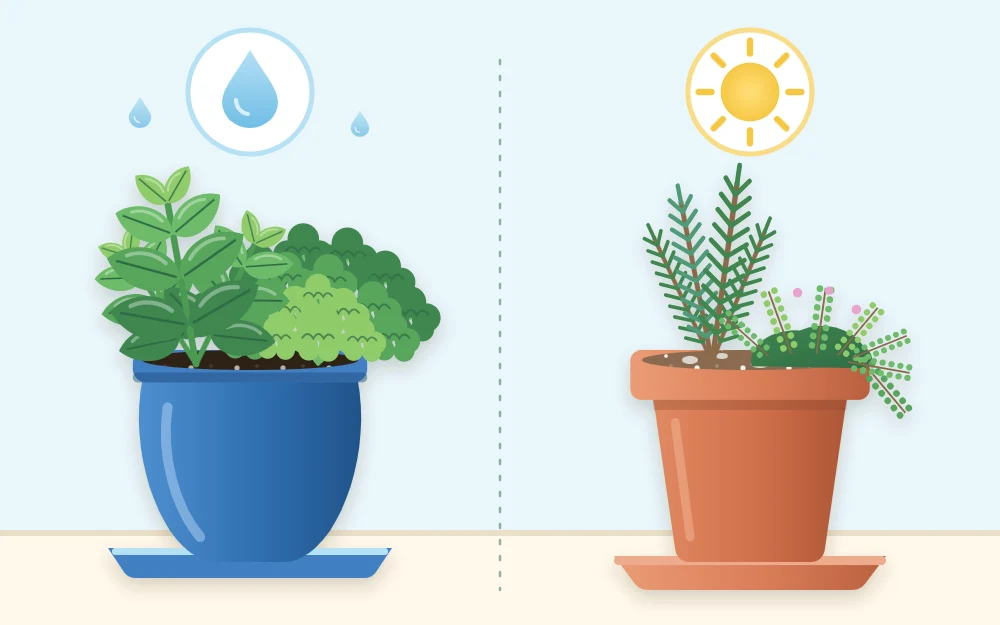
Cooking herbs fall roughly into two camps.
- Herbs that like steady moisture: basil, parsley, chives, cilantro and mint. They have soft, leafy growth and flag quickly when the potting mix dries out.
- Mediterranean herbs that like it drier: thyme, rosemary, oregano and sage. They come from sunny, rocky places, and they prefer a mix that drains fast and dries a little between waterings.
This grouping decides who can share a pot. Put rosemary in with basil and one of them will be unhappy, whichever way you water. Keep each group together and both do well. The step-by-step guide to planting a mixed herb container shows how to combine them.
Herbs that like steady moisture
Basil
A tender annual that needs warmth and suffers in cold, so it goes outside only once nights are mild. It wants sun, evenly moist mix and regular pinching to stay bushy. Because it has a few habits of its own, there is a separate guide to growing basil in a pot.
Parsley
A leafy, mounding plant, usually grown as an annual. It tolerates cool weather and part shade better than most herbs. Curly and flat-leaf types grow the same way. Pick the outer stems first and new ones rise from the center.
Chives
A clump of slender, grass-like leaves that returns each year in many climates. Chives are undemanding, cope with a little shade and produce round purple flowers. Cut leaves near the base and the clump regrows.
Mint
Vigorous and easy, sometimes too easy. Mint spreads by creeping stems and will crowd out anything planted with it, so it is best alone in its own pot. It likes moisture and accepts part shade.
Cilantro
A fast, short-lived annual grown from seed. Cilantro bolts, or runs to flower, quickly in heat, so it is best sown in the cooler parts of the growing season. Sowing a little seed at intervals keeps fresh leaves coming.
Mediterranean herbs that like it drier
Thyme
A low, spreading plant with tiny leaves on wiry stems. It stays small, spills nicely over a rim and resents sitting in wet mix. Give it full sun.
Rosemary
An upright, woody, evergreen shrub with needle-like leaves. It can live for years and grow fairly large, so it often ends up in a pot of its own. Rosemary is the least cold-tolerant of this group and commonly needs shelter over winter in cold climates.
Oregano
A spreading perennial with small oval leaves. It is tough, sun-loving and quick to fill a pot, so trim it back if it starts to crowd its neighbors.
Sage
A bushy plant with soft, gray-green leaves that becomes woody with age. It wants sun, air around its leaves and mix that drains freely.
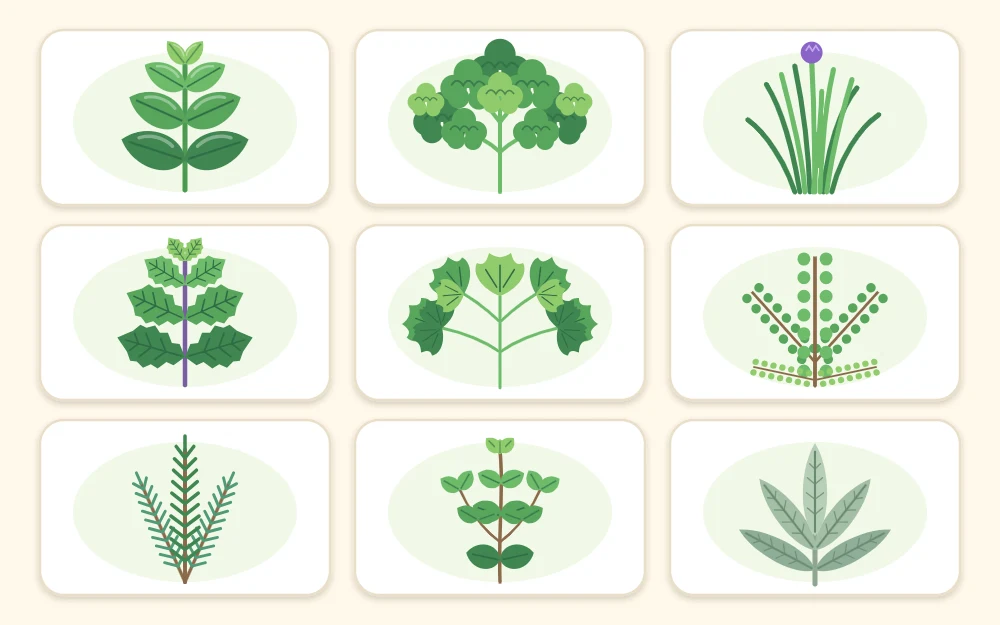
Nine herbs at a glance
Whether an herb behaves as an annual or a perennial depends partly on your winters, so the middle column is a general guide only.
| Herb | Annual or perennial | Moisture preference |
|---|---|---|
| Basil | Tender annual | Evenly moist |
| Parsley | Usually grown as an annual | Evenly moist |
| Chives | Perennial | Evenly moist |
| Mint | Perennial; keep in its own pot | Moist |
| Cilantro | Short-lived annual | Evenly moist |
| Thyme | Perennial | On the dry side |
| Rosemary | Perennial; tender in cold winters | On the dry side |
| Oregano | Perennial | On the dry side |
| Sage | Perennial | On the dry side |
Sun, pots and potting mix
Most herbs want plenty of sun. The Mediterranean group does best in full sun, which plant tags generally describe as about six hours or more of direct sun. Parsley, chives, mint and cilantro manage with less. If you are unsure what your doorstep really gets, the guide to reading the light in your space shows how to measure it.
Herbs do not need big containers to begin with. A pot about 8 to 12 in (20 to 30 cm) across is a common starting size for a single plant, with more room for rosemary and sage as they mature; check the plant tag for the mature size. Whatever you use needs drainage holes, and for plants you will eat, choose containers that have not held chemicals or unknown substances.
Fill pots with a bagged potting mix. “Moist” and “dry” describe what each group prefers, not a timetable: conditions vary from pot to pot, so feel the mix a couple of inches down before watering. Water the moisture-loving herbs as the mix begins to dry, and let the Mediterranean ones dry somewhat further first.
Harvest little and often
Regular picking is good for herbs. Snipping the tips of the stems, just above a pair of leaves, encourages side shoots and keeps the plant compact and bushy. A plant left unpicked tends to grow tall, flower and slow its leaf production.
Take a little from several stems instead of stripping one bare, and avoid removing more than about a third of a plant at once so it has enough leaf to recover. Rinse herbs before you use them.
Tip
Buy the herbs you cook with most. Three pots you use every week are worth more than nine you admire and forget.
Perennial herbs in winter
Roots in a pot are more exposed to cold than roots in the ground, because the container is surrounded by air instead of insulating soil. A thyme or sage that would survive winter in a garden bed may be damaged in a small pot in the same yard.
In cold-winter areas, perennial herbs in containers may need protection: moving pots against a sheltered wall, grouping them together, or bringing tender ones such as rosemary under cover. Your local extension service can advise on what overwinters reliably where you live. Basil and cilantro are simply replaced each year.
Frequently asked questions
Which herbs can be planted together in one pot?
Herbs with similar needs share well. Basil, parsley and chives all like evenly moist potting mix, so they make one group. Thyme, rosemary, oregano and sage prefer mix that drains fast and dries a little, so they make another. Mint spreads aggressively and is best kept in a pot by itself.
Do herbs in pots need full sun?
Most herbs grow best with plenty of direct sun, and the Mediterranean ones such as rosemary, thyme, oregano and sage want the most. Parsley, chives, mint and cilantro tolerate part shade. In very hot climates, some afternoon shade can help soft-leaved herbs such as basil and cilantro.
Will potted herbs come back next year?
It depends on the herb and your winters. Basil and cilantro are annuals and are replanted each year. Chives, mint, thyme, oregano and sage are perennials, but roots in pots are more exposed to cold than roots in the ground, so they may need shelter in cold climates. Rosemary is the most tender.