Growing Basil in Pots: Pinching, Watering and Harvesting
Why potted basil turns tall and thin or collapses, and how to prevent it: warmth, sun, evenly moist mix, and pinching above a pair of leaves so the plant branches and stays bushy.
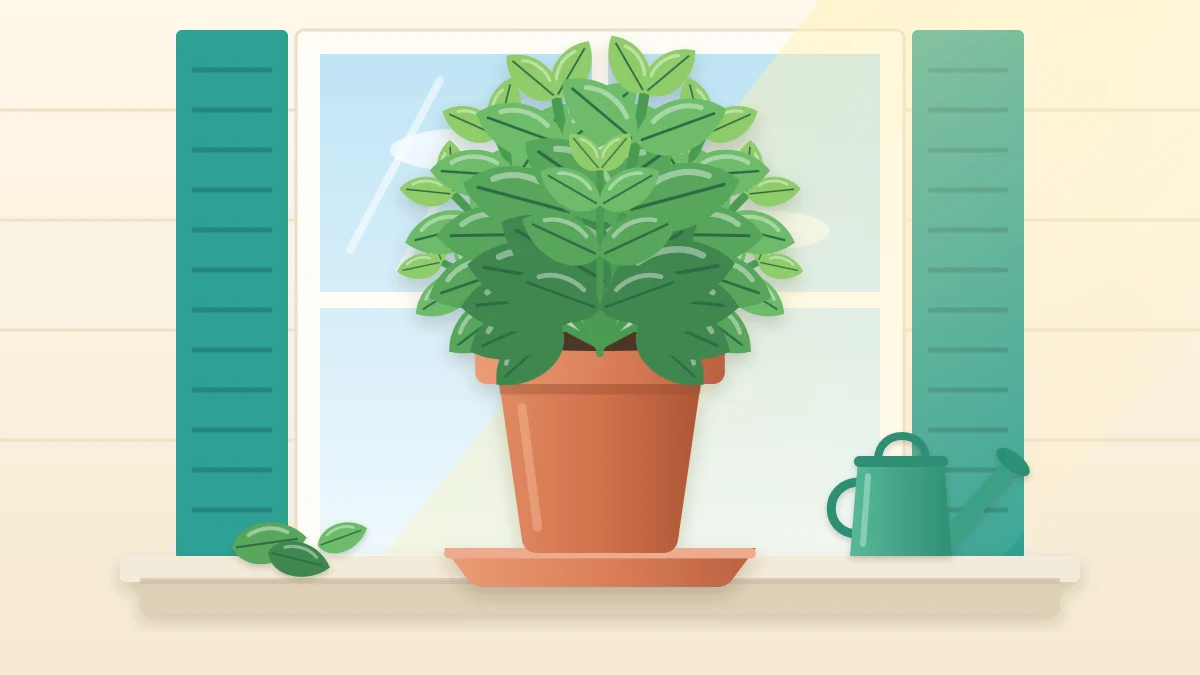
Basil is often the first herb people buy and the first one they lose. It shoots up into a tall, thin stalk, flowers and stops making leaves, or it flops one afternoon and never quite recovers. Both outcomes are common, and both are largely avoidable.
Success with growing basil in pots comes down to a handful of habits: giving it warmth and sun, keeping the potting mix evenly moist, and cutting the plant in a way that makes it branch. The last of these does the most to turn a spindly plant into a bushy one.
What basil needs
Basil is a tender, warm-season annual. It grows fast in warm weather, dislikes cold and is finished by the first frost. Chilly nights can damage it well before frost arrives: as a rough guide, growth slows and leaves may mark when temperatures drop much below about 50°F (10°C).
So put basil outside only once nights are reliably mild in your area,.
Basil belongs with the herbs that like steady moisture. If you are choosing companions for it, the roundup of the best herbs for pots shows which ones want similar care.
Light and placement
Give basil plenty of sun. A spot with about six hours or more of direct sun is a good aim, and plants in less light tend to stretch and produce fewer, smaller leaves. In very hot climates, some shade during the hottest part of the afternoon can help, because the leaves are soft and the pot dries quickly.
Choosing a pot and dividing crowded plants
A container about 8 to 12 in (20 to 30 cm) across per plant is a common suggestion. Treat it as a starting point and check the plant tag, since compact small-leaved types need less room than large-leaved ones. The pot must have drainage holes, and for an herb you will eat it should be one that has not held chemicals or unknown substances.
The potted basil sold in supermarkets deserves a special mention. What looks like one lush plant is usually many seedlings sown thickly in a small pot. They compete for water and light, which is one reason these pots often collapse.
They generally do better divided:
- Water the pot and let it drain.
- Slide the root ball out and gently pull it apart into a few clumps, each with several stems.
- Plant each clump in its own container of fresh, pre-moistened potting mix, at the same depth it was growing.
- Water in, then keep the pots out of harsh sun for a few days while they settle.
Keeping the mix evenly moist
Basil likes potting mix that stays evenly moist yet drains well. Its large, thin leaves lose water quickly, so it wilts fast when the mix dries. It also resents sitting in water, so empty saucers that stay full.
There is no set interval that suits every pot. How quickly the mix dries varies from pot to pot with the size and material of the container, the weather and how big the plant has grown. Feel the mix a couple of inches down, and in hot weather check often. When it is drying at that depth, water slowly at the surface until water runs from the drainage holes. The guide to checking and watering container plants covers the method in full.
Good to know
A wilted basil plant is not always a thirsty one. Roots damaged by waterlogged mix cannot take up water, and the plant droops in the same way. Feel the mix before you reach for the watering can.
Pinching for a bushy plant
Left alone, basil grows as a single upright stem. Pinching means removing the growing tip so the plant sends out side shoots instead.
Wait until the plant has several sets of leaves. Then follow the main stem down from the top to a pair of leaves, and cut or pinch the stem just above that pair. Look closely and you will see two tiny shoots where those leaves join the stem. With the tip gone, both grow, and one stem becomes two.
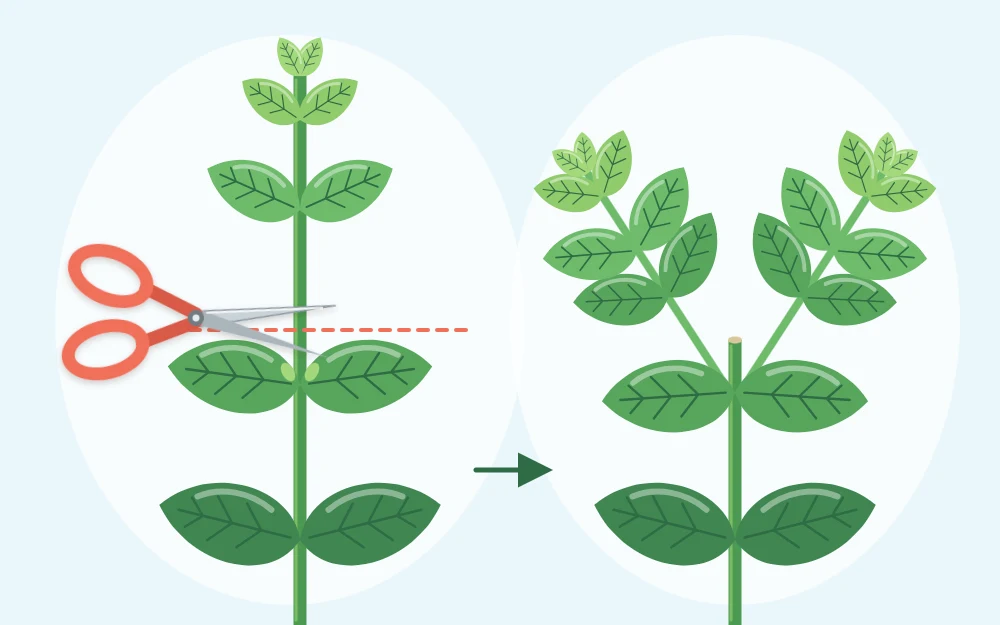
When those new stems have grown a few sets of leaves of their own, pinch them the same way.
Remove flower buds
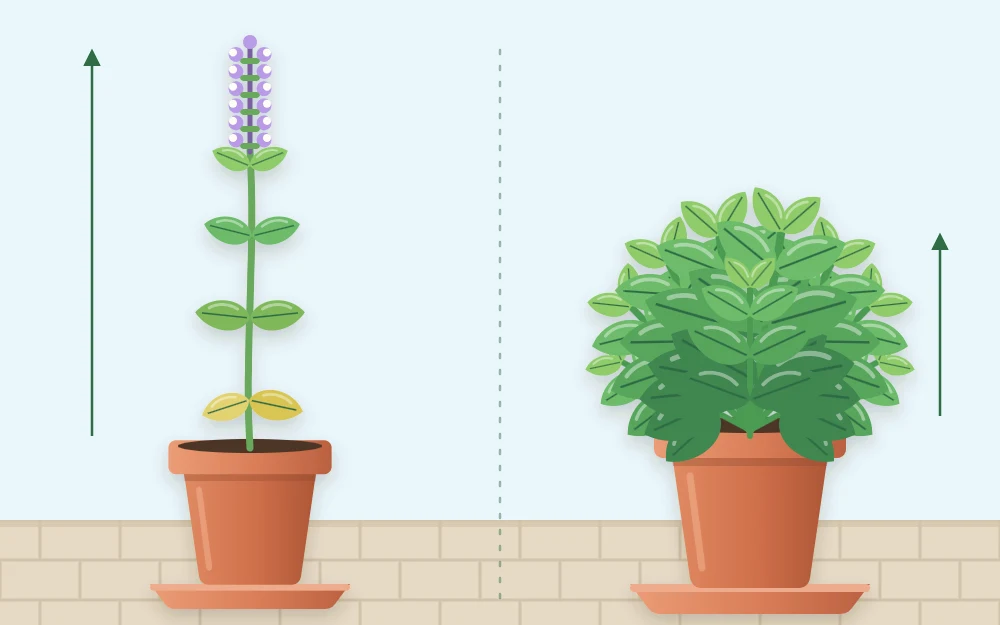
Sooner or later basil tries to flower. A flower spike forms as a tight cluster of small leaves and buds at the tip of a stem. Once a plant puts its energy into flowers and seed, leaf production slows and the leaves often become smaller and stronger in taste.
Pinch out flower buds as soon as you see them, cutting back to a pair of full-sized leaves. It is the same principle gardeners use on ornamental plants, described in the guide to deadheading and pinching container flowers.
Harvest from the top
Harvesting and pinching are the same action. Each time you want basil for the kitchen, take stem tips, cutting just above a leaf pair, and the plant branches again.
The common mistake is to pluck the big lower leaves one at a time and leave the top alone. That strips the plant of its largest leaves while the stem keeps climbing toward a flower spike. Take from the top instead, and never the lower leaves only.
Tip
Leave plenty of foliage each time you pick so the plant can regrow. Cutting a little from every stem tip works better than cutting one stem to the base. Rinse the leaves before you use them.
Common troubles and what to check
None of these symptoms points to a single cause, so use them as prompts for checking.
- Yellow lower leaves. Often associated with mix that stays too wet, crowded stems shading each other, or a plant that has used up the nutrients in its pot. Check the drainage holes and the moisture at depth, and consider whether it has been fed; follow the fertilizer label if you do feed.
- Black or dark patches on leaves. These commonly appear after cold nights or a spell near a cold window. Disease is another possibility, particularly in damp, crowded conditions. Remove affected leaves and think about recent weather.
- Tall, leggy growth. Frequently linked with low light, and with a plant that has never been pinched. Move the pot to a sunnier spot and cut the stems back above a leaf pair.
Frequently asked questions
Where exactly do I cut basil to make it bushy?
Cut or pinch the stem just above a pair of leaves. Two small shoots sit where those leaves meet the stem, and both grow once the tip is removed. Wait until the plant has several sets of leaves before the first cut, then repeat on the new stems as they lengthen.
Why does supermarket basil die so quickly?
Those pots usually hold many seedlings packed into very little potting mix, so they compete for water and light and dry out fast. Dividing the root ball into a few clumps and giving each its own pot of fresh mix often helps. Keep them warm and out of harsh sun while they settle.
Should I let basil flower?
If you are growing it for leaves, pinch the flower buds off as they appear. Flowering tends to slow leaf production and can make the leaves smaller and stronger in taste. Cut back to a pair of full-sized leaves below the bud, and expect to repeat this in hot weather.