How to Plant a Mixed Herb Container
Which herbs can share a planter, and how to plant them. Two groupings that get along, a sensible container size to start from, and step-by-step planting and early care.
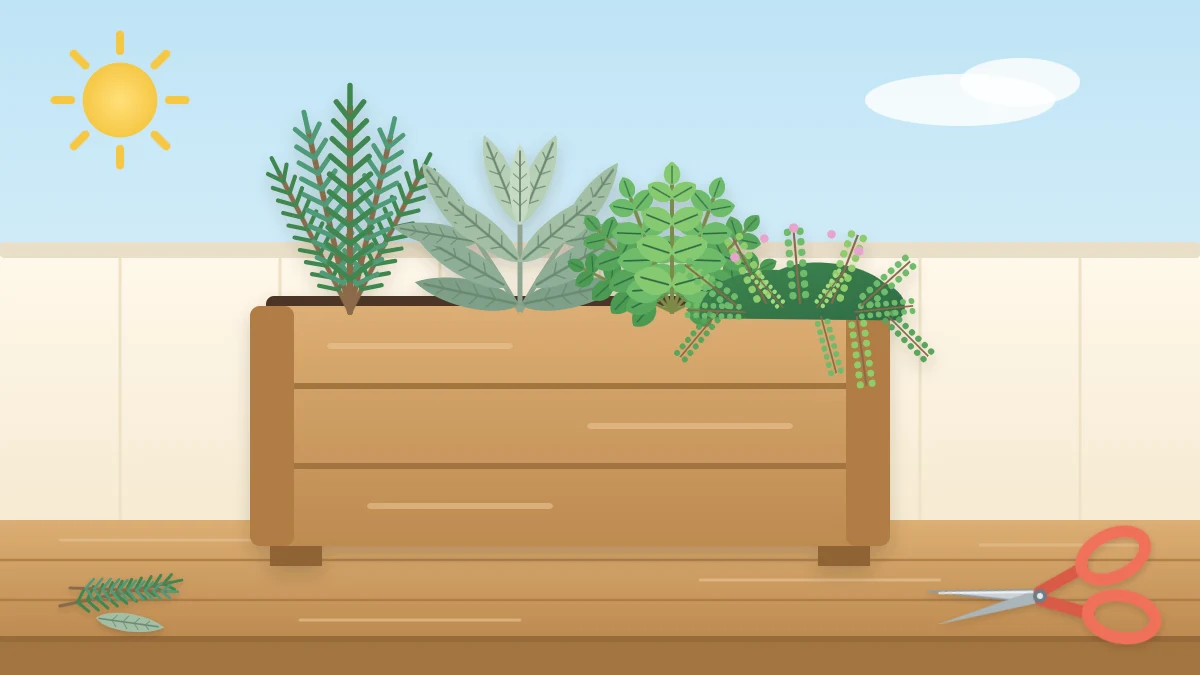
At a glance
What you need
- Three or four young herb plants
- Wide planter with drainage holes
- Potting mix
- Hand trowel
- Tub for dampening the mix
- Watering can
One planter holding several herbs is tidy, attractive and convenient: everything you want for cooking is in a single spot. It is also the herb project most likely to go wrong, because plants that look alike on the garden center bench can want quite different conditions.
A mixed herb container works when its plants agree on moisture and light. Choose companions on that basis first, and the planting itself is a simple job for an afternoon.
The rule that decides who shares a pot
Every plant in a container gets the same potting mix, the same watering and the same sun. So the plants need to want roughly the same things. With herbs, the big divide is moisture: some like the mix kept evenly moist, while others prefer it to dry a little between waterings.
Combine one of each and you are forced to choose which plant to disappoint. Group like with like and one routine suits the whole pot. If you are not sure where a particular herb falls, the overview of the best herbs to grow in containers lists each one with its preference.
Two groupings that work
A drier Mediterranean pot
Rosemary, thyme, oregano and sage all like full sun and a mix that drains fast. Rosemary and sage grow upright; thyme and oregano stay lower and spread.
A moister pot
Basil, parsley and chives all appreciate steady moisture. Basil is the tallest and the most tender, so this pot is planted once nights are mild. Parsley mounds, and chives add a vertical, grassy clump.
Good to know
Give mint a pot of its own. It spreads by creeping stems and will crowd out its neighbors in a shared planter, however well it matches them on moisture.
Choose the container and the mix
Pick a planter wide enough that each plant has room to grow. A trough or a bowl about 12 to 16 in (30 to 40 cm) across is a common starting size for three or four small plants; go larger if you can, and check each plant tag for mature size and spacing. Drainage holes are essential for every herb, and above all for the Mediterranean group.
Material matters too. Unglazed terracotta dries faster than plastic or glazed ceramic, which suits dry-loving herbs and means more checking for the moisture-loving ones. The guide to choosing a container by material and size compares the options. Since you will be eating from this planter, use one that has not held chemicals or unknown substances.
A standard bagged potting mix is fine for both groupings. Some gardeners blend extra perlite or coarse grit into the mix for the Mediterranean group to make it drain faster, which is optional. Do not use soil dug from the yard; the article on what potting mix is and why it matters explains why.
Plan the arrangement
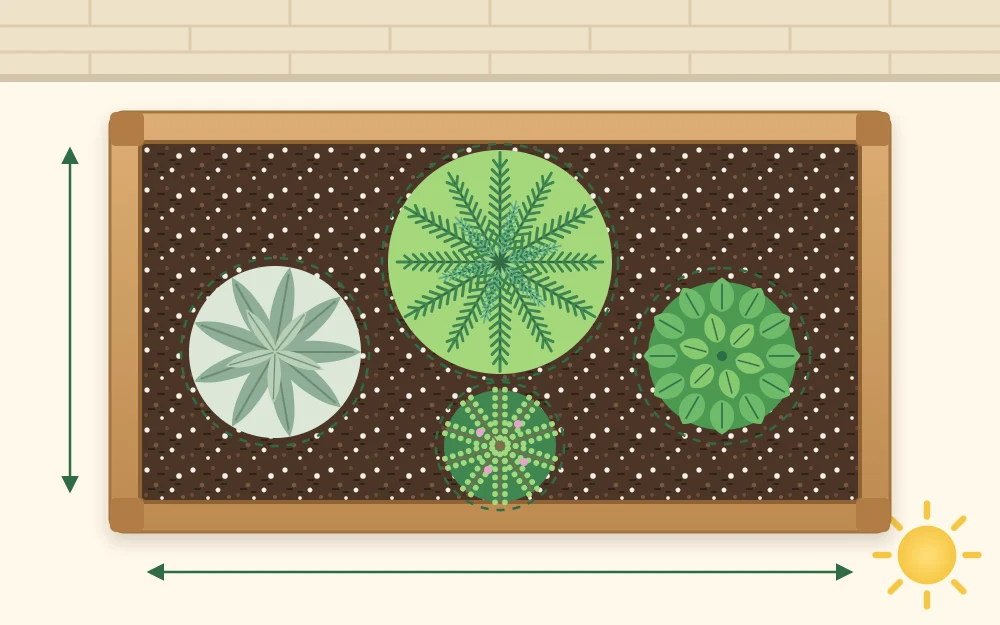
Before you plant anything, decide where each herb will sit. The usual approach is to put the tallest plant at the back if the planter stands against a wall, or in the center if it will be seen from all sides. Lower, spreading herbs go toward the front and edges, where they can trail over the rim.
Leave space between the plants. They are small now, but most herbs fill out quickly.
Planting step by step
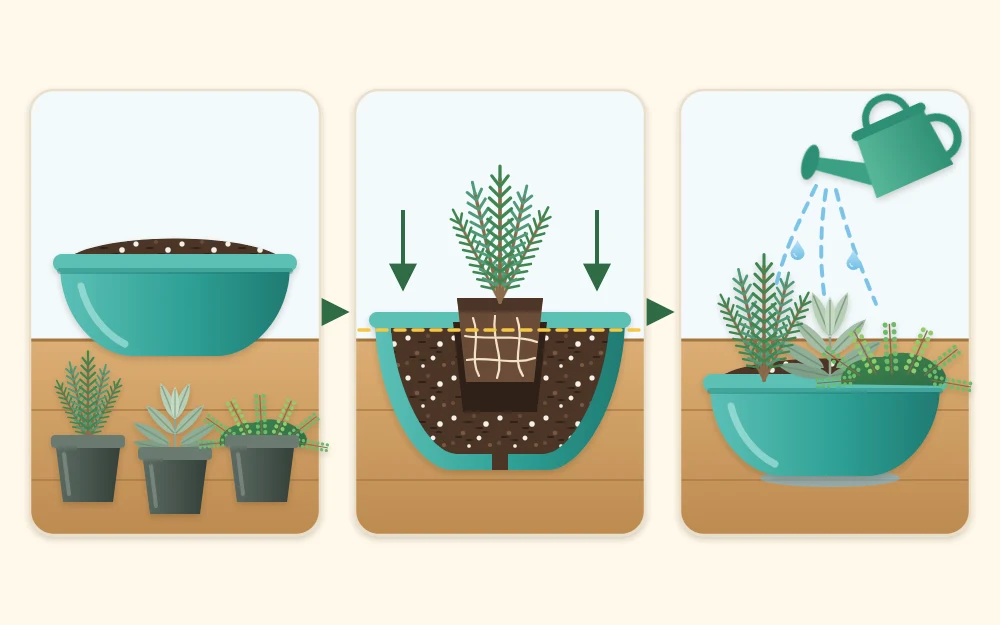
- Dampen the potting mix. Tip it into a tub and add water a little at a time, stirring until it is moist but not soggy. Damp mix is less dusty and settles evenly.
- Fill the container. Add mix until it is a few inches below the rim. You can cover large drainage holes with a piece of mesh to keep the mix in, but do not add a layer of gravel.
- Test the layout. Set the herbs on the surface, still in their nursery pots, and shuffle them until the arrangement looks right.
- Remove each plant and check the roots. Tip the plant out, supporting the stem between your fingers. If roots are circling tightly around the root ball, tease them loose gently so they grow outward.
- Plant at the same depth. Set each root ball so its top is level with where the finished surface will be, no deeper than it grew in its nursery pot.
- Fill and firm. Add mix around the root balls and press lightly with your fingers to close air gaps. Leave about an inch (2.5 cm) between the surface and the rim so water has somewhere to pool.
- Water in. Water slowly at the surface until it runs from the drainage holes. Top up any spots where the mix sinks.
Where to put it and the first weeks
Place the finished planter in sun. The Mediterranean pot wants as much direct sun as you can give it. The moister pot also likes sun, though in very hot climates basil and parsley often appreciate some afternoon shade.
For the first few weeks, check the moisture more often than you expect to later. Newly planted herbs have roots only in their original root ball, which can dry out while the surrounding mix is still damp. Push a finger into the mix near each plant, and water when it is drying at that depth. Conditions vary from pot to pot, so let what you feel guide you.
Harvesting from a mixed pot
Start picking lightly once the plants are growing strongly. Snip the tip of a stem just above a pair of leaves. New shoots grow from that point, so every harvest makes the plant bushier. Chives are the exception: cut whole leaves near the base and the clump regrows.
Take a little from each plant instead of cutting one back hard, and rinse what you pick before using it.
When one herb outgrows the pot
A mixed planter is rarely permanent. Oregano may spread over its neighbors, rosemary and sage become woody shrubs, and basil is finished when cold weather arrives. That is normal, not a failure.
Trim a spreading herb back to give the others light. If one plant is clearly dominating, lift it out with as much root as you can, move it to its own pot, and fill the gap with fresh potting mix and a new plant. Annuals such as basil can simply be replaced each year while the longer-lived herbs stay in place.
Frequently asked questions
How many herbs can I put in one planter?
For a trough or bowl about 12 to 16 inches (30 to 40 cm) across, three or four small plants is a common starting point. Check the plant tags for mature size and spacing, and leave gaps at planting time. Crowded herbs compete for water and light, and the vigorous ones soon cover the others.
Can basil and rosemary grow in the same pot?
They are a poor match. Basil likes evenly moist potting mix, while rosemary prefers mix that drains fast and dries a little between waterings. In a shared pot, one of them usually struggles. Grow basil with parsley and chives, and rosemary with thyme, oregano and sage.
Should I add gravel or grit to a herb planter?
A layer of gravel in the bottom does not improve drainage, so leave it out and rely on drainage holes and an open potting mix. Some gardeners do blend extra perlite or coarse grit through the mix for Mediterranean herbs to help it drain faster. That is optional, not required.

