Fertilizing Container Plants: A Plain Guide to Feeding Pots
Why potted plants run out of nutrients, what the numbers on a fertilizer label mean, how slow-release and water-soluble feeding differ, and how to spot the signs of too little or too much.
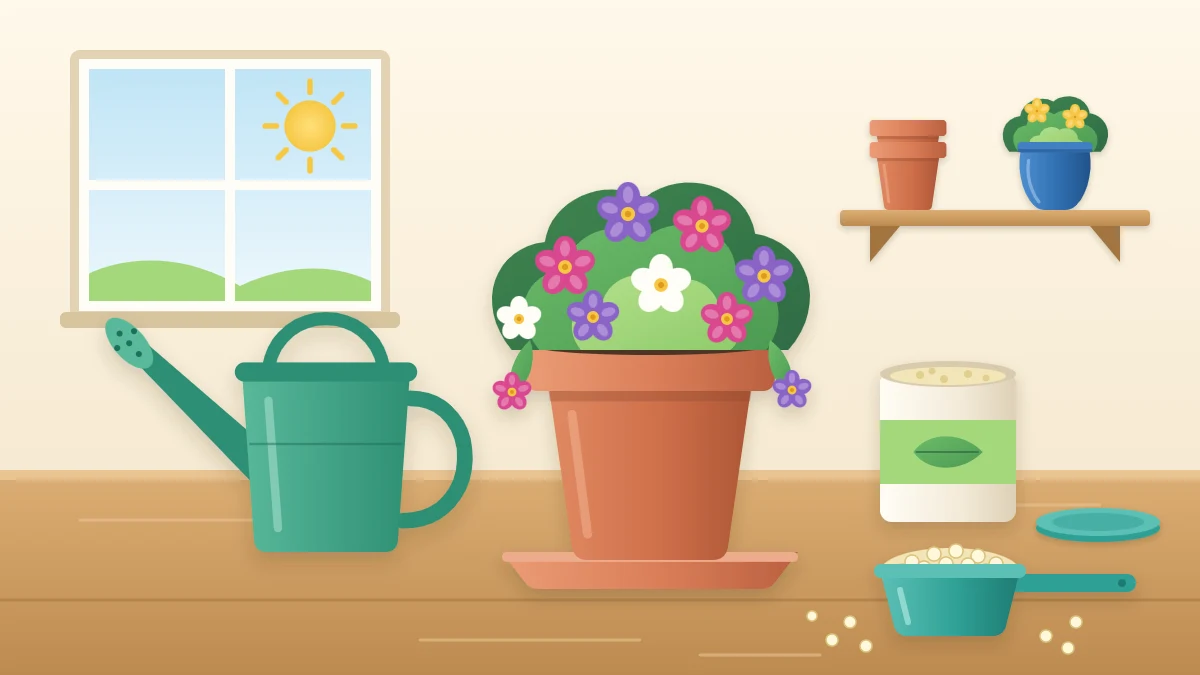
A pot that looked wonderful for its first few weeks and then slowly faded is one of the most common stories in container growing. The plants are still alive, but the leaves are paler, new growth has slowed and the flowers are fewer. Often the potting mix has simply run low on nutrients.
Fertilizing container plants is not complicated, and it does not call for a shelf of products. It comes down to understanding why pots run out, picking one of two simple approaches, and letting the product label decide the amounts.
Why pots need feeding more than garden beds
A plant in the ground can send roots outward and downward in search of nutrients, and ground soil holds and releases them over time. A container plant has only the mix inside its pot.
Most bagged mixes are soilless. They are built from ingredients such as peat moss, coconut coir, bark and perlite, chosen because they hold air and water well, and they carry very few nutrients of their own. The guide to what is in a bag of potting mix explains those ingredients.
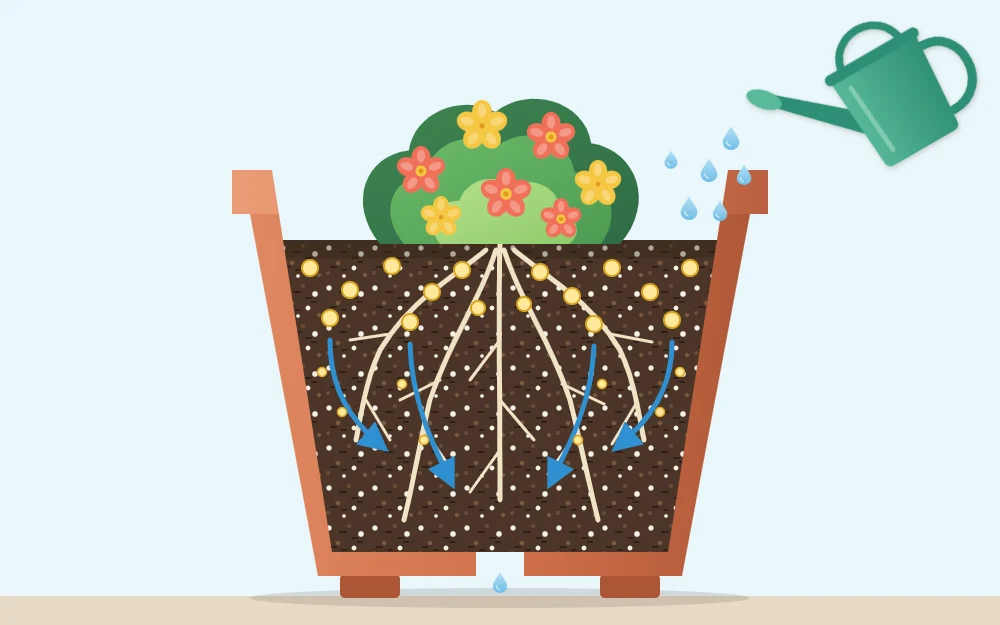
Watering adds to the shortfall. Each time water runs out of the drainage holes, it carries some dissolved nutrients with it. That thorough watering is still the right way to water a pot, so the answer is to replace what is lost.
What the three numbers on a label mean
Fertilizer packages show three numbers in a row. They give the percentages, by weight, of the three nutrients plants use in the largest amounts, in the order nitrogen, phosphorus (listed as phosphate) and potassium (listed as potash). Broadly, nitrogen supports leafy growth, phosphorus supports roots and flowering, and potassium supports overall vigor. Products described as balanced, all-purpose or made for flowering containers are the usual starting point, and many also include small amounts of other nutrients that soilless mixes lack.
The two common approaches
Many gardeners use one of these, and some use both. Neither is the correct one; they suit different habits.
Slow-release fertilizer
Slow-release fertilizer, also sold as controlled-release, comes as small granules or coated beads. You blend them into the mix at planting or scatter them on the surface, and they give up their nutrients gradually as the pot is watered. One application lasts for a stretch of weeks or months stated on the label. The appeal is convenience: you apply it and then get on with watering.
Water-soluble fertilizer
Water-soluble fertilizer is a powder or liquid that you dilute in a watering can and apply as you water. Nutrients are available to the roots right away, but they also wash through quickly, so it is given repeatedly through the growing season at the interval the label states. It offers more control, and it asks for more attention.
| Approach | How it is applied | What to know |
|---|---|---|
| Slow-release fertilizer | Blended into the mix or scattered on top | Feeds gradually; may run out before the season ends in pots that are watered heavily |
| Water-soluble fertilizer | Diluted in water and poured onto the mix | Acts fast and washes out fast; repeated as the label directs |
Check what your mix already contains
Some potting mixes include a starter charge of fertilizer, and a few contain a slow-release product meant to last for months. Read the bag before adding anything. If the mix already feeds, extra fertilizer at planting can give young roots more than they can handle. The bag usually says roughly how long its built-in feed lasts.
How much and how often: the label decides
This is the one firm rule in feeding pots: follow the product label, and do not exceed it. Products differ widely in strength, so an amount that suits one can be far too much of another. The label gives the rate, the interval, and often a separate rate for containers.
More is not better. Extra fertilizer does not make a plant grow faster in any useful way, and the salts it leaves in a small volume of mix can damage roots. If you are unsure, staying a little under the label rate is the gentler mistake.
Good to know
Read the whole label before you open the package, including the storage and handling directions, and use the measure supplied instead of guessing by eye.
When to feed, and when to wait
Feed plants that are actively growing. A plant putting out new leaves and buds in warm weather is using nutrients. A plant that has stalled in a cold snap, is resting for winter, or is struggling for an unrelated reason is not, and fertilizer will not push it along.
Apply liquid feed to mix that is already moist. Pouring fertilizer solution into a bone-dry pot exposes roots to a strong dose all at once, and much of it runs down the sides and out. If the pot is dry, water it first, then feed; the method is covered in the guide on how to water pots thoroughly.
Fast-growing annuals, hanging baskets and fruiting vegetables tend to be the hungriest. Slow growers and many herbs need noticeably less.
Signs of too little and too much
Symptoms are clues to follow up, never proof by themselves. Each of the signs below can come from something else entirely.
- Often associated with hunger: leaves turning pale or yellowish, especially older ones, slow growth, and fewer or smaller flowers. Soggy mix, too little light and a root-bound plant can produce a similar picture.
- Often associated with excess: lush, soft, floppy growth with few flowers, a white crust on the mix or the pot rim, and brown leaf edges. Dry spells, hot wind and mineral-rich tap water can do some of the same.
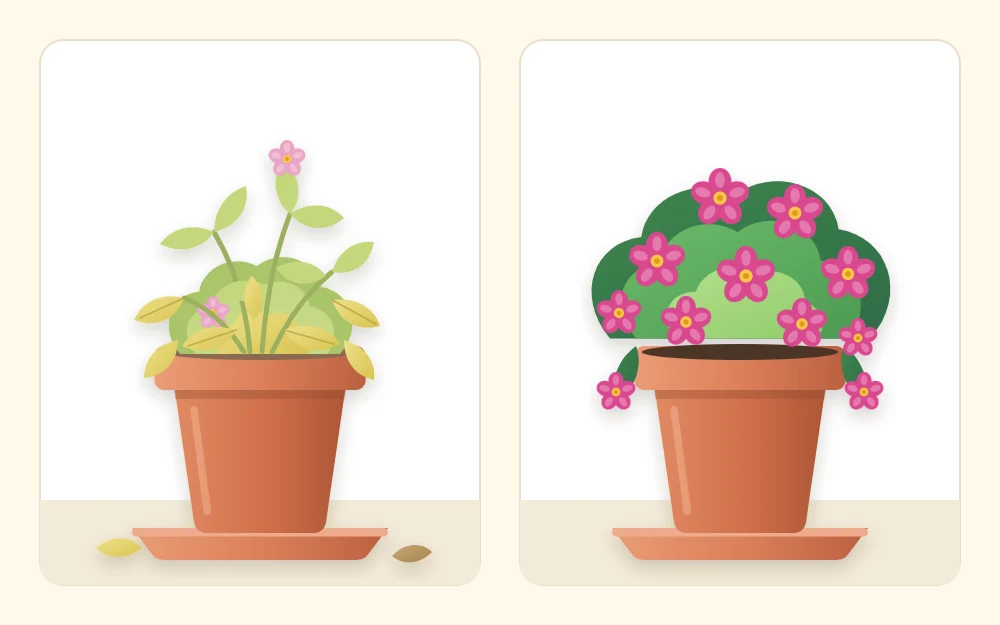
Before reaching for the fertilizer, think back to when the pot was last fed and check the moisture and the roots. The symptom-by-symptom troubleshooting guide walks through those checks.
Flushing a pot with plain water
If you suspect a buildup of fertilizer salts, or you know you overdid it, flush the pot. Water slowly with plain water until plenty has run from the drainage holes, let it drain, and repeat once or twice. Empty the saucer afterward, then hold off feeding for a while and watch the new growth.
For more background, see University of Illinois Extension’s page on fertilizing containers.
Frequently asked questions
Do I need to fertilize if my potting mix already has fertilizer in it?
Not at first. A mix with a starter charge or a built-in slow-release product feeds plants for a limited period, and the bag usually says roughly how long. Once that period has passed and plants are still actively growing, begin your own feeding according to the label of the fertilizer you choose.
Can you give container plants too much fertilizer?
Yes. In a small volume of mix, excess fertilizer leaves salts that can harm roots. Soft, floppy growth, a white crust on the mix and brown leaf edges are often associated with it, though each has other possible causes. Stay within the label rate, and flush the pot with plain water if you suspect a buildup.
Should I use slow-release or water-soluble fertilizer in pots?
Either can work, and many gardeners combine them. Slow-release granules are applied once and feed gradually, which suits anyone who wants less to remember. Water-soluble fertilizer acts quickly and gives more control but must be repeated. Whichever you pick, the amounts and timing come from that product's label.


