How to Repot a Container Plant Step by Step
How to tell when a potted plant has outgrown its container, how to pick the next pot, and the steps for moving it into fresh potting mix, plus what to do when the plant has to stay in the same large pot.
At a glance
What you need
- Container a size or two larger, with drainage holes
- Fresh potting mix
- Hand trowel
- Clean snips or a knife
- Watering can
- Gloves
A plant that drinks its pot dry within hours, or that has stopped growing for no obvious reason, has often filled its container with roots. Knowing how to repot a container plant gives it fresh potting mix and room to grow, and the job takes less time than most beginners expect.
What follows covers the signs that a move is due, how to choose the next pot, the steps themselves, and what to do for a plant that is staying in the large container it already has.
Signs a plant is ready for a bigger pot
None of these proves the case alone, but several together make a strong argument for a look at the roots:
- Roots circling on the surface of the mix or growing out of the drainage holes.
- Water running straight through and out of the bottom, with little soaking in.
- The pot drying out much faster than it used to in similar weather.
- Growth that has stalled during the growing season, with smaller new leaves.
- A top-heavy plant that tips over easily.
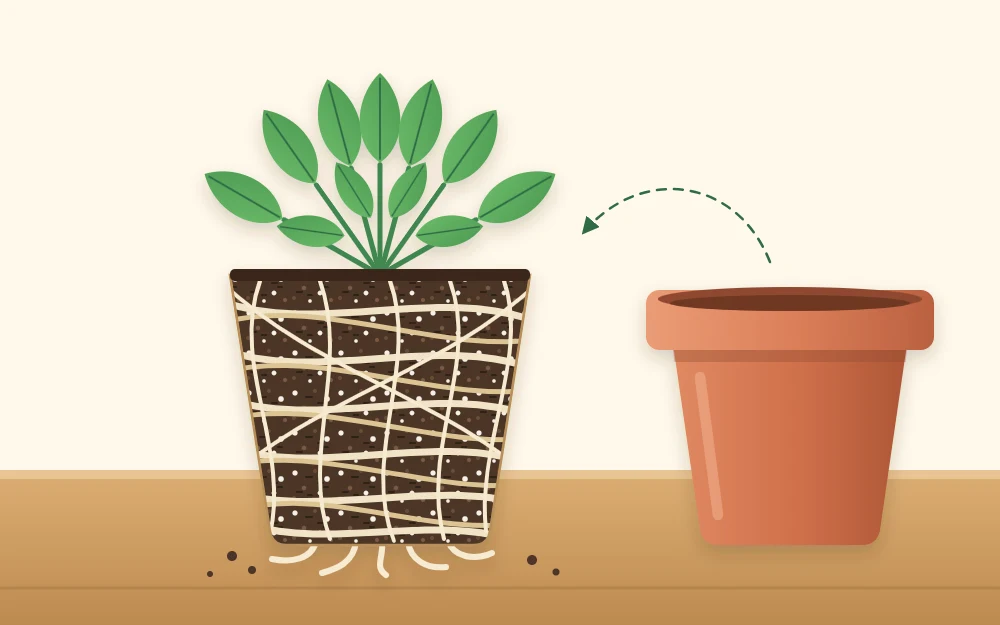
The quickest way to confirm is to slide the plant out and look. A root ball that holds the exact shape of the pot, wrapped in a dense mat of roots with little mix visible, is root-bound. If you can still see plenty of mix and only scattered roots, the plant has room, and the cause lies elsewhere.
The best time to repot
Repot while the plant is actively growing, so new roots move quickly into the fresh mix. For most outdoor container plants that means spring through early summer, though a plant that is clearly suffering can be moved at other times in the growing season.
Pick a mild, overcast day if you can, or work in the morning or evening instead of the heat of the day. Roots dry fast when they are exposed to sun and wind, so have everything ready before you tip the plant out.
Choosing the next pot
Go up a size or two, not straight to the biggest container you own. A new pot about a couple of inches (5 cm) wider than the old one is a common starting point for small and medium plants, with a slightly larger step for big, fast growers.
The reason for the modest jump is moisture. A small root ball surrounded by a large volume of mix cannot use the water held there, so the mix can stay wet for a long time. The guide on matching pot size to the plant explains this in more depth.
Whatever you choose, it needs drainage holes. If you are reusing an old pot, brush out the old mix and wash it first.
What you need
- The new container, with drainage holes
- Fresh potting mix
- A hand trowel
- Clean snips or a knife for the roots
- A watering can
- Gloves, and a piece of mesh to cover large drainage holes if you like
Use bagged potting mix, never soil from the yard. If the mix is dry in the bag, dampen it before handling: it keeps dust down and helps the mix take up water later. The article on choosing a potting mix for pots covers what to look for on the bag.
How to repot, step by step
- Water the plant beforehand. A moist root ball slides out more easily and holds together better. An hour or more ahead is helpful.
- Prepare the new pot. Add enough pre-moistened mix to the bottom so the top of the root ball will sit a little below the rim.
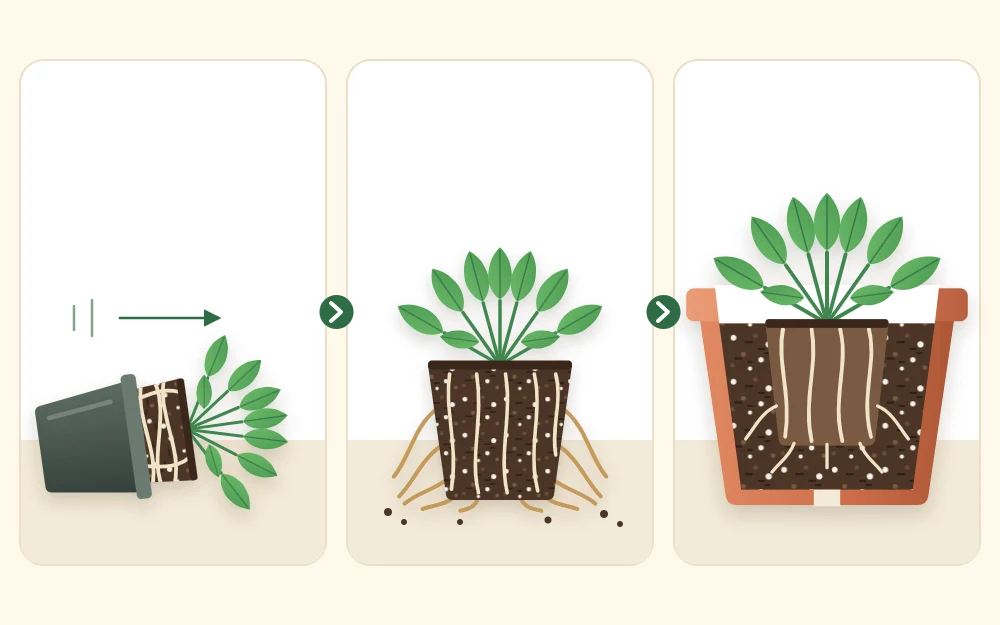
- Ease the plant out. Support the stem at its base with one hand, spreading your fingers over the mix, and tip the pot onto its side or upside down. Tap the rim or squeeze a flexible pot. Avoid pulling on the stem. With a stubborn pot, run a knife around the inside edge.
- Loosen the roots. Gently tease apart roots that circle the outside. If they are too dense to separate, make a few shallow vertical cuts down the sides of the root ball. This encourages roots to grow outward instead of continuing in circles.
- Set the plant at the same depth. Center it in the new pot so the top of the root ball sits where it did before, neither buried deeper nor raised.
- Fill around it. Add mix into the gap a little at a time and firm it lightly with your fingers. Do not pack it down hard, because roots need air.
- Leave watering room. Stop the mix about an inch (2.5 cm) or so below the rim so water can pool and soak in.
- Water thoroughly. Water slowly until it runs from the drainage holes. Top up with more mix if it settles.
Good to know
Large pots are heavy once filled and watered. Put the new container where it will live before you fill it, and ask for help with anything you cannot lift comfortably.
Aftercare for the first days
A repotted plant has disturbed roots and may droop a little at first. Give it a few days out of harsh afternoon sun and strong wind, then return it to its usual spot.
Moisture needs change after repotting, so check instead of assuming. There is now more mix around the roots, which can stay damp longer, yet the original root ball may still dry faster than the fresh mix beside it. Feel the mix near the stem as well as near the edge. Conditions vary from pot to pot, and the guide on how to check a pot and water it properly explains the method.
Hold off on fertilizer until you see new growth, and read the mix bag first, since some mixes already contain a starter feed.
When the plant is staying put: top-dressing
Some plants are already in the largest container you can manage, such as a shrub or small tree in a big tub. Repotting those every year or two is not practical, and top-dressing is the usual alternative.
Scrape away the top few inches of old mix with a hand trowel, working carefully around surface roots, and replace it with fresh mix to the same level. Water it in. This renews the layer where much of the feeding happens, although it does not solve a severely root-bound plant, which will eventually need more room or root trimming.
Frequently asked questions
How can I tell if a potted plant is root-bound?
Slide it out of the pot and look. A root-bound plant has a root ball that keeps the shape of the pot, covered in tightly wound roots with little mix showing. Roots emerging from the drainage holes and a pot that dries out much faster than before are common hints, but the roots themselves give the clearest answer.
Should I break up the roots when repotting?
Loosen them, gently. Roots that circle the root ball tend to keep circling, so tease the outer ones apart with your fingers. If the mass is too tight, a few shallow cuts down the sides help new roots head outward into the fresh mix. There is no need to shake off all of the old mix.
Can I put a small plant straight into a very large pot?
It is usually better to move up gradually. A small root ball cannot use the water held in a large volume of mix, so the mix may stay wet for a long time, which roots dislike. A pot a size or two larger gives room to grow while still letting the mix dry at a reasonable pace.


