Container Plant Problems: A Symptom-by-Symptom Guide
A starting point for troubleshooting potted plants: a table of common symptoms with their possible causes, a six-step checking routine, and first steps against aphids, spider mites and slugs.
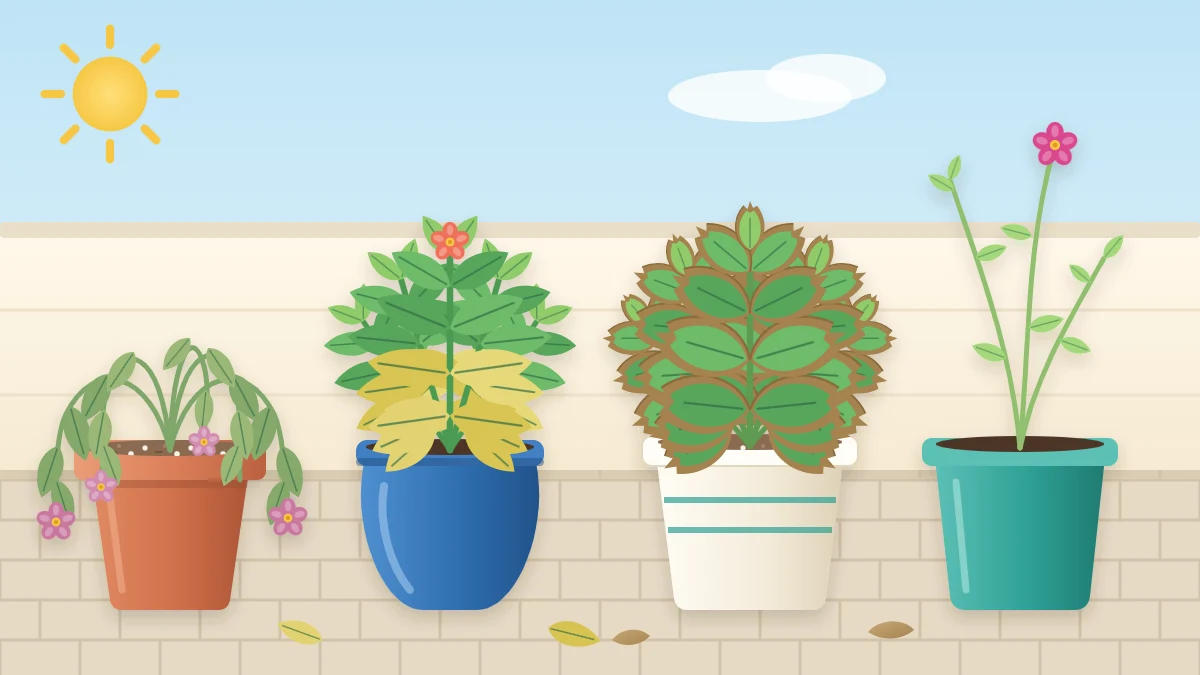
A drooping plant, a scatter of yellow leaves or a few ragged holes can make a healthy-looking pot seem suddenly in trouble. Most container plant problems trace back to a short list of causes: water, drainage, roots, light, weather, feeding and pests.
The difficulty is that the same symptom can come from several of them. Treat this page as a starting point for working out which one applies to your pot. It gives you the likely suspects and the checks that separate them.
Symptoms, possible causes and first checks
Find the symptom you see, then make the check in the last column before you change anything.
| What you see | Common possible causes | What to check first |
|---|---|---|
| Wilting | Dry mix; waterlogged mix and damaged roots; heat; a root-bound plant | Moisture a couple of inches down, then the drainage holes |
| Yellow lower leaves | Mix kept too wet; low nutrients; too little light; natural aging of old leaves | Moisture at depth and when the pot was last fed |
| Brown, crispy leaf edges | The pot drying out; hot wind or strong sun; fertilizer salt buildup | Recent weather, and any white crust on the mix |
| Leggy growth, few flowers | Too little light; crowding; faded flowers left on; heavy feeding | Hours of direct sun the spot really gets |
| Flowers or buds dropping | Heat or a cold snap; swings between dry and wet; a recent move | Recent weather and how evenly moist the mix has been |
| Holes in leaves | Slugs or snails; caterpillars; beetles; hail or wind damage | Leaf undersides, and the pot after dark |
| Sticky leaves or clusters of small insects | Aphids or other sap-feeding insects | Shoot tips, buds and leaf undersides |
| White powdery coating | Often powdery mildew, a fungal disease; sometimes dried spray or dust | Whether it wipes off, and how crowded the plants are |
| White crust on the mix or pot | Minerals from tap water; fertilizer salts | How recently and how heavily the pot was fed |
A routine for checking any struggling pot
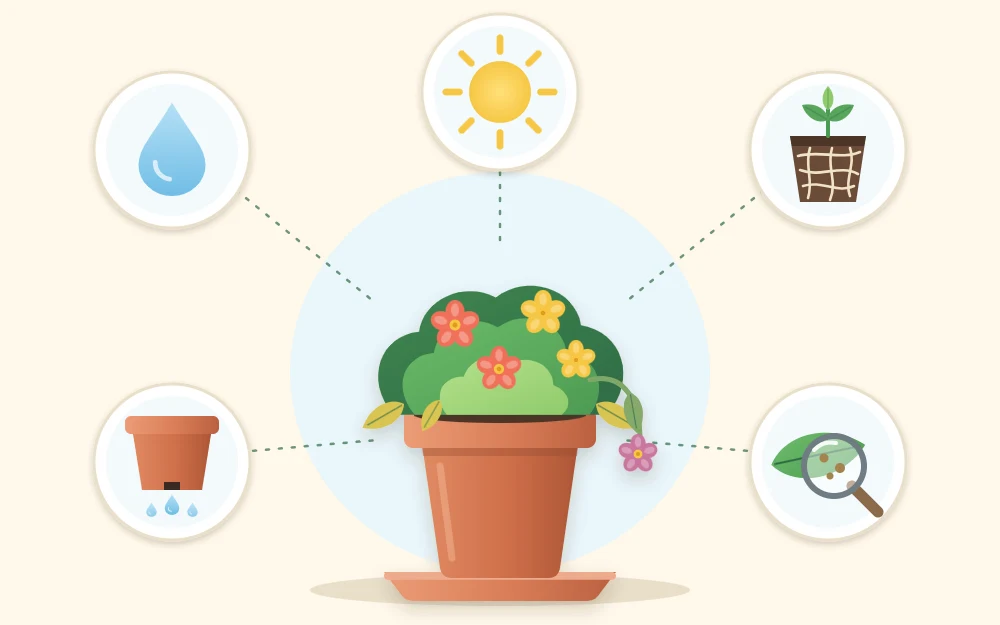
Whatever the symptom, the same six checks sort out most cases. They take a few minutes.
- Feel the mix at depth. Push a finger a couple of inches (about 5 cm) down. Note whether it is dry, damp or soggy.
- Check the drainage holes. Make sure they exist, are not blocked, and are not sitting in a full saucer.
- Look at the roots. Tip the plant out. Healthy roots are usually firm and pale. Dark, soft, sour-smelling roots are commonly associated with waterlogging, and a solid mat of circling roots means the plant is root-bound.
- Think about light. Compare the direct sun the spot gets with what the plant tag asks for.
- Recall the weather and the feeding. A heat wave, a cold night, strong wind or a long gap since the last feed each leave marks that show up days later.
- Look under the leaves. Many pests feed on the undersides and at the shoot tips, where they are easy to miss.
Wilting: check before you water
Wilting is the symptom most likely to send you for the watering can, and it is the one that most needs a check first. A plant wilts when its leaves lose water faster than the roots supply it. Dry mix is one reason. Another is mix that has stayed saturated: roots short of air stop working and may rot, so the plant droops while standing in wet mix. Adding more water then makes matters worse.
If the mix is dry at depth, water thoroughly, following the method in the guide on how to water a pot properly. If it is wet, hold off, empty the saucer and look at the holes; the article on how drainage works in a pot explains what helps. A plant that droops on a hot afternoon but recovers by evening with moist mix is often reacting to heat alone.
Good to know
Conditions vary from pot to pot. Two containers side by side can have different problems, so check each one separately instead of treating the whole group the same way.
Yellow leaves, brown edges and weak growth
A few yellow leaves at the base of a full, growing plant are often just old leaves being shed. Widespread yellowing deserves more attention. Mix that stays too wet is one possibility, and low nutrients are another, especially in a pot that has been growing hard for months without feeding. The moisture check and your memory of the last feed usually point one way or the other.
Brown, crispy edges are commonly linked with a pot that dried out, with hot wind, or with a buildup of fertilizer salts. A white crust on the surface of the mix supports the last of those. The guide to feeding container plants explains how to flush a pot with plain water.
Tall, stretched stems with few flowers often suggest too little light, although crowding and heavy feeding can add to it.
Pests in brief
Three pests account for much of the damage on patio pots.
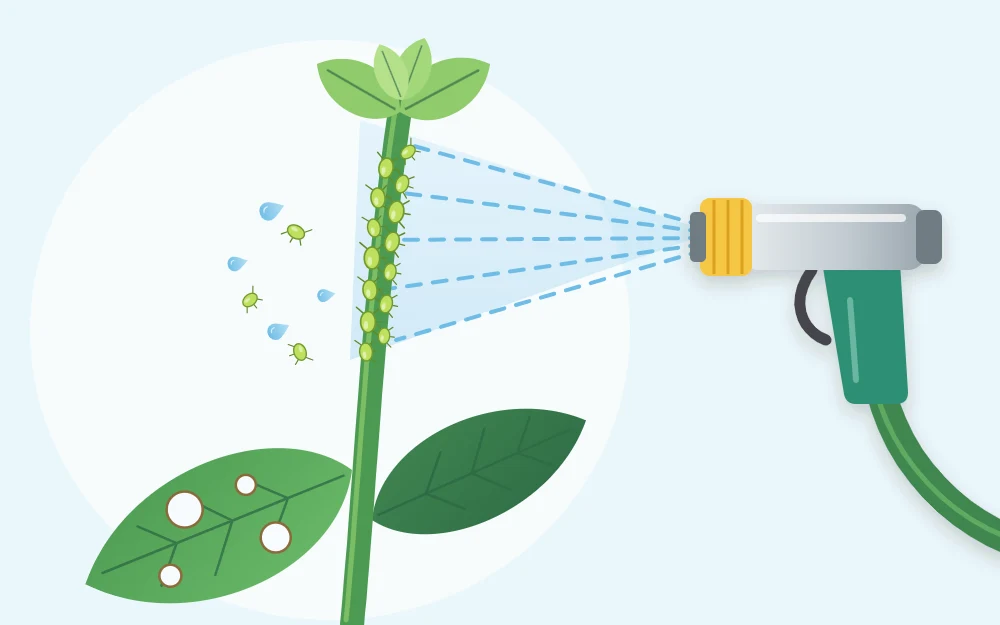
- Aphids: small, soft insects clustered on shoot tips and buds, often leaving a sticky film on the leaves below.
- Spider mites: tiny specks on leaf undersides that cause pale stippling and sometimes fine webbing, more common in hot, dry conditions.
- Slugs and snails: ragged holes and shiny trails, with feeding mostly at night and in damp weather.
Start with physical steps. A firm spray of water from a hose knocks aphids and mites off; repeat it over several days and aim under the leaves. Pick slugs and snails off by hand in the evening. Remove badly affected leaves, and move a heavily infested pot away from the others.
If you decide to use a pesticide, check that the label lists both your pest and your plant. For herbs and vegetables, confirm that it is labeled for edibles. Then follow the label exactly. For identification help, see the University of California IPM notes on aphids.
One symptom rarely has one cause
Problems in pots tend to stack. A plant in a container that is too small dries out faster, gets stressed in heat, and then attracts pests. Fixing the underlying condition usually does more than chasing each symptom. Many of those underlying conditions are covered in the list of common beginner mistakes with containers.
Change one thing at a time and give the plant a week or two to respond. Leaves that are already damaged will not recover, so judge progress by the new growth.
Frequently asked questions
Why is my potted plant wilting even though the mix is wet?
One possibility is that the mix has stayed saturated and the roots, short of air, have stopped taking up water. Heat is another, since leaves can droop on a hot afternoon and recover by evening. Check that the drainage holes are clear, empty any saucer, and tip the plant out to look at the roots.
Should I remove yellow leaves from a container plant?
Yes, you can pinch or snip off leaves that have turned fully yellow. They will not turn green again, and removing them keeps the pot tidy and makes new changes easier to notice. Removing them does not address the cause, though, so still check moisture, light and when the plant was last fed.
How do I get rid of aphids on plants in pots?
Begin with water. A firm spray from a hose, aimed at shoot tips and the undersides of leaves and repeated over several days, knocks many of them off. You can also wipe them away by hand or cut off a badly infested tip. If you turn to a pesticide, the label must list aphids and your plant.


