Growing Lettuce in Containers: Salad Greens From a Pot
Lettuce is one of the quickest edible crops for a pot or window box. Learn which types to sow, how to thin and harvest, and why heat is the main thing to plan around.
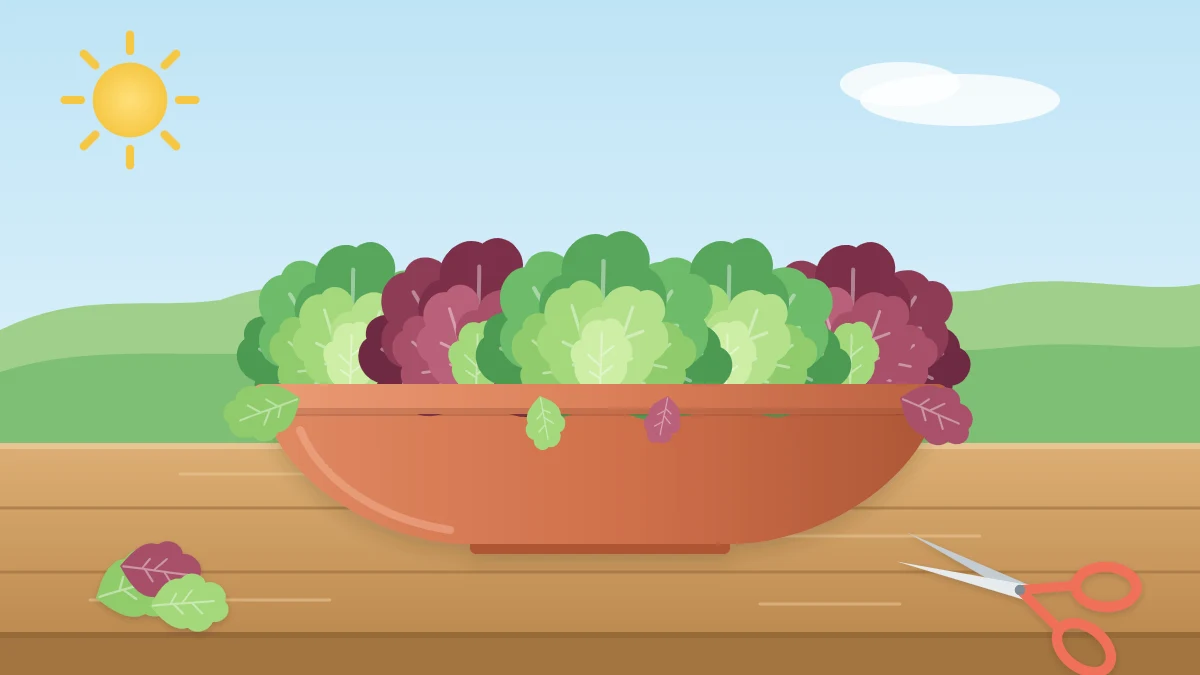
At a glance
What you need
- Lettuce seed or young plants
- Wide container with drainage holes
- Potting mix
- Watering can with a fine rose
- Scissors
If you want something edible from a pot without a long wait, lettuce is hard to beat. It grows quickly from seed, it does not need a deep container, and it puts up with less sun than most vegetables.
Growing lettuce in containers also solves a practical problem: the leaves are a few steps from the kitchen, so you can cut what you need for one meal and leave the rest growing. Here is how to sow, grow and pick it in a pot, bowl or window box.
Why lettuce suits a pot
Three traits make lettuce one of the most container-friendly crops:
- Shallow roots. It does not need a deep or heavy container.
- Quick growth. You can start cutting baby leaves within weeks of sowing, depending on the variety and the weather.
- Tolerance of part shade. A spot with a few hours of direct sun is often enough, which opens up places where tomatoes would fail.
It sits at the easy end of the list of vegetables worth growing in containers.
Choose a container and a type of lettuce
Wide and fairly shallow is fine. A container holding about 6 in (15 cm) of potting mix or more is a commonly suggested starting point, and a broad bowl, a trough or a window box gives you more leaves than a tall, narrow pot of the same volume. Drainage holes are essential. Because you will eat the leaves, use containers that have not held chemicals or unknown substances.
As for what to sow:
- Loose-leaf lettuce is the simplest. It forms an open rosette instead of a tight head, grows fast and can be picked a few leaves at a time. Seed is often sold as a blend of green and red types.
- Romaine grows upright with crisp ribs and takes a little longer.
- Butterhead makes a soft, loose head and also does well in pots.
Sowing seed or setting out young plants
Lettuce is a cool-season crop, so it can be started while the weather is still too chilly for tomatoes and basil. The guide to starting your pots in spring explains how to judge the timing for your area.
- Dampen the mix. Tip the potting mix into a tub and moisten it before you fill the container. This keeps dust down and helps it take up water evenly. Use a bagged potting mix made for containers, not soil from the garden.
- Fill and level. Fill to about an inch (2.5 cm) below the rim and smooth the surface gently without packing it down.
- Scatter the seed thinly. Sprinkle a pinch at a time over the surface. Thin sowing saves work later.
- Cover very lightly. Lettuce seed is small and should be barely covered: a fine dusting of mix is enough. Check the seed packet for the depth it suggests.
- Water gently. Use a watering can with a fine rose so the seed is not washed into one corner.
- Keep the surface evenly moist. Seed that dries out as it sprouts often fails. Feel the surface regularly until seedlings are up.
If you would rather skip the seed stage, buy a tray of young plants and set them into the mix at the same depth they were growing, spaced as the plant tag suggests.
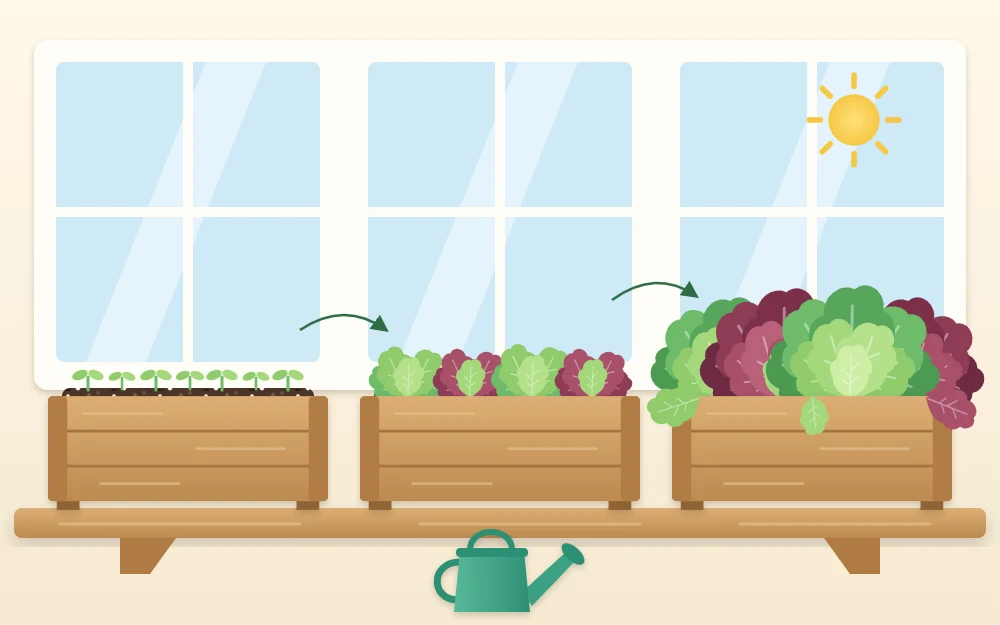
Thin the seedlings
Once seedlings have a few leaves, they will be crowded. Thin them so the remaining plants have room, snipping the extras at the base with scissors instead of pulling them, which disturbs the roots of their neighbors. The seed packet gives a spacing for your variety; plants grown for baby leaves can stay closer together than plants you want to reach full size.
The thinnings are edible. Rinse them and add them to a salad.
Light, moisture and heat
In cool weather lettuce grows well in full sun or part shade. As the season warms, afternoon shade becomes an advantage, and one benefit of a container is that you can move it to a spot that gets morning sun only.
Heat is the main limit on this crop. In hot weather lettuce bolts, meaning it sends up a tall flower stalk, and the leaves usually turn bitter at the same time. For that reason it is mainly a spring and fall crop in areas with warm summers, though gardeners in cool-summer climates can often keep it going longer.
Lettuce has shallow roots and soft leaves, so it does not cope well with drying out. Feel the mix a little below the surface and water when it is starting to dry, aiming to keep it evenly moist but never waterlogged. How quickly a container dries varies from pot to pot with its size and material, the weather and how big the plants have grown, so check instead of watering by habit.
Tip
When a plant starts to stretch upward in the center, bolting has begun. Pick what you can use right away, taste a leaf, and plan to replace that pot.
Harvest so the plant keeps growing
Loose-leaf lettuce is usually picked by the cut-and-come-again method. Take the outer leaves, cutting or pinching them off near the base, and leave the small leaves in the center to keep growing. The plant goes on producing from the middle, and you can return to it several times before it tires or bolts.
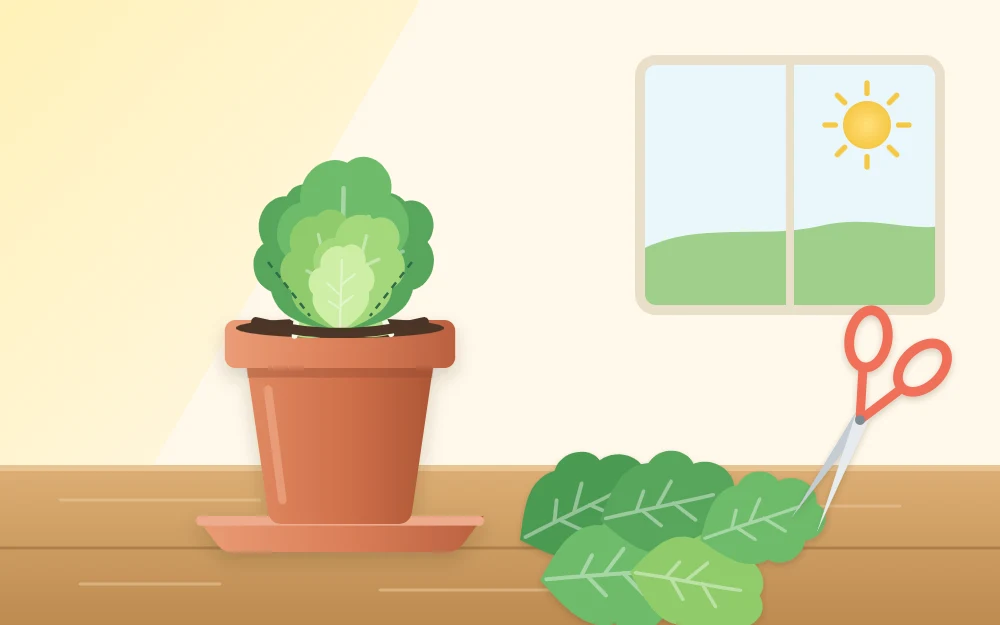
Romaine and butterhead can be picked the same way while young, or left to fill out and cut whole. Wash leaves before eating.
Sow again for a steady supply
One sowing gives you a flush of leaves and then fades. A common practice is to sow a new pot every couple of weeks or so while conditions stay cool, so that a younger batch is always coming along behind the one you are cutting. Treat that interval as a loose guide.
Slugs and aphids
Two pests turn up on lettuce more than others. Slugs and snails chew ragged holes, mostly at night, and hide under pot rims and saucers during the day; check those places and pick them off by hand. Aphids cluster on young leaves and in the heart of the plant, and a firm rinse of water usually knocks them off.
If you ever consider a pesticide, check that the label lists both your pest and lettuce, that the product is labeled for edibles, and follow it exactly.
Frequently asked questions
How deep does a container need to be for lettuce?
Lettuce has shallow roots, so about 6 inches (15 cm) of potting mix or more is a commonly suggested starting point. Width matters more than depth for the number of plants you can fit. Very shallow containers dry out fast, so a slightly deeper one is easier to keep evenly moist.
Why did my lettuce grow tall and taste bitter?
That is usually bolting, when the plant sends up a flower stalk. It is commonly brought on by heat and lengthening days, and dry spells can add to the stress. Bitter leaves rarely improve, so pick what is still pleasant, then sow a fresh pot when cooler weather returns.
Can lettuce grow in shade?
Lettuce tolerates part shade better than most vegetables, and in warm weather afternoon shade often helps it last longer. It still needs good light, so a spot with a few hours of direct sun or bright open sky is a reasonable aim. Deep shade tends to produce thin, floppy growth.

