Spring Container Gardening: When and How to Start Your Pots
How to tell when it is warm enough to plant your pots in spring: last frost dates, which plants can go out early and which must wait, how to harden plants off, and the jobs to do beforehand.
The first warm weekend of the year makes almost everyone want to fill pots. Spring container gardening rewards that enthusiasm, but it rewards patience more, because a single cold night can undo a whole afternoon of planting.
The answer to “is it too early?” is not a date. It depends on where you live, on this year’s weather and on which plants you have in mind. Some can go out while nights are still chilly; others should wait until the cold is properly over.
Time it by conditions, not the calendar
The most useful single piece of information is the average last frost date for your area: the point in spring after which frost becomes unlikely, based on past records. It is an average, so frost can still arrive after it in some years. Your local extension service can tell you the date for your county and often publishes planting guidance to go with it.
People often look to hardiness zones for this, but zones answer a different question. They describe how cold winters typically get, which tells you whether a perennial or shrub is likely to survive the winter outdoors. They do not tell you when to plant. Two places in the same zone can have last frosts many weeks apart.
Alongside the frost date, watch what is actually happening: the forecast for the next week or two, night temperatures, and how cold the potting mix feels when you push a hand into it.
Cool-season plants that can go out early
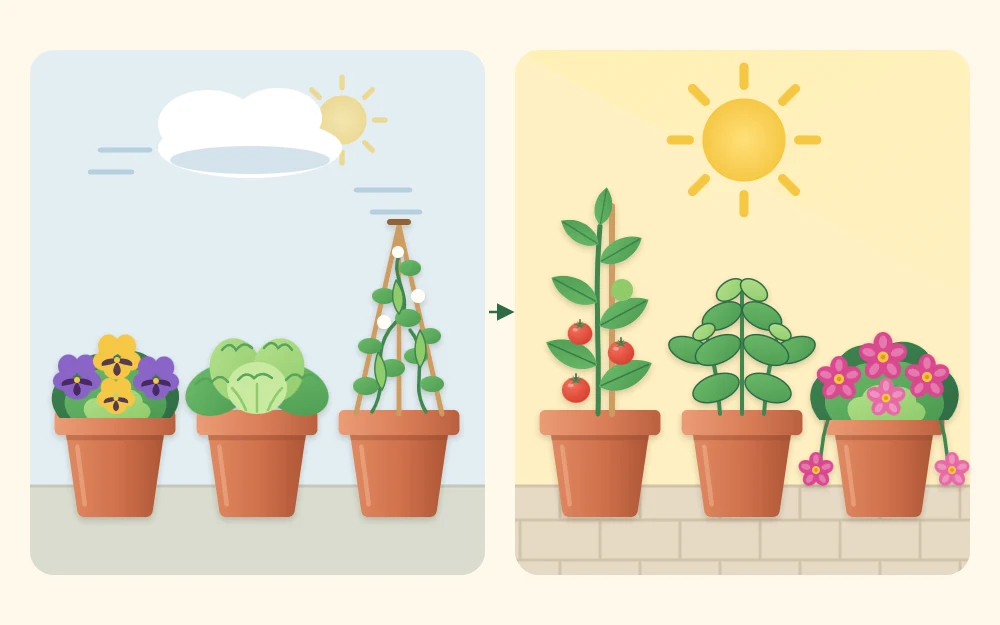
Some plants grow best in cool weather and shrug off a light frost once they are used to the outdoors. These let you start well before the tender plants are ready.
- Flowers: pansies and violas.
- Salad and vegetables: lettuce, spinach and peas.
- Herbs: parsley.
A bowl of salad leaves is one of the easiest ways to begin the season, and the guide to growing lettuce in containers covers sowing and harvesting. Even these plants can be damaged by a hard freeze, especially when newly planted, so keep an eye on the forecast.
Warm-season plants that have to wait
Tender plants are damaged or killed by frost and stall in cold conditions even when it does not freeze. This group includes most of the summer favorites:
- Tomatoes and peppers
- Basil
- Petunias
- Impatiens
Hold these back until the danger of frost has passed in your area and nights are mild. As a rough guide, many gardeners wait for nights that stay above about 50°F (10°C) before setting out the most cold-sensitive ones, such as basil and peppers.
If you are still deciding what to grow, the overview of the best plants for container gardening sorts beginner choices into flowers, herbs and vegetables.
Spring jobs to do while you wait
The weeks before planting are useful ones. Getting the pots ready means that when the weather turns, you can plant in an afternoon.
- Clean the pots. Brush out old mix and roots and scrub off crusty deposits with water and a stiff brush.
- Check for damage. Look for cracks in terracotta and ceramic pots that spent the winter outside.
- Check the drainage holes. Poke them clear, and make sure every pot you plan to use has them.
- Sort out the potting mix. Decide what to replace and what to refresh; the guide to reusing potting mix from last year explains when that is reasonable. Dampen dry mix before handling it to keep the dust down.
- Look over last year’s perennials. Check for new shoots at the base, trim away dead stems, and be patient: some plants are late to wake, so do not give up on them at the first look.
- Plan the layout. Empty pots are light and easy to shuffle. If you want ideas, see the guide to planning a patio container garden.
Hardening off: the step that is easy to skip
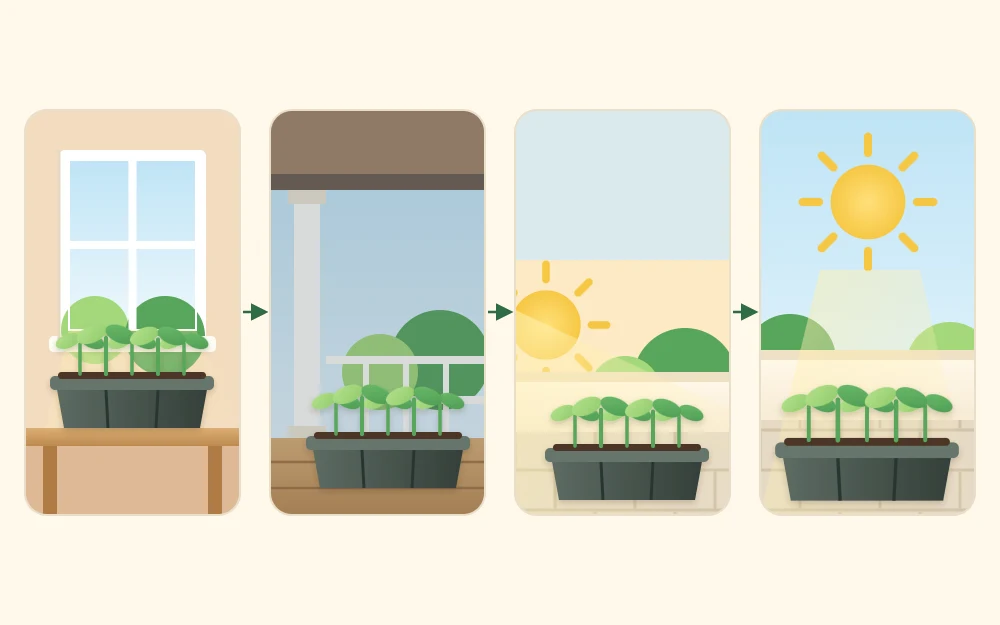
Plants raised in a greenhouse or on a windowsill have never felt direct sun, wind or cool nights. Moved straight outside, their leaves can scorch or turn pale and growth can stop for a while. Hardening off means easing them into outdoor conditions over about a week or more.
- Start on a mild day in a sheltered, shaded spot for a few hours, then bring the plants back in.
- Over the next several days, lengthen the time outside and move them into gentle morning sun.
- Gradually add more sun and some breeze, until they are out all day in the light they will finally grow in.
- Leave them out overnight once nights are mild enough for that plant, then plant them.
Small trays and cell packs dry quickly outdoors, so feel the mix often during this week.
Be ready for a late cold snap
Frost after planting is common enough to plan for. Containers have one big advantage here: they can be moved.
- Shift pots against a house wall, under a porch roof or into a garage or shed for the night.
- Cover plants that cannot be moved with an old sheet or frost cloth in the evening, draped so it reaches the ground and traps some warmth, and take it off in the morning.
- Check that the mix is not bone dry before a cold night, since stressed plants cope less well.
Good to know
Roots in a pot are more exposed to cold than roots in the ground, because cold air reaches the container from every side. A frost that barely marks plants in a garden bed can be harder on the same plants in small pots.
Why rushing rarely pays
Tender plants set out into cold mix often sit and sulk. They may not die, but they stop growing, the leaves can pale or take on a purplish tint, and wet, cold mix around idle roots invites rot. A plant set out a couple of weeks later into warm mix frequently catches up with, and sometimes overtakes, one that was planted too early.
Cool, damp spring weather also means pots dry slowly. Conditions vary from pot to pot, so feel the mix a couple of inches down before watering instead of assuming it is needed.
Tip
If you cannot wait, plant a pot of pansies or a bowl of lettuce first. It satisfies the urge to garden while the tomatoes and basil stay safely indoors.
Frequently asked questions
When is it safe to put container plants outside in spring?
It depends on the plant and on your local climate. Cool-season plants such as pansies and lettuce can go out while nights are still chilly. Tender plants such as tomatoes, basil and petunias should wait until the danger of frost has passed in your area and nights are mild. Your local extension service can give you frost dates.
Do plants from a garden center need hardening off?
Often, yes. Plants kept in a greenhouse or under cover have not experienced direct sun, wind or cool nights. Giving them about a week or more of gradually longer spells outdoors, starting in sheltered shade, helps avoid scorched leaves and stalled growth. Plants sold from an open outdoor bench may need less.
What should I do if frost is forecast after I have planted?
Move the pots if you can: against a house wall, under a porch roof or into a garage or shed overnight. Cover anything too heavy to move with an old sheet or frost cloth in the evening and remove it the next morning. Small pots are the most vulnerable, so deal with those first.