Types of Plant Containers: Window Boxes, Baskets, Grow Bags and More
A tour of container types beyond the round pot: troughs, window boxes, hanging baskets, fabric grow bags, self-watering planters and railing planters, with what each is good for and its catch.
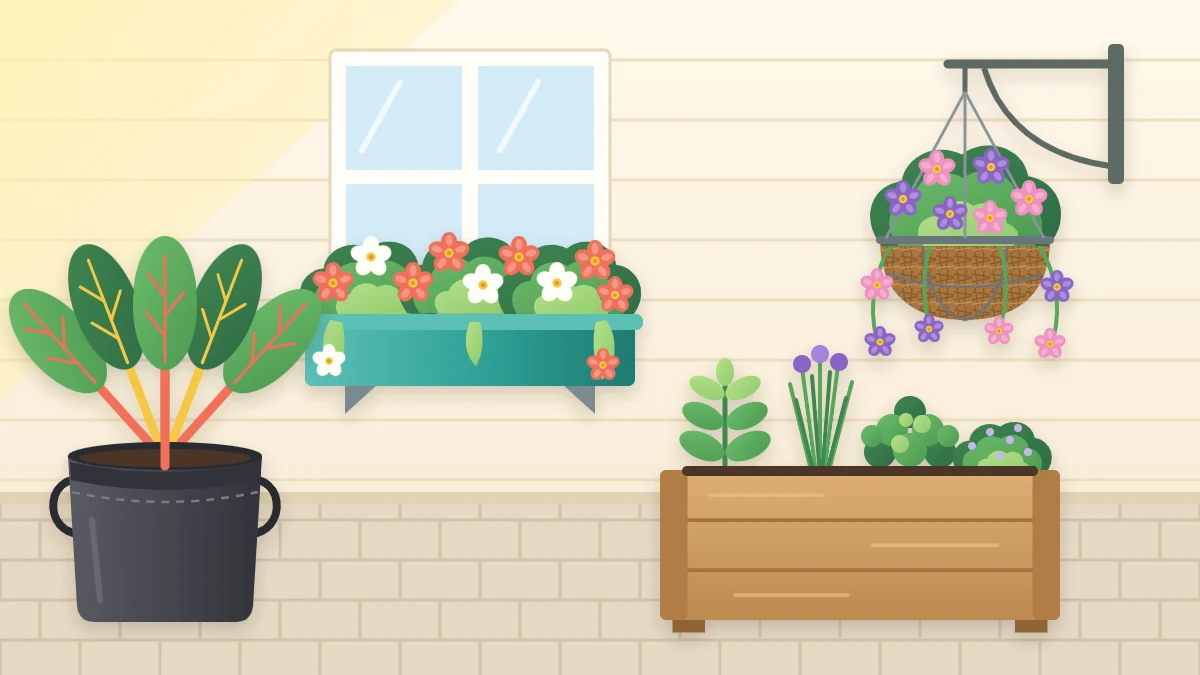
The round pot is only one way to hold a plant. Walk through any garden center and you will also find troughs, window boxes, hanging baskets, fabric bags and planters with built-in water reservoirs. Each solves a particular problem, and each has a catch.
This tour of the main types of plant containers explains what each one is good for and what to watch out for, so you can decide when something other than a classic pot makes more sense. For help with materials such as terracotta, plastic and glazed ceramic, see the guide on how to choose containers for plants.
Classic Round Pots
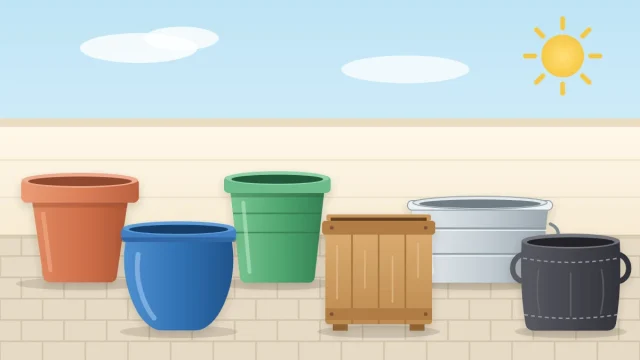
The familiar round pot is the all-purpose choice. It comes in every size and material, it suits a single plant or a mixed planting, and it can be moved, turned and regrouped as the season goes on.
The catch: small ones dry out quickly, and large ones are heavy once filled with moist mix. Size matters more than shape for most plants, and the guide to what size pot you need gives commonly suggested starting points.
Troughs and Planter Boxes
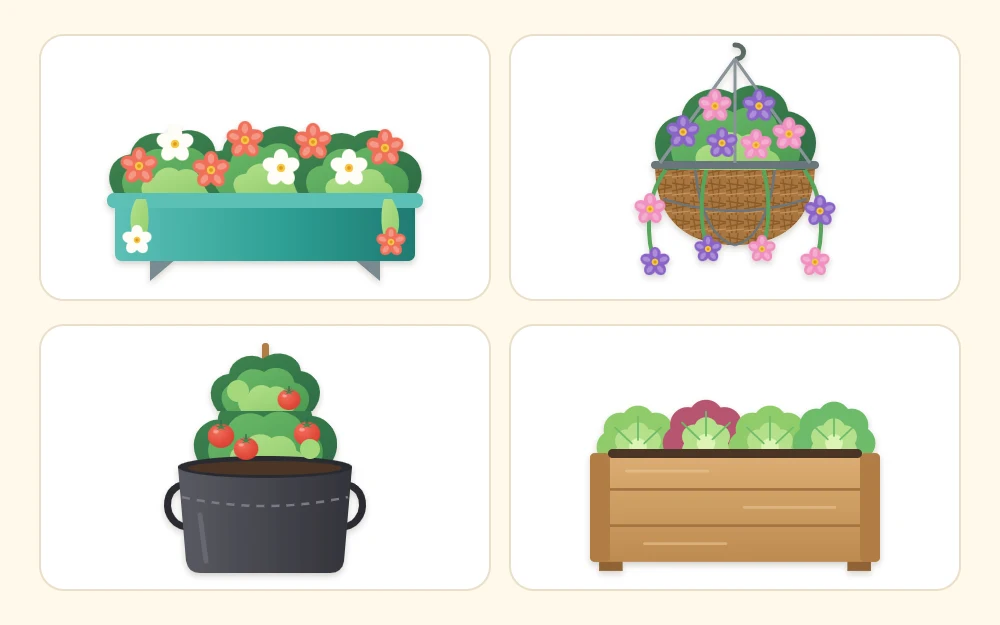
Long, rectangular containers suit plants grown in a row: a line of herbs, a strip of salad greens or a low hedge of flowers along the edge of a patio. They make good use of narrow spaces beside a wall or a path, and their larger volume of mix holds moisture longer than a row of separate small pots would.
The catch: a long box full of wet mix is hard to move, so decide where it goes before you fill it. Check that there are several drainage holes along the base, not just one at an end.
Window Boxes
A window box is a trough designed to sit on a sill or hang below a window. It puts flowers or herbs at eye level, both from inside the house and from the street.
The catch: window boxes are usually shallow and narrow, so they hold little mix and dry fast, especially on a sunny wall. They suit compact plants with modest roots. They must also be fixed securely, because a planted, watered box is much heavier than it looks.
Hanging Baskets
Baskets lift trailing plants into the air, where stems can spill downward on every side. They add color at a height that pots on the ground cannot reach.
There are two main kinds. Wire baskets are lined with coir, moss or a preformed liner, and they drain and breathe freely. Solid plastic baskets, often with a small attached saucer, hold moisture longer.
The catch: a hanging basket is exposed to sun and wind on all sides, so it dries faster than any other common container. A small basket in hot, windy weather may need water more than once in a day, while the same basket in a cool, still spell lasts much longer. Lift the base to feel the weight, or feel the mix, rather than guessing. Larger baskets are easier to keep moist than small ones. The steps for planting one are in the guide on how to plant a hanging basket.
Fabric Grow Bags
A grow bag is a soft-sided container made of thick, porous fabric, usually with handles. Grow bags are inexpensive, light and easy to store flat at the end of the season. Their generous volumes make them popular for vegetables such as tomatoes, peppers and potatoes.
The catch: the same porous sides let moisture escape, so grow bags dry quickly in sun and wind. Water can also seep from the base onto whatever the bag stands on, which matters on decking.
Self-Watering Planters
A self-watering planter has a water reservoir beneath the potting mix. A wicking column or a strip of fabric draws water upward as the mix dries, and you refill the reservoir through a fill tube. The result is steadier moisture, which helps thirsty plants in hot weather and gives you more leeway during a short absence.
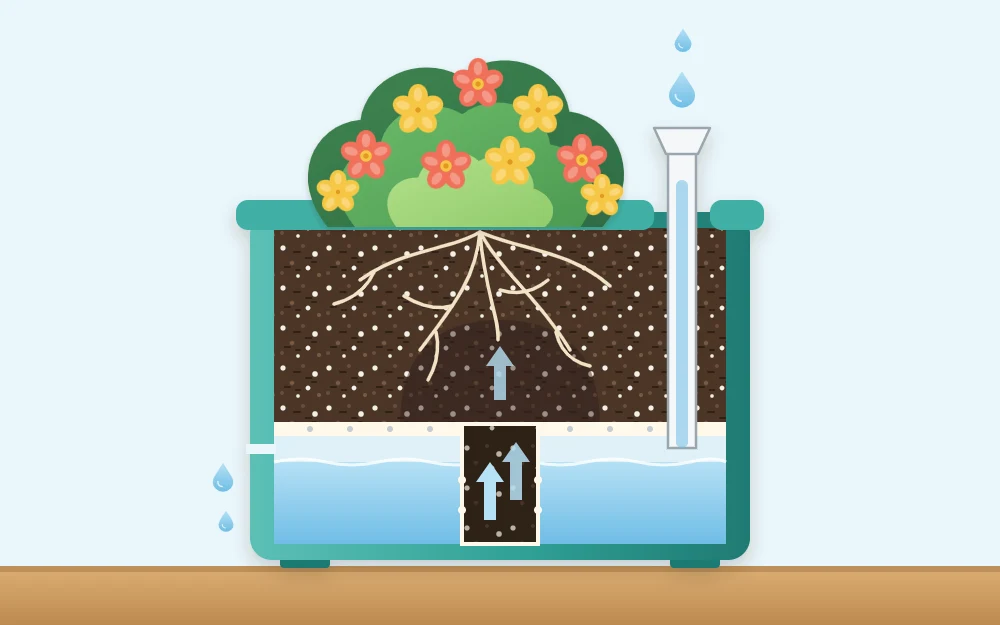
The catch: the name promises more than the planter delivers. You still need to check the reservoir and the mix, because a large plant can empty the reservoir quickly in summer. Fertilizer salts can also build up in the mix when water only ever moves upward, so many gardeners flush the planter from the top with plain water now and then. Look for an overflow hole, which stops rain from flooding the reservoir.
These planters are not ideal for plants that like to dry out between waterings, such as rosemary, thyme and lavender.
Railing Planters and Wall Pockets
Railing planters sit astride or hook over a deck or balcony railing. Wall pockets and vertical planters hang on a fence or a wall. Both make use of space that would otherwise grow nothing, and both bring plants up to eye level.
The catch: they hold a small volume of mix, so they dry fast and suit only small plants: compact flowers, salad leaves and low herbs. Fixing matters even more than it does for a window box.
Good to know
Anything hung or mounted must be secured for its weight when wet, which is far more than its weight when dry. Use brackets, hooks and fixings rated for the load, fix them into something solid and follow the maker’s instructions. On a balcony, also check your building’s rules and what the structure is designed to carry.
Container Types at a Glance
Drying speed in this table is a general tendency. The size of the container, its material, the plant, the weather and the season all change it, and conditions vary from pot to pot.
| Type | Typical use | How fast it dries |
|---|---|---|
| Round pot | Single plants and mixed plantings | Varies with size and material |
| Trough or planter box | Rows of herbs, salad greens or flowers | Moderate to slow |
| Window box | Compact flowers and herbs at a window | Fast |
| Hanging basket | Trailing flowers | Fastest |
| Fabric grow bag | Vegetables | Fast |
| Self-watering planter | Thirsty plants, steadier moisture | Slow while the reservoir holds water |
| Railing planter or wall pocket | Small flowers, salad leaves and low herbs | Fast |
Start with the plant and the place, then be realistic about care. The types that dry fastest need the most frequent checking, so a patio hung with small baskets asks more of you than two large pots at ground level.
Frequently asked questions
Are fabric grow bags better than plastic pots?
Neither is better in every case. Grow bags are light, inexpensive and easy to store, and their porous sides let air reach the roots. They also lose moisture faster, so they need checking more often in hot or windy weather. Plastic pots hold moisture longer and usually last more seasons.
Do self-watering planters really water themselves?
Not entirely. A reservoir under the mix supplies water by wicking, which evens out moisture and stretches the time between refills. You still need to refill the reservoir, check the mix and flush it from the top with plain water occasionally. Large plants can drain the reservoir quickly in hot weather.
Which type of container dries out fastest?
Hanging baskets generally dry fastest, because sun and wind reach them from every side and they hold a limited amount of mix. Window boxes, railing planters and fabric grow bags also tend to dry quickly. Actual drying time depends on size, plant, weather and season, so check the mix rather than assume.