Container Plants in Summer Heat: Keeping Pots Going
Why pots suffer in hot weather, how to tell heat wilting from a dry pot, simple ways to cool the root zone, and how to set containers up before a week away.
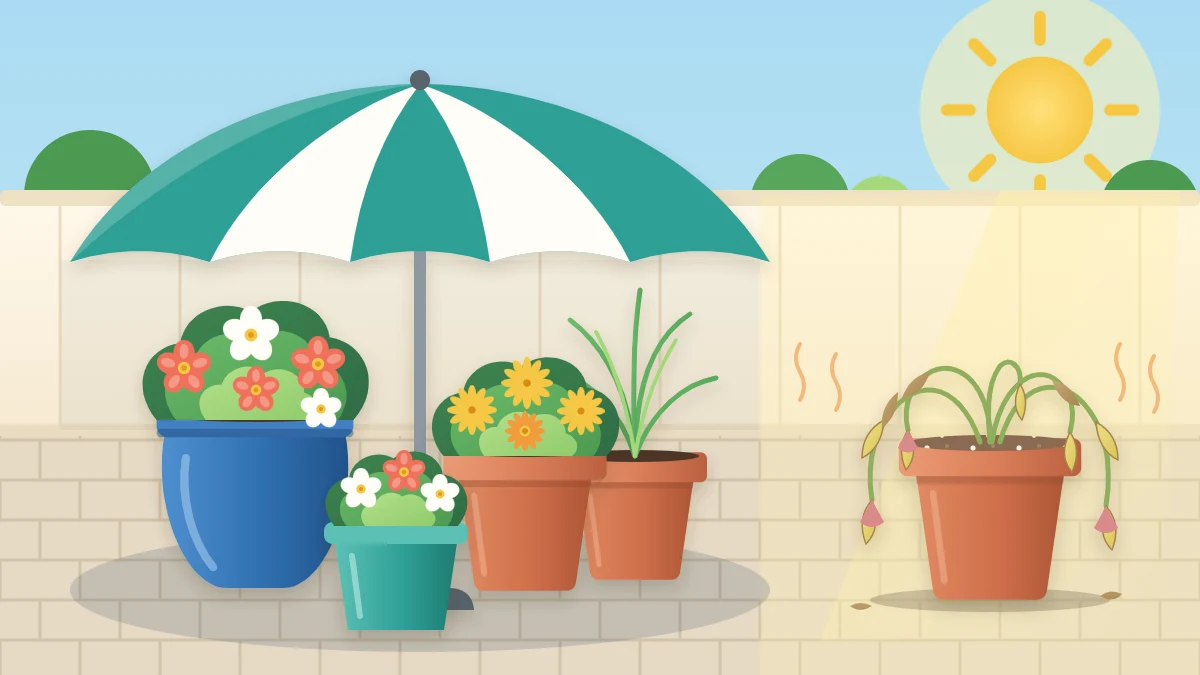
The first real hot spell of the year is often when a container garden stops looking easy. Pots that sailed through spring now droop by mid-afternoon, and the watering can never seems to be put away.
Looking after container plants in summer heat comes down to two things: understanding why pots struggle more than plants in the ground, and making a few changes that take the pressure off. Both help whether you are at home through a heat wave or about to leave for a week.
Why pots struggle in hot weather
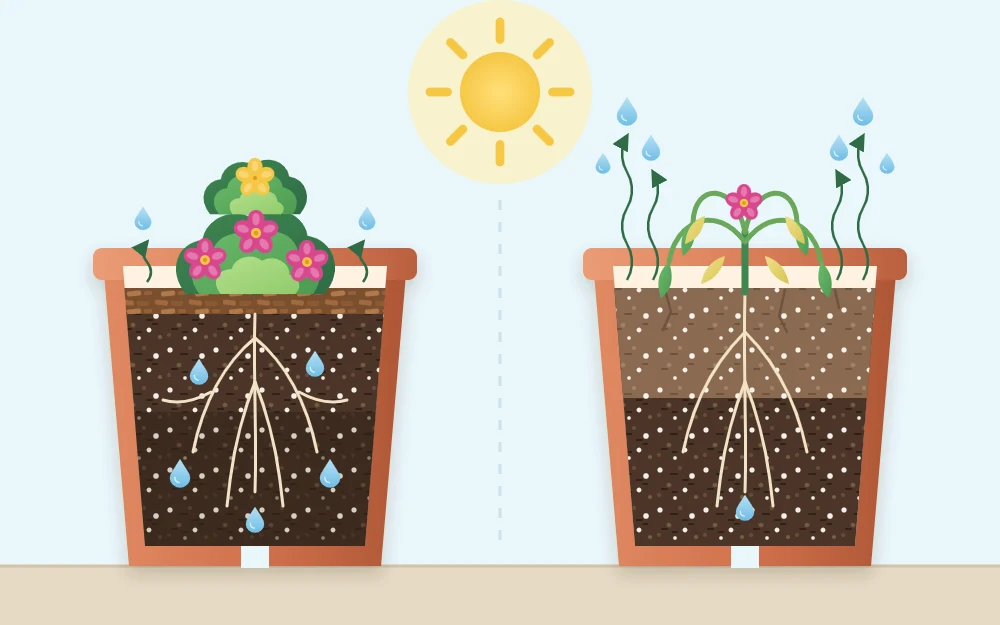
Roots in the ground are insulated by the earth around them. Roots in a pot have only a thin wall between them and the sun, so the potting mix heats up quickly, especially in a small or dark container standing on paving. Warm mix also dries faster.
The plants have changed since spring, too. A tomato or a basket of petunias in midsummer may be many times the size it was at planting, with far more leaf area losing water, while the volume of mix it draws on has stayed exactly the same. Demand has grown and the reserve has not.
Checking and watering during a heat wave
Conditions vary from pot to pot, and never more so than in heat. A large glazed pot in part shade may hold moisture well, while a small hanging basket in sun and wind runs dry quickly. So check instead of assuming: feel the mix a couple of inches (about 5 cm) down, or test the weight of the pot. On the hottest, windiest days, small containers may need checking more than once.
When the mix is dry at depth, water thoroughly, until water runs from the drainage holes. Morning is a good time, because the plant begins the hottest hours with a full reserve. The complete method is in the guide on how to check and water pots.
Afternoon wilting is not always thirst
Many plants droop in the hottest part of the day because their leaves lose water faster than the roots can supply it, even when the mix is moist. If the mix feels damp and the plant perks up again by evening, it does not need more water. Pouring more into already wet mix can leave roots short of air.
Tip
Feel the mix before you water a drooping plant in the afternoon. That one check tells apart a pot that is dry from a plant that is simply hot.
Ways to reduce heat stress
You cannot change the weather, but you can change what your pots are exposed to.
- Move pots into afternoon shade. Morning sun with shade from early afternoon is far gentler than all-day exposure. A plant caddy makes heavy pots easier to shift. The article on reading sun and shade in your space shows how to find those spots.
- Group pots together. Clustered containers shade each other’s sides and shelter one another from drying wind.
- Shade the pots themselves. The plant may want sun while its roots do not. Standing a pot inside a larger one, or placing low plants in front of it, keeps direct sun off the container wall.
- Mulch the surface. A layer of bark or similar material about an inch (2.5 cm) deep over the mix slows evaporation and keeps the surface cooler.
- Get dark pots off hot paving. Dark colors absorb heat, and stone or concrete radiates it back. Moving a pot onto a cooler surface or raising it on pot feet helps.
Good to know
Wet pots are heavy. Use a plant caddy or ask for help with large containers, and take care on hot paving, which can be much warmer than the air.
When plants pause in the heat
Hot spells can make healthy plants stop performing for a while. Tomatoes and peppers are well known for it: in very hot weather, often when days climb well past about 90°F (32°C) or nights stay unusually warm, they may drop flowers or stop setting fruit. Many flowering annuals also bloom less during the hottest weeks, and cool-season plants such as lettuce and pansies may decline altogether.
This is commonly a response to temperature, not a sign that you have done something wrong, although dry mix and other stresses can cause flower drop as well. Keep the checks and watering steady, and resist the urge to add extra fertilizer. Plants often resume flowering and fruiting once temperatures ease.
Going away for a week
A week without attention in midsummer is a long time for a pot. A combination of the steps below gives plants the best chance.
- Move everything into shade. Gather pots in the coolest, most sheltered spot you have, such as the shaded side of a wall. A week of lower light does less harm than a week of drying out.
- Bring hanging baskets down. Set them on the ground or on an upturned pot among the others, where they dry more slowly.
- Water thoroughly before you leave. Soak every pot until water runs from the holes.
- Ask a neighbor or friend. This is the most dependable option. Show them how to feel the mix and how long to water, and put the watering can or hose where they can reach it. Grouped pots make the job quicker for them.
- Consider a watering aid. A drip kit on a timer or planters with a built-in reservoir can bridge the gap. The overview of container types, including self-watering planters, explains how reservoirs work.
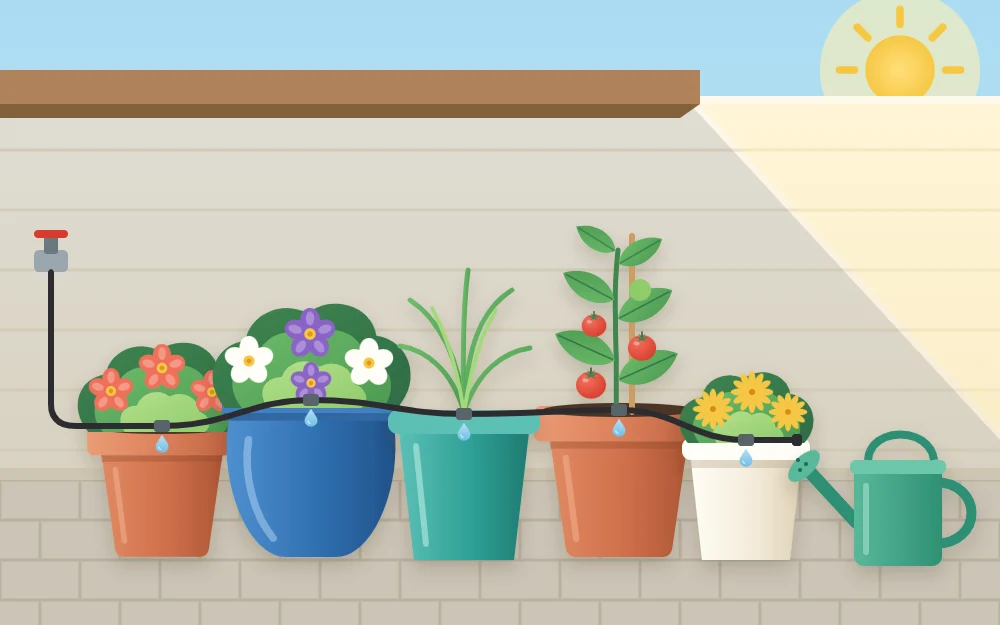
Test any drip system or reservoir for several days before you travel. Emitters clog, timers get set wrongly and reservoirs empty faster in heat than you expect.
Planning for next summer
If the same pots struggle every year, the setup may be the cause more than the care. Larger containers hold more mix, stay cooler and give you a wider margin on hot days. Light-colored pots heat up less than dark ones. Plastic, resin and glazed ceramic lose less moisture through their sides than unglazed terracotta or fabric.
Plant choice matters as well. Some plants cope with heat much better than others, and the plant tag is the place to check. For general background on caring for pots through the season, see the University of Wisconsin Extension article on container gardening.
Frequently asked questions
Why do my potted plants wilt in the afternoon even after watering?
In strong heat, leaves can lose water faster than roots supply it, so a plant droops even in moist mix and recovers as the day cools. That is one common explanation, not the only one. Feel the mix at depth: if it is damp and the plant perks up by evening, extra water is not needed.
Should I move container plants into shade during a heat wave?
It often helps. Shade during the afternoon lowers the temperature of both leaves and pot and slows drying. Sun-loving plants cope with several days of reduced light far better than with repeated severe drying. Move them back gradually once the weather eases, and take care when shifting heavy, wet containers.
How can I keep pots alive while I am away for a week?
Group the pots in a shaded, sheltered spot, bring hanging baskets down to ground level and soak everything before leaving. A neighbor who knows how to feel the mix is the most dependable help. Drip kits and self-watering planters can work too, but run them for several days beforehand to be sure they do.