Fall and Winter Container Care: Cleanup, Storage and Cold Protection
An end-of-season guide by task: fall color, clearing spent annuals, storing pots that can crack in freezing weather, and protecting the perennials, shrubs and herbs that stay in containers over winter.

By the end of the season most pots look tired. The annuals are thin and straggly, some containers are already empty, and a few perennials or herbs are still green and clearly intend to carry on. Fall and winter container care is about dealing with each of those groups in turn.
None of it is hard, and a little effort now saves money and work later: pots that are stored properly do not crack, and plants that are protected have a much better chance of growing again. What you need to do, and when, depends on how cold your winters get.
Keep some color going in fall
Cooling weather does not have to mean bare pots. As summer annuals fade, cool-season plants can take their place for a few more weeks, or longer where winters are mild.
- Pansies and violas flower in cool weather and tolerate light frost.
- Ornamental kale and cabbage are grown for their rosettes of purple, pink and cream leaves, and the color often deepens as nights get colder.
- Mums (chrysanthemums) bought in bud give a strong burst of color. Planted in a pot in fall they are best treated as short-term color, since they often do not get through a cold winter in a container.
Pots dry more slowly in cool weather, and conditions vary from pot to pot, so feel the mix a couple of inches down before you water.
When frost ends the annuals
The first hard frost usually finishes tender annuals overnight. Once they have collapsed, clear them out so they do not sit rotting in the pot.
- Pull the plants, shaking the mix from the roots back into the pot or a tub.
- Compost healthy remains. Put anything that had obvious disease or a heavy pest problem in the trash instead.
- Decide what to do with the mix. If the plants were healthy it can often be partly reused; the guide to refreshing and reusing old potting mix explains when that makes sense and when to start fresh.
Empty and store pots that can crack
Potting mix holds water, and water expands as it freezes. In a rigid pot that pressure has nowhere to go. Unglazed terracotta is the most vulnerable because the clay itself absorbs water, and many glazed ceramic pots can crack or flake in the same way.
Where winters bring freezing weather, the safe routine for these pots is:
- Empty them completely.
- Brush off mix, roots and crusty deposits with a stiff brush.
- Let them dry.
- Store them under cover in a shed, garage or porch. If they have to stay outside, turn them upside down and raise them off the ground so they cannot fill with water.

Plastic, resin, wood and fabric containers are more tolerant of freezing, though thin plastic can turn brittle with age and sun. Material makes a real difference here, which is one more thing to weigh when choosing containers for your plants.
Tip
Stack clay pots with a sheet of newspaper or cardboard between them. They are less likely to jam together or chip, and easier to separate in spring.
Perennials, shrubs and herbs that stay in pots
A plant in the ground has the whole mass of the earth around its roots. A plant in a pot has a thin wall and a few inches of mix, with cold air on every side. Its roots get much colder than they would in a bed, and roots are generally less cold tolerant than the top growth.
For that reason a common guideline is to choose plants rated about two hardiness zones colder than your own if you expect them to winter outdoors in a container. You can look up your zone on the USDA Plant Hardiness Zone Map, and the plant tag gives the plant’s rating. It is a rule of thumb, not a promise: pot size, wind, snow cover and how wet the mix stays all play a part.
Larger containers protect roots better than small ones, simply because there is more mix around them. Fall is not the best moment to move a plant up a size, though; repotting is usually done while a plant is actively growing, so make a note for spring.
Ways to protect pots through the cold
You can combine several of these, and the colder your winters, the more of them are worth doing.
- Group and shelter. Push pots together against a house wall, out of the prevailing wind. They shield one another, and the wall gives off a little warmth.
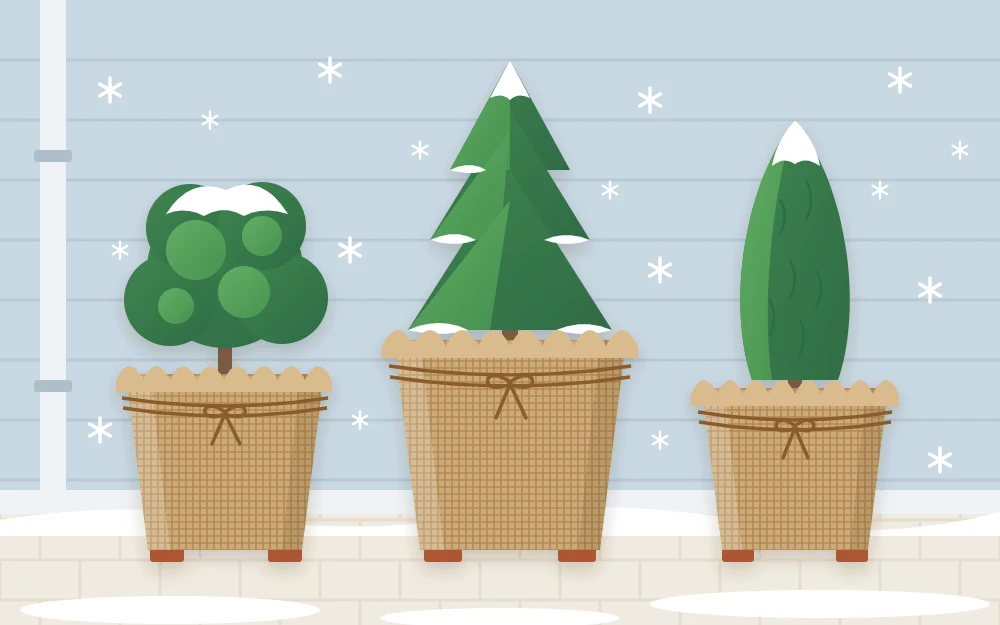
- Wrap or insulate the container. Burlap, bubble wrap or an old blanket around the pot, or dry leaves or straw packed between grouped pots, slows the loss of heat from the root zone. Wrap the pot, not the leaves.
- Move them under cover. An unheated garage or shed suits dormant plants well: cold enough to keep them asleep, but buffered from the worst temperature swings and drying wind.
- Raise pots off the ground. Stand them on pot feet or bricks so the drainage holes stay clear. A pot frozen to the paving, or sitting in a puddle, cannot drain.
Good to know
Large pots full of damp mix are heavy. Slide them on a plant caddy or get help instead of lifting, and move them before the mix freezes solid.
Dormant plants still need a look
A dormant plant uses very little water, but its roots are alive and the mix should not dry out completely. Evergreens keep losing moisture through their leaves all winter, and pots under a roof or in a garage get no rain at all.
There is no timetable for this. Now and then, on a day when the mix is not frozen, push a finger in. If it is dry a couple of inches down, water lightly, enough to dampen the root ball without leaving it soggy. Mix that stays wet and cold for long periods is as risky as mix that dries to dust.
Looking ahead to spring
Unwrap and uncover plants gradually as the weather warms, and do not be quick to give up on anything that looks lifeless, since some perennials are slow to show new growth. When the season turns, the guide to starting your pots in spring picks up where this one stops, with cleaned pots and saved mix ready to use.
Frequently asked questions
Can I leave terracotta pots outside in winter?
Where winters stay above freezing, usually yes. Where it freezes, terracotta filled with wet mix can crack or flake as the water expands. The safer course is to empty the pots, brush them clean, let them dry and store them under cover, or at least upside down and raised off the ground.
Do potted plants need water in winter?
Much less than in summer, but the mix should not dry out completely, especially around evergreens and in pots kept under a roof or in a garage. There is no set interval. Feel the mix on a day when it is not frozen and water lightly if it is dry a couple of inches down.
Will perennials survive winter in a container?
Some will, depending on the plant, the size of the pot and how cold your winters are. Roots in a pot get colder than roots in the ground, so a common guideline is to choose plants rated about two hardiness zones colder than yours and to shelter or insulate the pot in the coldest months.

