How to Choose Containers for Plants: Material, Size and Drainage
A step-by-step way to pick a pot: check for drainage holes, compare materials by how fast they dry and how much they weigh, then weigh up size, color and whether it ever has to move.
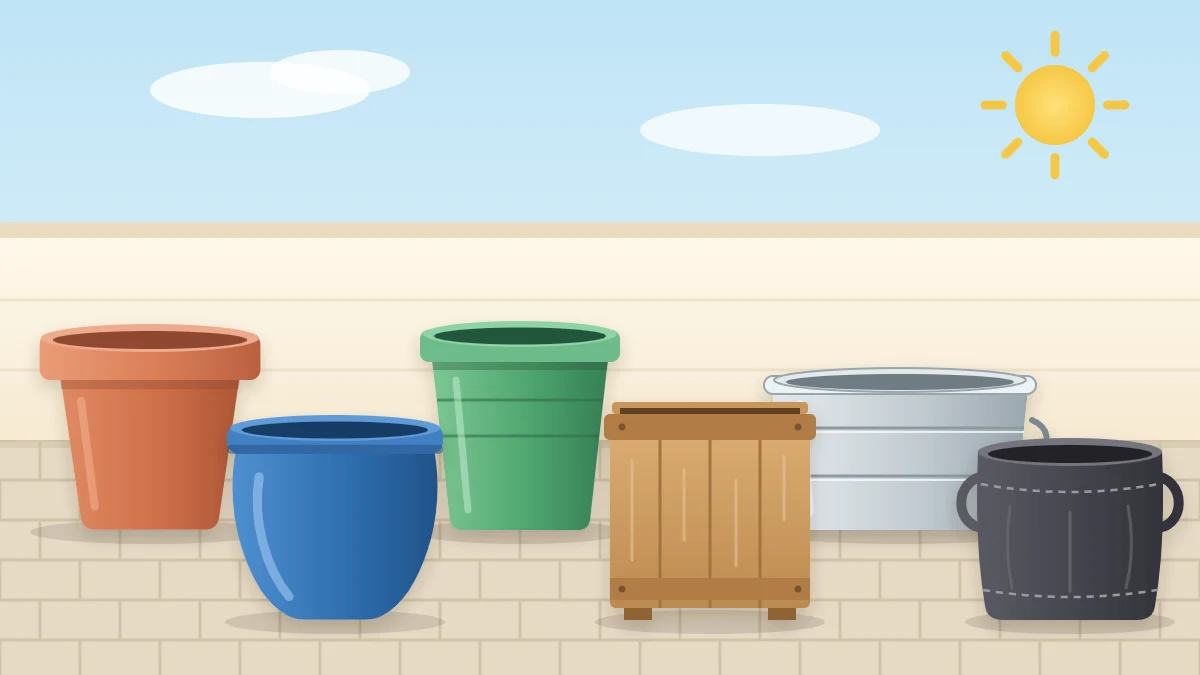
A wall of pots at the garden center can stop you in your tracks. There is terracotta next to glossy ceramic, plastic made to look like stone, wooden boxes, metal tubs and soft fabric bags, all in a dozen sizes. Learning how to choose containers for plants is mostly a matter of asking a few questions in the right order.
Looks come last. First check that water can get out, then think about what the pot is made of, how big it is and how heavy it will be once it is planted. Get those right and almost any style you like will work.
Start with drainage holes
Turn the pot over before you look at anything else. A container for a living plant needs at least one hole in the base so that extra water can leave. Without one, water collects at the bottom, the potting mix stays saturated and roots are left without the air they need.
Many decorative pots are sold with no hole at all. You can sometimes drill one, or use the pot as an outer sleeve around a plainer pot that does drain. Both options, along with saucers and pot feet, are covered in the guide to drainage holes, saucers and what really helps water leave a pot.
Compare the materials
Material decides how fast a container dries out, how heavy it is and how it copes with the weather. None is best for every situation, so match the material to your site and to how much attention you can give the pot.
| Material | How fast it dries | Weight | What to know |
|---|---|---|---|
| Unglazed terracotta | Fast; the clay is porous | Heavy | Can crack or flake if it stays damp through freezing weather |
| Glazed ceramic | Slower; the glaze seals the sides | Heavy | Often sold without holes, and can also crack in a hard freeze |
| Plastic and resin | Slow; holds moisture longer | Light | Easy to move; thin plastic can turn brittle after years in sun |
| Wood | Moderate | Medium to heavy | Insulates roots well; it slowly weathers and eventually rots |
| Metal | Slow through the sides | Light to medium | Heats up quickly in sun; usually needs holes added |
| Fabric grow bag | Fast; air reaches the sides | Very light | Air around the roots is helpful, but the mix needs checking more often |
| Concrete or stone | Slow to moderate | Very heavy | Stable in wind; best treated as a permanent fixture |
A porous or fabric container suits plants that dislike sitting wet, and gardeners who tend to water generously. Plastic, resin and glazed pots hold moisture longer, which helps in hot, exposed spots or when you cannot check your pots as often. Conditions vary from pot to pot, so treat the table as a guide to tendencies rather than fixed behavior.
For a closer look at each kind, including window boxes, hanging baskets and self-watering planters, see the overview of the main types of plant containers and what each suits.
Pick a size and shape that fits the plant
Bigger containers hold more potting mix, which stores more water and gives roots more room. For a beginner, a pot that is a little larger than seems necessary is usually easier to look after than a small one that dries out by midday.
Shape matters too. A pot that narrows sharply at the neck looks elegant, but it is hard to slide a root ball out of it later. Tall, slim containers tip more easily in wind than low, wide ones.
How much room a given plant needs depends on what it is and how large it will grow, so check the plant tag and read the guide on what size pot different plants need before you buy.
Think about color and heat
Color is not only a design choice. A dark container in full sun absorbs more heat than a pale one, and that warmth passes into the potting mix. On a hot afternoon the root zone on the sunny side of a black or charcoal pot can become much warmer than the air, which stresses roots and dries the mix faster.

Metal has a similar effect because it conducts heat readily. If you love a dark or metal container, give it a spot with afternoon shade, choose a larger size so there is more mix to buffer the heat, or group it behind other pots that shade its sides.
Check the weight before you fill it
An empty pot tells you little about how heavy it will be in use. Potting mix soaked with water is heavy, and a large ceramic or concrete planter that you can just about lift when empty may be impossible to shift once planted.
Decide where the container will live and whether it ever has to move: to follow the sun, to make room for guests, or to come under cover before winter. If it must move, choose a lighter material or stand the pot on a wheeled caddy rated for the load before you fill it.

Good to know
Hanging baskets, window boxes and railing planters are heavy when wet. Use hardware rated for the load and follow the maker’s instructions. On a balcony or rooftop, check your building’s rules and what the structure is designed to carry.
Take extra care with containers for edibles
Buckets, tubs and barrels can make good, roomy planters for herbs and vegetables once they have drainage holes. For anything you plan to eat, use containers that have not held chemicals or unknown substances. If you cannot tell what a secondhand container was used for, keep it for flowers or leave it behind.
Containers sold or labeled for growing food take the guesswork out of it. The University of Maryland Extension has more detail on types of containers for growing vegetables.
A quick checklist at the store
When you are holding a pot and still cannot decide, run through these points.
- Holes: does it have drainage holes, or can you add them?
- Material: will it dry fast or slowly, and does that suit your site and habits?
- Size: is there enough room for the plant at its full size, not just today?
- Shape: can you get a root ball out again, and will it stand firm in wind?
- Color: will a dark finish sit in strong afternoon sun?
- Weight: can you move it when it is full and wet, or does it need a caddy?
Frequently asked questions
Are terracotta or plastic pots better for beginners?
Either can work well. Unglazed terracotta is porous, so the potting mix dries faster, which suits plants that dislike staying wet. Plastic is lighter and holds moisture longer, which helps in hot, sunny spots. Think about your site and how often you can check the pots, then choose the one that fits.
Can I use a pot that has no drainage holes?
Not for planting directly. Water has nowhere to go, so the mix at the bottom stays saturated and roots can suffer. Either add holes, if the material allows it, or keep the plant in a plain draining pot and stand that inside the decorative one, tipping out any water that collects.
Do dark pots really get too hot for plants?
They can in strong sun. Dark surfaces absorb more heat than pale ones, and the warmth passes into the potting mix, especially on the sunny side. A larger pot, some afternoon shade or other containers shading its sides all reduce the effect. In cool or cloudy climates it is seldom a concern.