What Size Pot Do You Need? Container Size Explained
How to match a container to a plant: why volume matters, when depth beats width, how pot sizes are labeled, commonly suggested starting sizes and the signs a plant needs more room.
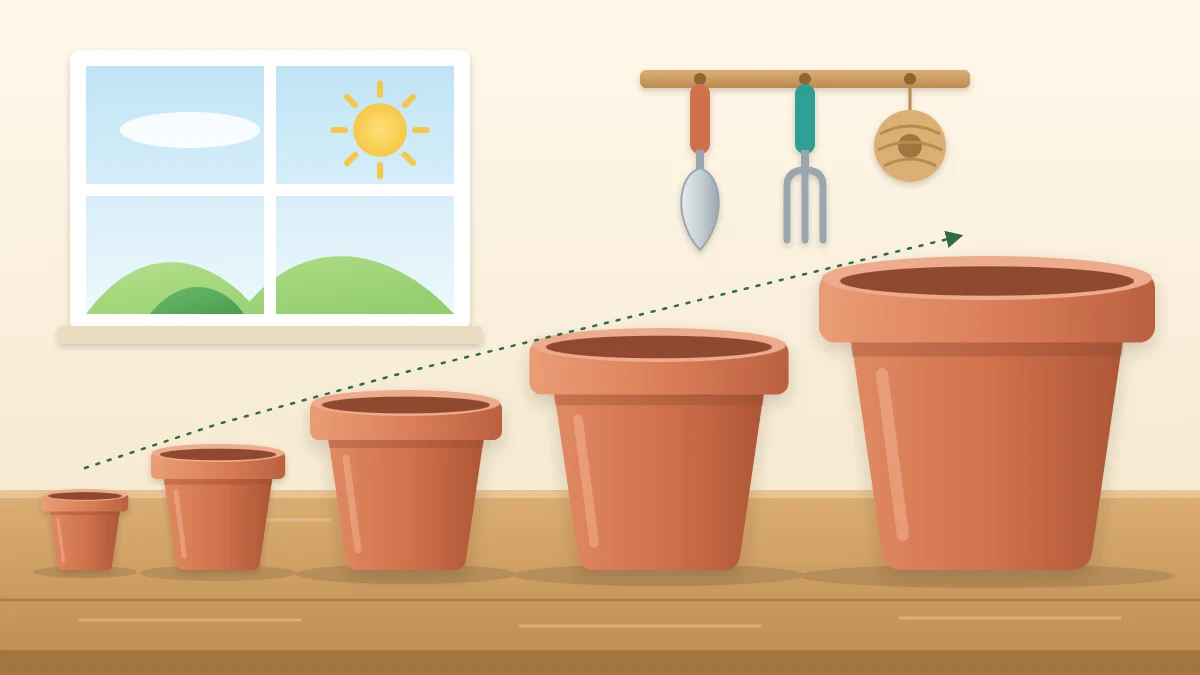
You have a plant in one hand and are wondering what size pot it should go into. It is one of the most common questions in container growing, and the honest answer is that there is no single correct figure, only a sensible range for each kind of plant.
Once you understand why size matters, the choice becomes much easier. This guide explains the thinking, gives commonly suggested starting points, and shows how to tell when a plant needs more room.
Why volume matters more than looks
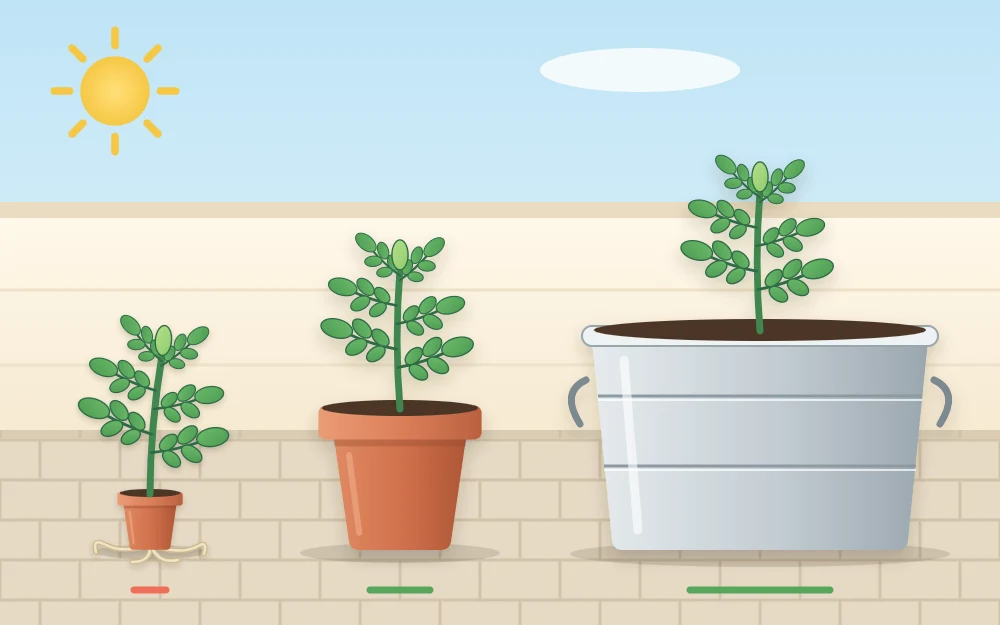
The amount of potting mix in a container is the plant’s entire supply of water and nutrients. More mix holds more of both, so a larger pot gives you a longer margin between checks. A greater mass of damp mix also warms up and cools down more slowly, which protects roots on hot afternoons and cold nights.
That is why larger pots are more forgiving for beginners. A small pot in full sun can go from moist to dry within hours on a hot, windy day, while a big one in the same spot stays moist much longer. Conditions vary from pot to pot, but the general pattern holds.
Can a pot be too big?
It can, though it is the less common problem. A small plant with few roots draws little water, so a very large volume of mix around it can stay wet for a long time, particularly in cool or shady conditions. Roots sitting in constantly wet mix do not grow well.
The usual approach is to match the pot to the size the plant will reach during the season, not the size it is today. A young tomato can go straight into its final large container because it grows fast. A slow-growing houseplant or small perennial is better moved up one size at a time.
Depth versus width
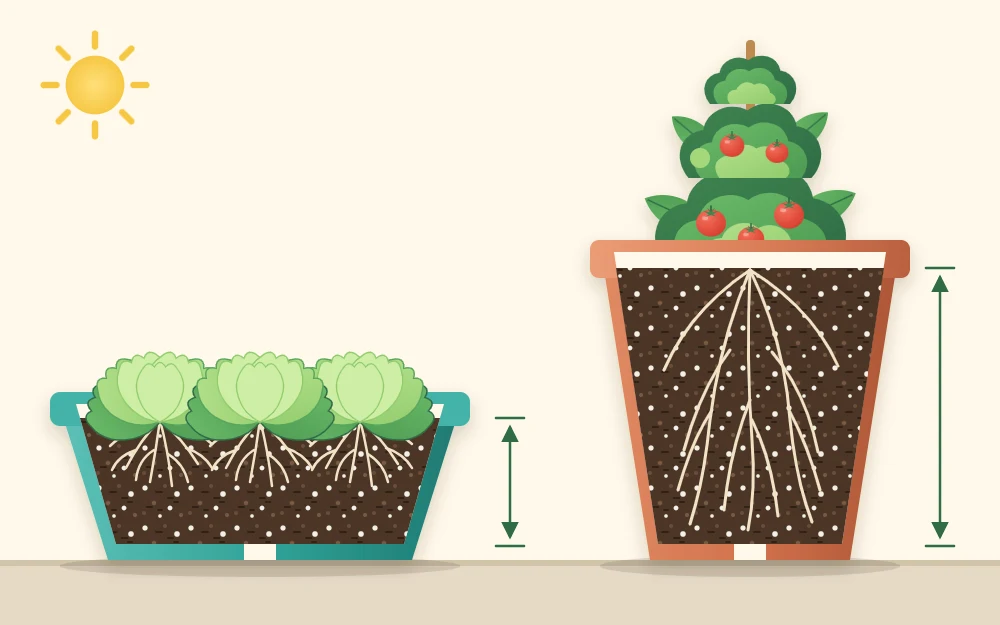
Two pots with the same volume can suit very different plants. What matters is where the roots want to go.
- Shallow-rooted plants such as lettuce, other salad greens, many small herbs and many flowering annuals are content in a wide, fairly shallow bowl or window box.
- Deep-rooted plants such as tomatoes, and root crops such as carrots, need depth. A carrot cannot grow longer than the mix below it, so check the expected root length on the seed packet.
- Tall or top-heavy plants need a wide, weighty base as well as depth, so they do not blow over.
How pots are measured and sold
Pot labels use two systems, and they are easy to confuse.
Diameter in inches. Decorative pots are usually sold by the width across the top, such as 10 in (25 cm) or 14 in (36 cm). Diameter tells you nothing about depth, so two 12 in (30 cm) pots can hold very different amounts of mix. Look at the height as well.
Volume in quarts or gallons. Grow bags, buckets and nursery pots are usually sold by volume. One thing to know is that the “gallon” sizes used in the nursery trade are nominal: a trade one-gallon pot holds less than a true US gallon. When a guide suggests 5 gallons (about 19 liters), it means real volume, so a standard 5-gallon bucket is a more reliable yardstick than a nursery pot label.
Material and shape affect how a pot behaves as well. Those are covered in the guide on how to choose a container by material, shape and drainage.
Commonly suggested starting points
The figures below are commonly suggested rough minimums for one plant, or one small group. Treat them as a place to begin and go larger where you can.
| Plant | Suggested starting size | Notes |
|---|---|---|
| Salad greens and small herbs | At least 6 to 8 in (15 to 20 cm) deep | Width matters more than depth; a bowl or window box works |
| Most flowering annuals | About 8 to 12 in (20 to 30 cm) wide and deep | Wider for mixed plantings |
| Peppers and bush beans | About 2 to 5 gallons (8 to 19 liters) | Larger pepper varieties do better at the upper end |
| A compact tomato | At least 5 gallons (about 19 liters) | Types sold as patio, dwarf or bush tomatoes |
| A large tomato or a dwarf shrub | About 10 to 20 gallons (38 to 76 liters) | More volume makes watering far easier in summer |
Sizes vary a good deal by variety. A miniature pepper and a full-sized bell pepper are both “peppers”, and the plant tag or seed packet is the best guide to how large yours will grow. For more crop-by-crop detail, see the roundup of the best vegetables for containers and the room each needs, or the University of Maryland Extension’s page on growing vegetables in containers.
Tip
If you are torn between two sizes, take the larger one. The extra potting mix costs a little more at the start and makes the pot easier to keep evenly moist all season.
Planting several things together
A mixed container is not exempt from the arithmetic. Three plants need roughly the room of three plants, even though they share it. Crowded pots can look lush in spring and then struggle in midsummer, when the roots have filled the mix and it can no longer hold enough water for the afternoon.
Use the spacing on each plant tag as a guide. Ornamental containers are often planted closer than a garden bed for a full look, but the closer you plant, the larger the pot should be and the more closely you will need to watch moisture and feeding.
Signs a plant has outgrown its pot
No single symptom proves a pot is too small, since dry weather, heat and feeding can cause similar effects. Several of these together make it likely:
- Roots growing out of the drainage holes or circling on the surface.
- Water running straight through, and the mix drying far faster than it did earlier in the season.
- The plant wilting on warm afternoons even though you are watering thoroughly.
- Growth slowing, with smaller new leaves, despite reasonable light and feeding.
- A top-heavy plant that tips over easily.
To be sure, slide the plant out and look. A root ball that is a dense web of roots with little mix visible is root-bound and ready for a larger home. The step-by-step method is in the guide on how to repot a container plant into a bigger pot.
Frequently asked questions
Is it better to use a pot that is too big or too small?
For most fast-growing summer plants, slightly too big is the easier mistake to live with, because extra potting mix stores more moisture and nutrients. The exception is a small, slow-growing plant in a very large pot, where the mix can stay wet for a long time. Those are better moved up gradually.
How deep does a container need to be for vegetables?
It depends on the crop. Salad greens and many herbs manage in a fairly shallow container, while tomatoes and root crops need considerably more depth. Check the seed packet or plant tag for the variety you have, treat published figures as minimums, and choose a deeper pot when you have the option.
Why does my one-gallon nursery pot seem smaller than a gallon?
Because it usually is. Gallon sizes in the nursery trade are nominal names for pot sizes, and a trade gallon holds less than a true US gallon. When planting advice gives a volume, it means real volume, so measure the container or compare it with a standard bucket if you are unsure.