Container Drainage: Holes, Saucers and the Gravel Myth
Why pots need drainage holes, why a layer of gravel in the bottom does not help, and what does: an open potting mix, clear holes, pot feet and saucers that get emptied.
More container plants are lost to water that cannot escape than to almost anything else. Good container drainage is simple to arrange, yet it is surrounded by advice that sounds sensible and does not hold up, such as putting a layer of rocks in the bottom of the pot.
Here is what is actually going on inside a pot when you water it, what helps the extra water leave, and what to do with that handsome planter that has no hole at all.
Why roots need air as well as water
Potting mix is full of small spaces. After you water, the larger spaces drain and refill with air while the smaller ones hold on to moisture. Roots need both: they take up water, and they also need oxygen to stay alive and working.
When water cannot leave a pot, every space stays full and the air is pushed out. Roots sitting in saturated mix for long periods begin to die back, and damaged roots cannot supply the plant. That is why a waterlogged plant often wilts in much the same way as a dry one. Wilting has several possible causes, so feel the mix a couple of inches down and look at the drainage holes before deciding what the plant needs.
Drainage holes: how many and how big
Every container you plant into needs at least one opening in the base. There is no exact rule, but as a general guide a small pot does well with one hole about as wide as a finger, while a large tub or trough benefits from several spread across the base so no corner stays flooded.
Holes can be in the bottom or low on the sides. What matters is that water appears from them soon after you water thoroughly. If you are still shopping, the guide to choosing a container by material, size and drainage explains what to look for.
Adding holes yourself
Plastic, resin, wood and thin metal are usually easy to drill. Turn the container upside down on a stable surface, wear eye protection and use a bit suited to the material. Several medium holes are better than one very large one.
Good to know
Ceramic, terracotta and concrete need the right bit for the material, a slow speed and light pressure, and they can still crack. If a pot is precious to you, do not drill it. Use it as an outer pot instead, as described below.
The gravel myth
The idea is familiar: put a layer of gravel, pebbles or broken pots in the bottom so water has somewhere to drain to. It seems logical, since water runs quickly through gravel. Inside a pot, though, it does not work that way.
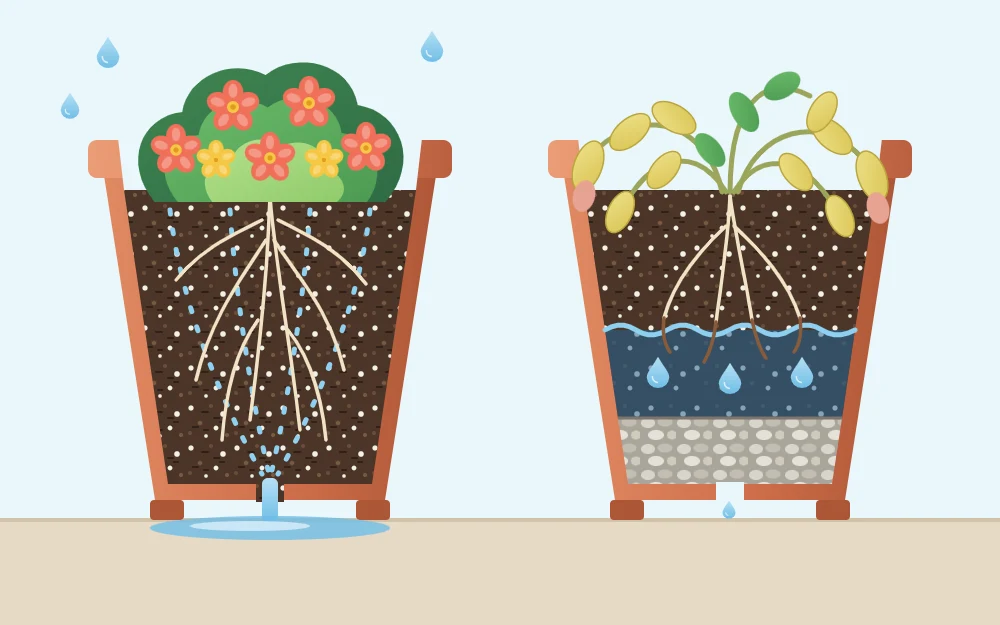
Water does not move readily from a fine-textured material into a coarse one. The small pores in potting mix hold water more tightly than the big gaps between stones, so the water stays in the mix until that mix is saturated. Only then does it drip into the gravel below.
The result is that the wettest zone in the pot does not disappear. It simply sits higher, right on top of the gravel, and closer to the roots. You have also given up part of the pot to stones, so the plant has less mix to grow in.
North Carolina State Extension discusses container media and drainage in more depth in its handbook chapter on plants grown in containers.
What actually improves drainage
Three things make a real difference, and none of them is complicated.
- An open potting mix. A mix made for containers has coarse particles that keep air spaces open after watering. Garden soil packs down in a pot and drains poorly. See the guide to what potting mix is and why it matters.
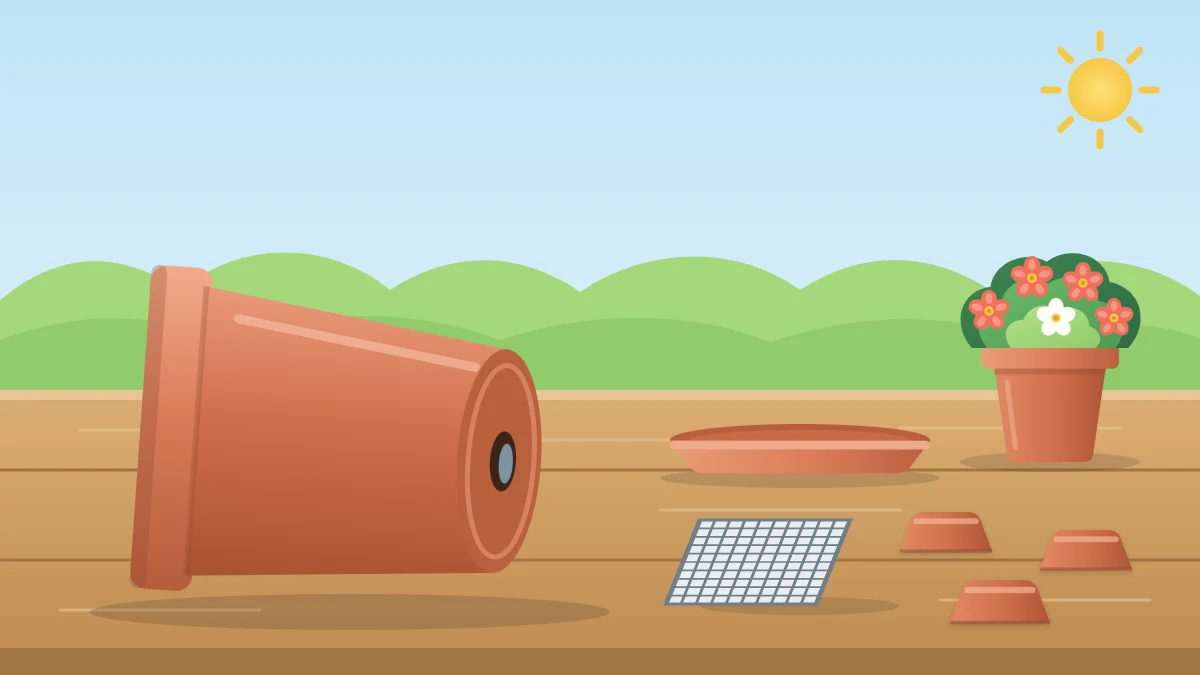
- Holes that stay clear. Fill the pot with mix from the bottom up. To stop mix washing out of a large hole, lay a small piece of mesh over it, or a single curved shard of broken pot placed like a bridge. One piece keeps mix in; a whole layer is not needed.
- A gap under the pot. A pot sitting flat on paving can seal its own hole. Raising it slightly on pot feet lets water run out freely and helps the surface underneath dry.
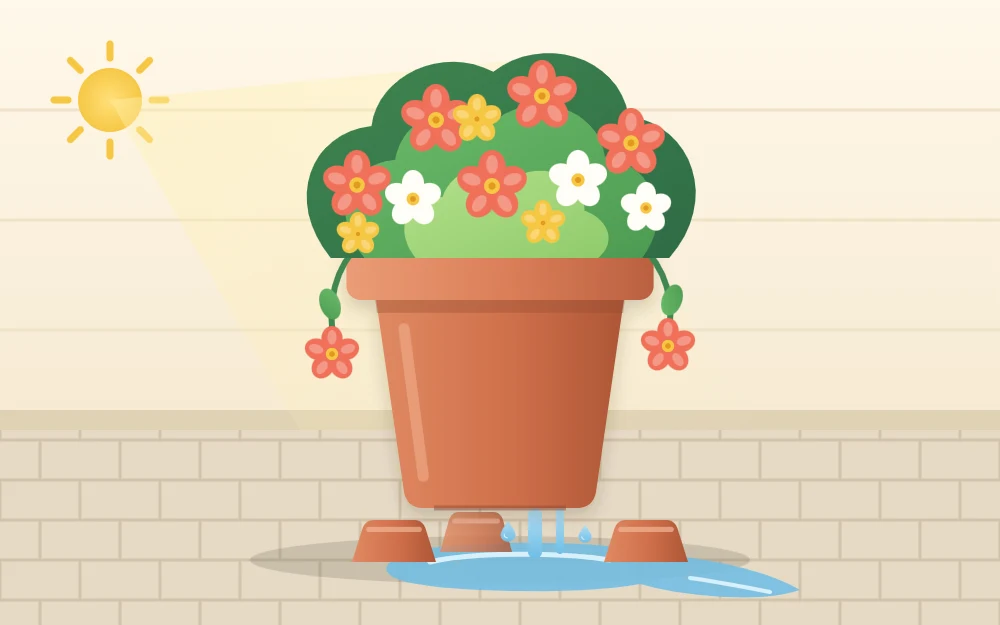
Check holes now and then through the season. Roots, compacted mix or debris can plug them, and a pot that drained well in spring may be blocked by late summer.
Saucers: useful, with one condition
Saucers protect floors, decks and furniture, and indoors they are essential. They cause trouble only when they are left full. A pot standing in water draws that water back up into the mix, and the lower roots stay saturated.
The habit to build is simple: empty the saucer once the pot has finished dripping after watering, and again after heavy rain. For pots too heavy to lift, soak up the water with an old towel or sponge, or stand the pot on feet inside the saucer so its base is above the waterline.
Outdoors in a rainy spell, taking saucers away altogether is often the easiest answer. How much and how often you water also matters, and conditions vary from pot to pot; the guide on how to water container plants by checking the mix covers that side.
Using a pot without holes
You do not have to give up a container you love because it has no drainage. Treat it as a decorative outer pot.
- Grow the plant in a plain pot with drainage holes that fits inside the decorative one.
- Stand the inner pot on a few pot feet or an upturned saucer so it sits above any water that gathers.
- After watering or rain, lift the inner pot out and tip away what has collected.
A quick drainage check for any pot
Water the pot slowly until water runs from the base. If nothing appears, or water sits on the surface for a long time, tip the pot gently and look underneath: the hole may be blocked or sealed against the ground. If the hole is clear, the mix itself may be too dense or worn out.
Poor drainage is one of several easily avoided problems for new growers. The rest are gathered in the list of common container gardening mistakes and how to fix them.
Frequently asked questions
Should I put rocks in the bottom of a planter for drainage?
No. Water tends to stay in the finer potting mix until it is saturated before moving into a coarse layer, so the wet zone ends up sitting higher in the pot. The stones also take up room roots could use. Fill the container with potting mix and rely on open drainage holes.
How do I stop potting mix from falling out of the drainage hole?
Lay a small piece of mesh or window screen over the hole before filling, or bridge it with one curved piece of broken pot. Either lets water through while holding the mix back. A little mix may wash out the first time you water, which is normal and soon stops.
Is it bad to leave water in a plant saucer?
Left for long, yes. The mix can soak that water back up, keeping the lowest roots saturated and short of air. Tip the saucer out once the pot has stopped dripping and again after heavy rain. For heavy pots, mop the water up or raise the pot on feet inside the saucer.