Container Gardening for Beginners: A Simple Starting Guide
New to growing plants in pots? Learn why containers behave differently from garden beds, the five decisions that shape most results, and a small first project that is easy to manage.
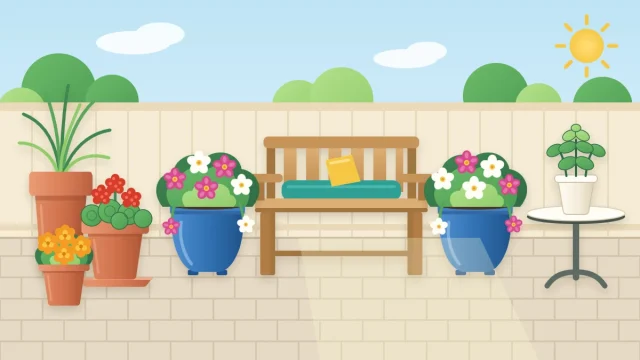
A pot of flowers by the door or a tomato plant on the patio is one of the simplest ways to start growing things. You do not need a yard, a digging fork or much space. Container gardening for beginners comes down to a handful of decisions, and most of them are made before a single plant goes in.
This guide is the starting point. It explains what makes a pot different from a garden bed, walks through the five choices that shape most results, and suggests a small first project. Where a topic deserves more room, you will find a link to the full guide.
Why a Pot Is Not a Small Garden Bed
A plant in the ground can send roots outward and downward in search of water and nutrients. The ground around it also acts as a buffer: it stays cooler in summer, warmer in winter and moist for longer after rain.
A plant in a container has only what is inside the pot. That limited volume of potting mix dries out faster, heats up faster in the sun and runs out of nutrients faster than garden soil does. Nothing arrives unless you bring it.
The Five Decisions That Matter Most
Five basics account for most of the difference between pots that thrive and pots that limp along.

1. How much sun the spot gets
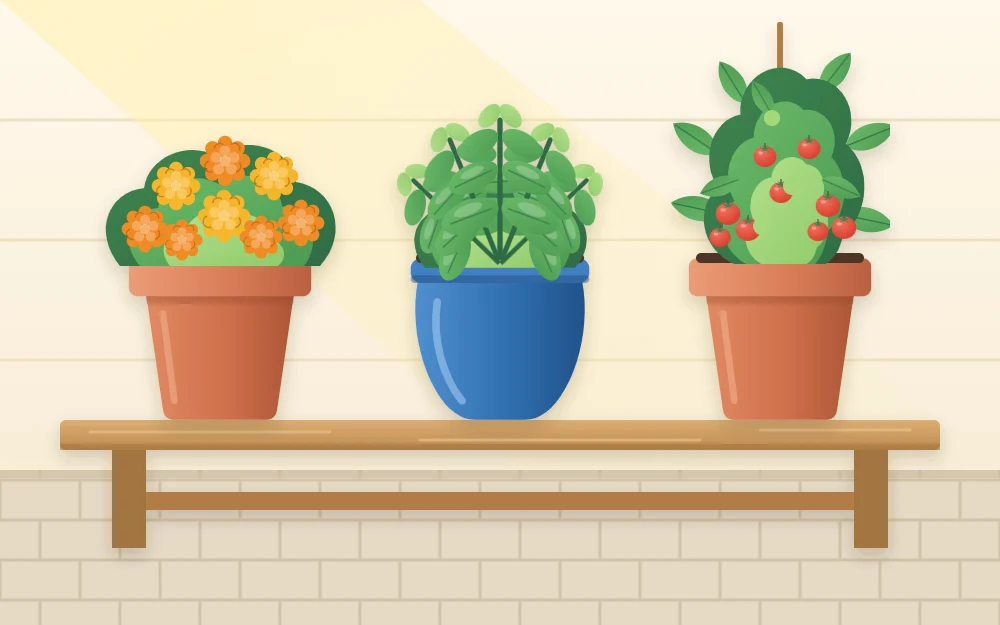
Light is the one thing you cannot buy in a bag, so start there. Watch your patio, porch or steps on a clear day and note roughly how many hours of direct sun reach the place where the pots will stand. Then choose plants that suit that amount, using the light information on each plant tag. A sun-loving plant in a dim corner tends to grow tall and thin with few flowers, and no amount of care fully makes up for it.
2. A container with drainage holes
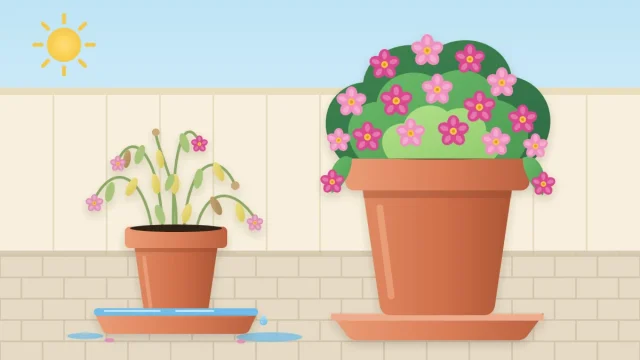
Roots need air as well as water. If water cannot leave the bottom of a pot, the mix stays saturated and roots can suffocate and rot. Whatever the container is made of, check that it has drainage holes before you buy it. Material, weight and shape matter too, and the guide to choosing containers for plants compares the common options.
3. A pot big enough for the plant
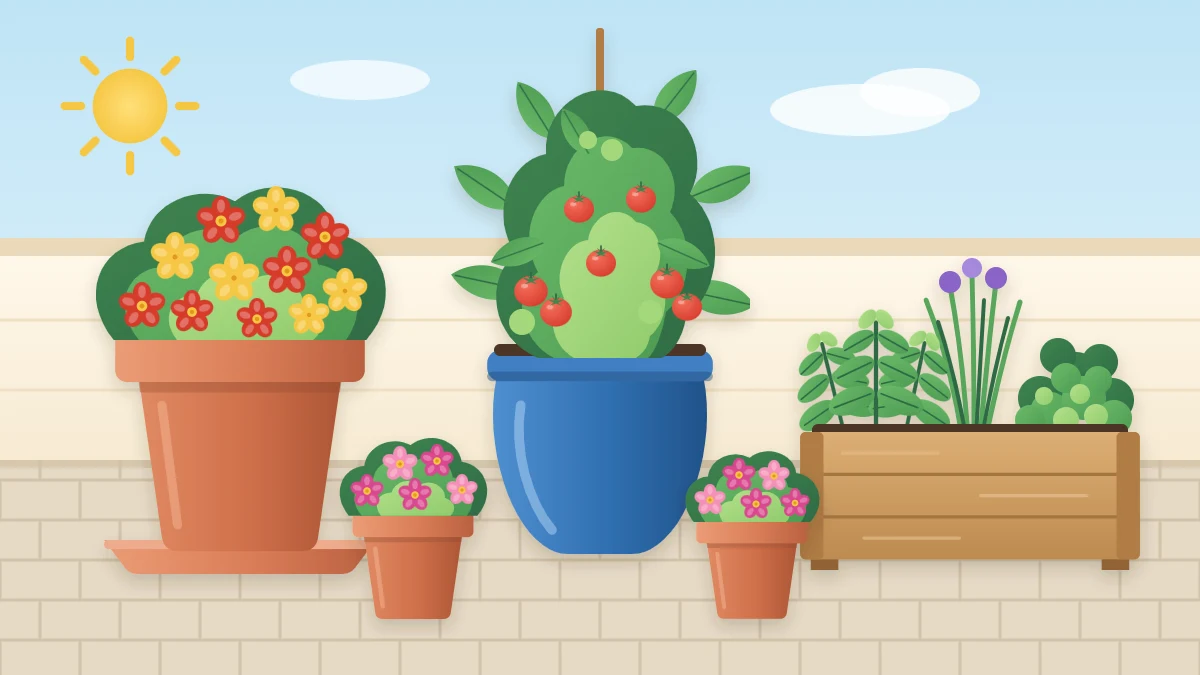
Small pots are tempting because they are cheap and light, but they hold little mix, so they dry out quickly and leave roots short of room. A larger pot holds more water and nutrients and is more forgiving if you miss a check on a hot day. As a rough starting point, many flowering annuals do well in a pot about 12 in (30 cm) across, while a compact tomato is commonly given a container of about 5 gallons (about 19 liters) or more. Sizes vary by variety, so read the plant tag.
4. Bagged potting mix, not garden soil
Soil dug from the yard packs down hard in a pot, drains poorly and may carry weeds and disease. Bagged potting mix is made to stay loose and airy in a container while still holding moisture. Look for the words “potting mix” or “container mix” on the bag. The article on potting mix for containers explains what is inside and how to tell the products apart.
Tip
Dry potting mix is dusty and hard to wet. Dampen it in the bag or in a tub before you fill your pots, and it will be easier to handle and will take up water evenly.
5. Watering by checking the mix
There is no timetable that works for every pot. How quickly a container dries depends on its size and material, the plant, the weather and the season, and conditions vary from pot to pot even on the same patio. Instead of following the calendar, push a finger a couple of inches into the mix. If it feels dry at that depth, water slowly until water runs from the drainage holes. If it still feels moist, wait and check again later. The full method is in the guide on how to water container plants.
A Sensible First Project
Start small. Two or three pots are enough to learn how quickly your containers dry, how the light moves across your space and how fast plants grow. A dozen pots bought in one enthusiastic afternoon can turn into a chore by midsummer.
Choose plants with a reputation for being forgiving. A pot of marigolds or geraniums for color, a pot of basil for the kitchen and one compact cherry tomato make a varied, manageable trio for a sunny spot. For a shadier place, begonias or impatiens are common choices. You will find more options, sorted by what you want to grow, in the list of the best plants for container gardening.
What You Need to Get Started
The shopping list is short, and none of it needs to be expensive:
- Two or three containers with drainage holes
- A bag of potting mix
- Young plants from a garden center, which are easier than seed for a first season
- A watering can or a hose with a gentle spray setting
- A hand trowel
- A fertilizer made for container plants, used according to its label
When to Plant
Timing depends on where you live, not on a date. Tender plants such as tomatoes, basil and most summer flowers are damaged by frost, so wait until the danger of frost has passed in your area and nights are staying mild. Your local extension service can tell you the average last frost date for your location. For a broader introduction from a university source, see the University of Illinois Extension’s overview of container gardens.
After Planting: A Simple Routine
Once your pots are planted, the work is mostly looking. Make a habit of walking past them and checking three things: the moisture in the mix, the leaves and whether anything has changed since your last look.
Potting mix holds few nutrients for long, so most container plants need feeding during the growing season. Follow the fertilizer label and do not exceed it.
Expect a few setbacks. A plant may wilt, stall or get nibbled, and that is how every gardener learns what a particular spot and a particular pot need. With the five basics in place, most problems are small and fixable.
Frequently asked questions
Is container gardening hard for a beginner?
It is one of the easier ways to begin, because you control the potting mix, the position and the plant. The main difference from a garden bed is that pots dry out and use up nutrients faster, so they need checking more often. Starting with two or three good-sized pots keeps that manageable.
Can I use soil from my yard in pots?
It is not a good idea. Garden soil compacts in a container, drains slowly and leaves roots short of air, and it can bring weed seeds and disease with it. A bagged product sold as potting mix or container mix is made to stay loose and to drain freely in a pot.
How many pots should I start with?
Two or three is a sensible number for a first season. That is enough to learn how fast your containers dry and how the light moves across your space, without turning care into a burden. Fewer, larger pots are generally easier to look after than many small ones.