Can You Reuse Potting Mix? How to Refresh Old Container Soil
Old potting mix can often be used again when the plants in it were healthy. Learn when to discard it, how to refresh it with fresh mix and fertilizer, and what to do with the rest.
At a glance
What you need
- Used potting mix from healthy plants
- Fresh potting mix
- Tarp or large tub
- Hand trowel or hand fork
- Gloves
- Fertilizer, used according to its label
- Watering can
Last year’s pots are still sitting where the summer left them, full of gray, root-matted mix, and a new season is coming. Buying all-new bags for every container adds up quickly. So can you reuse potting mix, or does it all have to go?
The balanced answer is that you often can, in part, as long as the plants that grew in it were healthy and you put back what a season of growing took out. Here is how to decide, and how to refresh old mix so it is worth planting into.
What a season does to potting mix
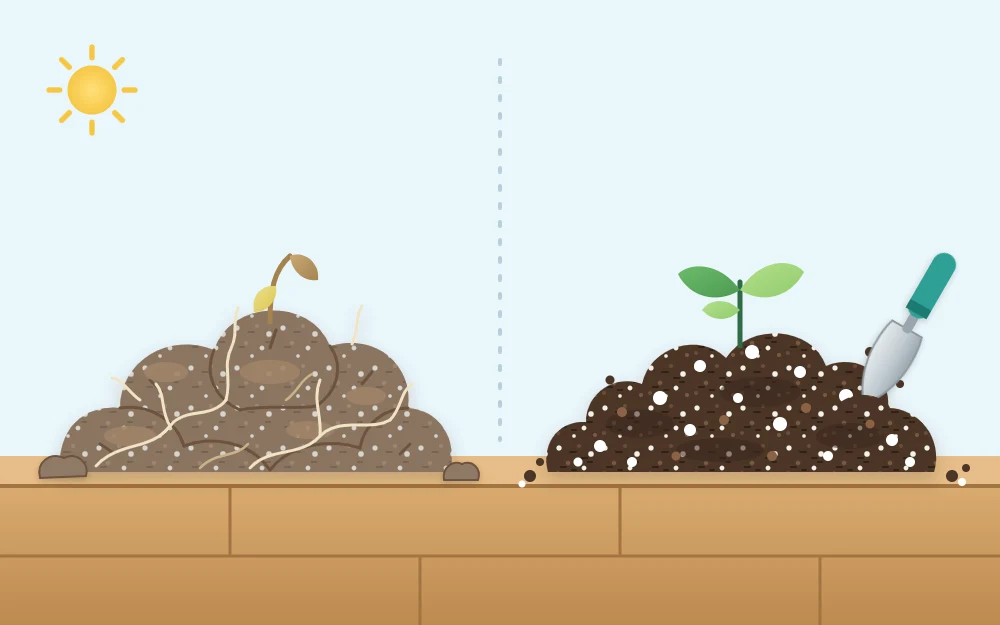
Fresh mix is light and open. Over months of watering and root growth, the fibers and bark pieces break down into finer particles and the mix settles. It then holds less air, drains more slowly and can pack into a dense block that is hard to re-wet once it dries out.
The other change is invisible. Plants use up the nutrients in the mix, and regular watering washes more out through the drainage holes. By the end of a season, used mix has very little left to feed a new plant. For background on what the ingredients are meant to do, see the guide to what potting mix is made of.
When not to reuse it
Some mix is better kept out of your pots.
- The plants were diseased. If a plant collapsed, rotted at the base or had badly spotted, moldy leaves, the cause may persist in the mix.
- There were root or soil pests. Grubs, larvae or insects living in the mix can carry over to the next planting.
- You are not sure why the plant died. When in doubt, leave it out of containers.
- It smells sour or is slimy. That suggests it stayed waterlogged for a long time.
Many gardeners also avoid growing tomatoes and their relatives (peppers, eggplants and potatoes) in mix that grew any of them the year before, because that plant family shares several diseases. Use that mix for flowers or unrelated crops, or start those plants in fresh mix.
Do not put mix from diseased plants on the compost pile or garden beds either. Bag it and put it out with household trash, following local rules.
What you need
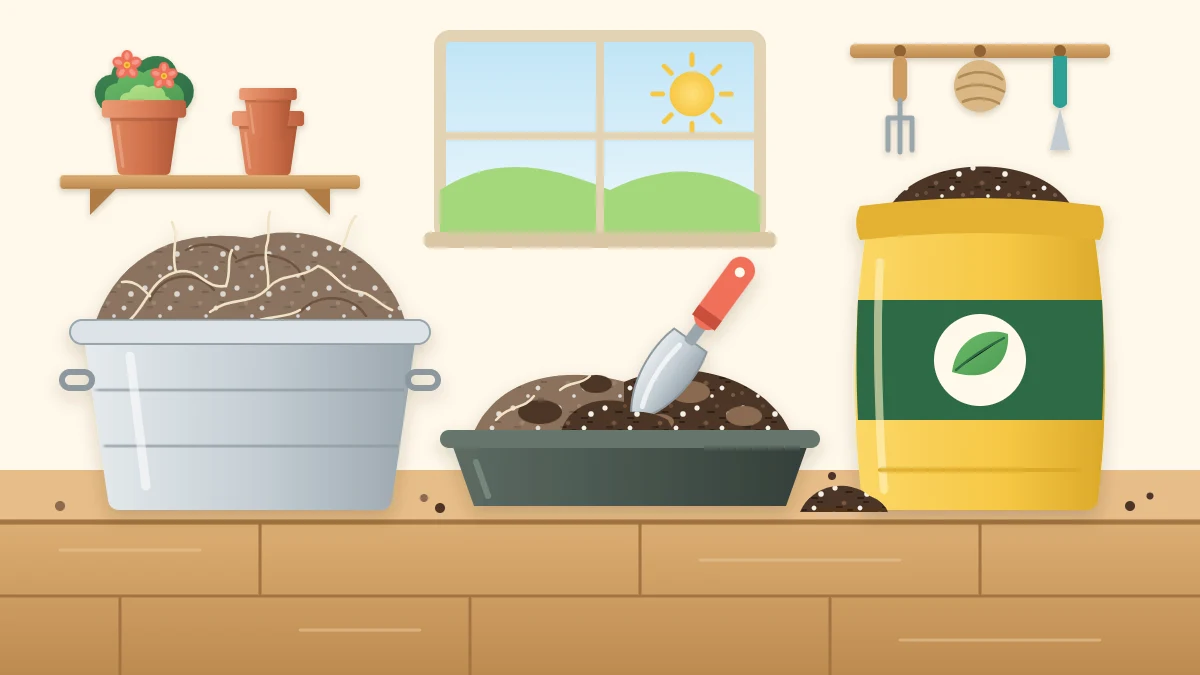
Refreshing mix takes little equipment: a tarp or large tub to work on, a hand trowel or hand fork, gloves, a watering can, a supply of fresh potting mix, and a fertilizer suited to the plants you will grow.
Good to know
Old mix that has dried out is dusty. Sprinkle it with water before you tip it out and break it up, work outdoors, and avoid breathing the dust. Wear gloves and wash your hands afterward.
How to refresh old potting mix
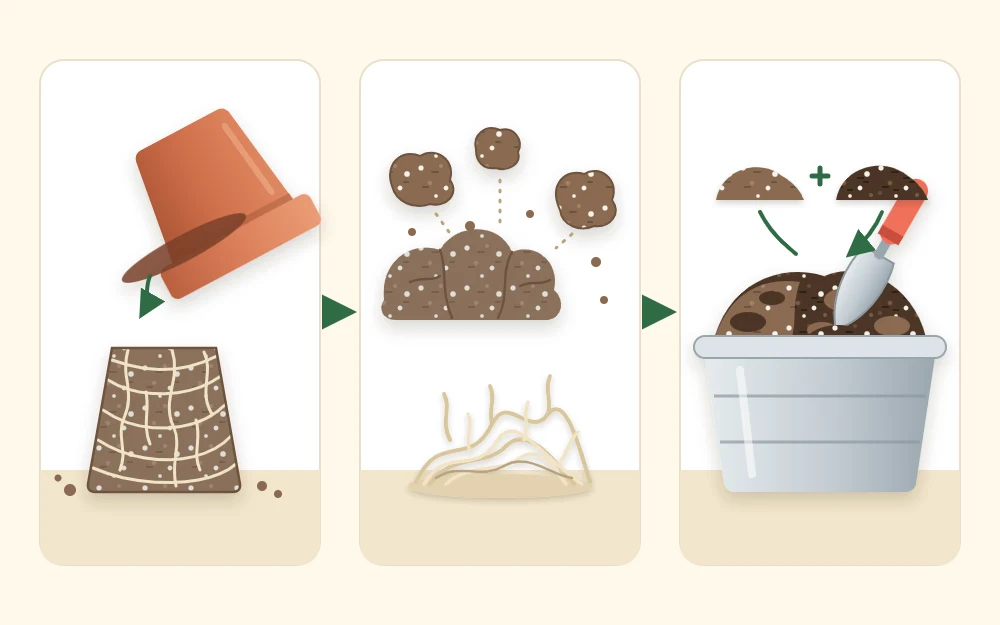
- Dampen and tip out. Lightly moisten the surface, then turn the pot over onto a tarp or into a large tub. Tap the sides to release the root ball.
- Break up the clumps. Crumble the mass with your hands or a hand fork until no hard lumps remain.
- Pull out old roots and debris. Remove thick roots, stems, dead leaves and any weeds. Fine root hairs can stay. Look for grubs or other pests as you go; if you find many, do not reuse the mix in pots.
- Blend with fresh mix. Add a generous share of new potting mix and turn the two together thoroughly. Half old and half new is a common starting point; use more fresh mix if the old is very fine and dense.
- Add fertilizer according to its label. Old mix has little nutrition left, so the blend needs feeding. Follow the product label for the amount and do not exceed it.
- Moisten evenly. Add water a little at a time and mix until it is damp like a wrung-out sponge.
- Clean the pot and refill. Brush out the empty container, check that the drainage holes are clear, then fill and plant as usual.
Because a refreshed blend starts with less in reserve than an all-new mix, pay attention to feeding through the season. The guide to fertilizing container plants explains slow-release and water-soluble fertilizer and how to use them sensibly.
A shortcut for big planters
Emptying a very large planter is heavy work and usually not necessary when the previous plants were healthy. Instead, refresh the top.
Pull out the old plants and as much of their root mass as comes easily. Scoop out roughly the top third of the mix, loosen what remains below with a hand fork without packing it down, then refill with fresh mix and add fertilizer according to its label. The roots of new plants start out in the fresh layer and grow down from there.
After several seasons the lower mix becomes dense as well. When water starts to pool on the surface or drains very slowly even though the holes are clear, it is time to empty the planter completely.
Good uses for mix you do not replant
Spent mix from healthy plants still has value as organic matter, even if it is too tired for pots.
- Spread it thinly over garden beds or work it into the ground soil, where it helps loosen the texture.
- Add it to a compost pile in layers with other materials.
It is best not to use old mix for starting seeds. Seedlings are easily damaged by disease organisms, so a fresh seed-starting mix is the more reliable choice.
Storing leftover mix
Both opened bags of fresh mix and mix you have emptied from pots keep well if they stay dry and covered. Fold the bag top over and clip it, or tip the mix into a bin with a lid. Store it off the ground, out of the rain and away from direct sun.
Mix stored damp can turn moldy or attract fungus gnats, so let emptied mix dry somewhat before putting the lid on, and dampen it again when you are ready to use it.
The end of the growing season is a convenient moment for this job, since pots are being emptied and put away anyway. The guide to fall and winter container care covers cleaning and storing the containers themselves.
Tip
Mark stored bins by what grew in the mix, such as flowers or tomatoes. Next spring you will know which mix to keep away from related crops.
Frequently asked questions
How many times can you reuse potting mix?
There is no fixed number. Each season the mix becomes finer and denser, so judge it by feel: if a refreshed blend is still loose, drains freely and re-wets easily, it can serve again. Once it stays heavy and slow to drain even after adding fresh mix, move it to garden beds or compost.
Do I need to sterilize old potting mix before using it again?
Most home gardeners do not. The simpler safeguard is to be selective: reuse only mix from plants that stayed healthy, discard mix from diseased or pest-ridden pots, and avoid following tomatoes and their relatives with the same family. Use fresh mix for seedlings, which are the most vulnerable.
Can I leave old potting mix in the pots over winter?
You can, although damp mix that freezes may crack terracotta and ceramic containers, so those are better emptied or kept somewhere dry. Mix left in sturdy pots should be loosened, cleared of old roots and refreshed with new mix and fertilizer, used as its label directs, before replanting in spring.

