Deadheading and Pinching: Keeping Container Flowers Blooming
How to remove faded flowers so potted annuals keep producing buds, which plants need it and which clean themselves, how to pinch young plants for bushier growth, and how to trim leggy trailers in midsummer.
At a glance
What you need
- Small, sharp garden snips
- Cloth for wiping the blades
- Small bucket or bag for trimmings
- Watering can
Pots that looked full and bright in early summer often turn straggly by the middle of the season: long stems, brown flower heads and fewer new blooms. The plants are rarely finished. Many have simply moved on from flowering to making seed.
Deadheading container flowers interrupts that shift, and together with pinching and one well-timed trim it keeps many annuals blooming for much longer. All three jobs are quick, and none needs more than your fingers or a small pair of snips.
What deadheading is and why it works
Deadheading means removing flowers once they have faded. An annual’s purpose is to set seed, and when a bloom has been pollinated the plant begins sending its energy into the developing seed behind it. As seed ripens, many plants slow down or stop making new buds.
Taking off the fading flower before the seed forms keeps the plant trying again, and for many common container annuals that means more buds. It also keeps a pot looking fresh, and it removes soggy petals that can turn moldy in damp weather.
How to deadhead properly
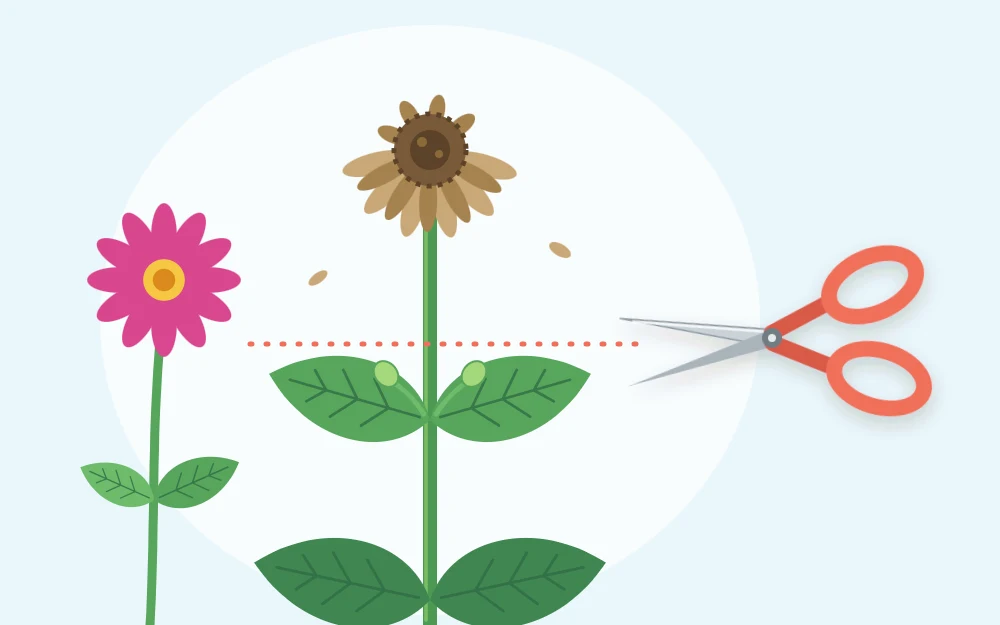
The most common beginner slip is pulling off only the petals. The part that becomes seed sits at the base of the flower, so if that stays on the plant, little has changed.
- Find a faded bloom: petals wilted, browned or dropped.
- Follow its stalk down to the first set of healthy leaves or to a side bud.
- Pinch the stalk between thumb and fingernail, or snip it, just above that point.
- Collect what you remove instead of dropping it into the pot.
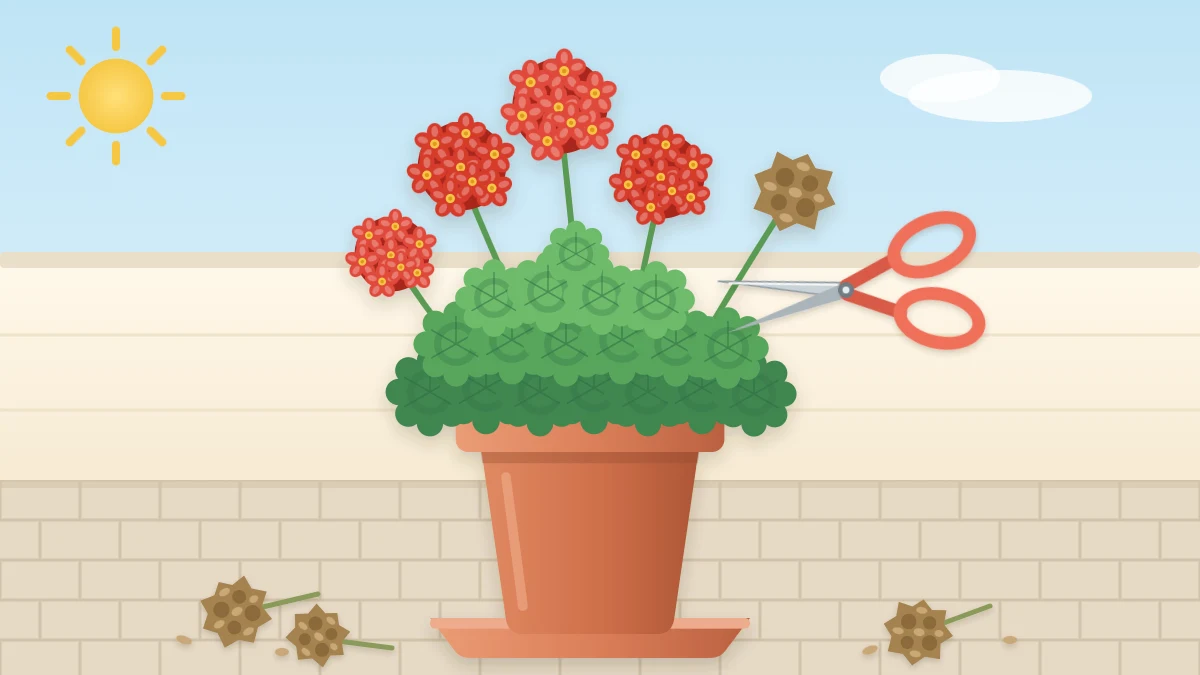
A few plants have their own details. Geraniums carry clusters of flowers on a long bare stalk, which snaps off cleanly where it joins the main stem. On petunias, remove the small green swelling behind the petals as well as the bloom. On salvia, cut the whole spent spike back to the leaves below it.
Tip
Soft stems pinch off easily with fingers. Use clean, sharp snips for anything tough or wiry, since a ragged tear can damage the stem below it.
Which plants need it and which do not
Not every container flower needs your help. Some drop their old blooms unaided or are bred not to set much seed; these are often sold as self-cleaning. Varieties differ, so read the plant tag.
| Plant | Deadheading need | What to know |
|---|---|---|
| Geraniums | Regular | Snap off the whole flower stalk at its base |
| Marigolds | Regular | Pinch off browned heads above a leaf |
| Zinnias | Regular | Cut back to a pair of leaves or a side bud |
| Older petunia types | Regular | Remove the seed pod, not only the petals |
| Salvia | Occasional | Remove spent spikes to encourage new ones |
| Calibrachoa, many modern trailing petunias | Little or none | An occasional trim keeps them compact |
| Impatiens, begonias | Little or none | Clear fallen petals off the leaves |
If you are still choosing plants, the roundup of reliable flowers for sunny pots notes how much deadheading each one tends to need.
Pinching young plants for bushier growth
Pinching is a different job with a similar motion. Instead of removing an old flower, you remove the soft growing tip of a young stem, just above a pair of leaves. The plant responds by sending out side shoots from the leaf joints below, so one stem becomes two or more.
It is most useful early, when a young plant is growing tall on a few stems. Pinching delays the first flowers a little, and the reward is a fuller plant with more flowering stems later. Many bedding plants are sold already branched and need no pinching at all, so look at the plant before you start. If it is compact and bushy, leave it alone.
The midsummer cut-back
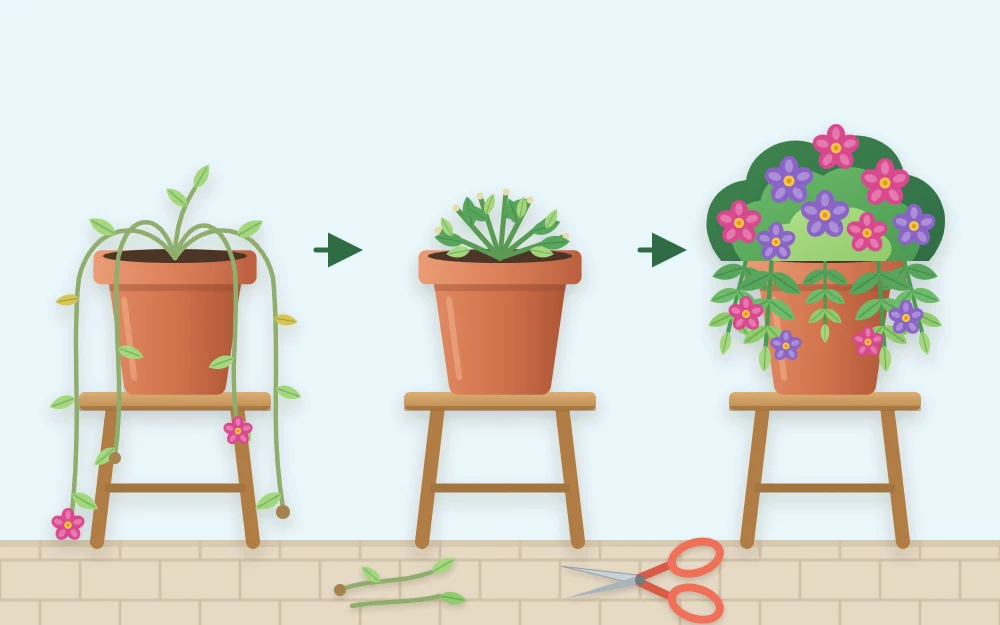
By midsummer, trailing plants such as petunias, calibrachoa and verbena can grow long and bare near the center of the pot, with flowers only at the tips. Deadheading will not fix that. A trim will.
- Check that the plant is otherwise healthy and the mix is moist.
- Trim the long stems back by up to about a third, cutting just above a leaf. If that feels drastic, cut half the stems now and the rest once the first have regrown.
- Water thoroughly.
- Feed according to the label of your fertilizer, since regrowth draws on nutrients. The guide to feeding plants in pots explains the options.
The pot will look sparse at first. New shoots typically appear along the stems within a couple of weeks, with flowers following, though the pace depends on the plant and the weather.
Good to know
Avoid a hard trim during a heat wave. A freshly cut plant in a baking pot is under extra stress, so wait for a milder spell. Conditions vary from pot to pot, so check the mix before and after you cut.
Heat can also slow flowering without any help from seed heads. If blooms thin out in a hot spell even on well-kept plants, the advice on looking after pots in hot weather covers what is going on.
Clean tools and a tidy pot
Sharp snips make a clean cut that seals quickly. Wipe the blades clean before you start and after working on a plant that looks diseased, so you do not carry a problem from one pot to the next.
Pick up fallen petals and removed flower heads from the surface of the mix and from the leaves. Wet petals stuck to foliage are a common starting point for gray mold in humid weather. Healthy trimmings can go in the compost.
Making it a habit
Deadheading works best little and often. A quick look around your pots about once a week is a comfortable rhythm for most people, and a habit that helps, not a rule. Fast bloomers in warm weather may want attention sooner, and self-cleaning plants hardly at all.
Pairing it with something you already do makes it easy to keep up. When you check whether a pot needs water, glance over the flowers and pinch off anything that has faded.
Later in the season you can relax. As fall approaches, annuals are nearing the end of their run whatever you do, and a few seed heads left in place make no real difference.
Frequently asked questions
Do all container flowers need deadheading?
No. Geraniums, marigolds, zinnias and older petunia types respond well to it, while calibrachoa, many modern trailing petunias, impatiens and begonias are often sold as self-cleaning and need little beyond an occasional tidy. Varieties differ, so the plant tag is the best guide for the plants you actually have.
What is the difference between deadheading and pinching?
Deadheading removes a flower that has faded, so the plant does not spend energy on seed. Pinching removes the growing tip of a young stem above a pair of leaves, so the plant branches and becomes bushier. Both use the same finger-and-thumb motion, but they are done at different stages and for different reasons.
Can I cut back leggy petunias in the middle of summer?
Yes, as long as the plant is otherwise healthy. Trimming long, bare stems by up to about a third, then watering and feeding as the fertilizer label directs, usually prompts fresh shoots, with regrowth typically showing within a couple of weeks. Avoid doing it during extreme heat, when a cut plant is under extra stress.


