Planning a Patio Container Garden: Layout Ideas That Work
Arrange pots so a patio, deck or porch looks good and stays usable. Plan around how you use the space and where the sun falls, then apply simple ideas for grouping, height and placement.
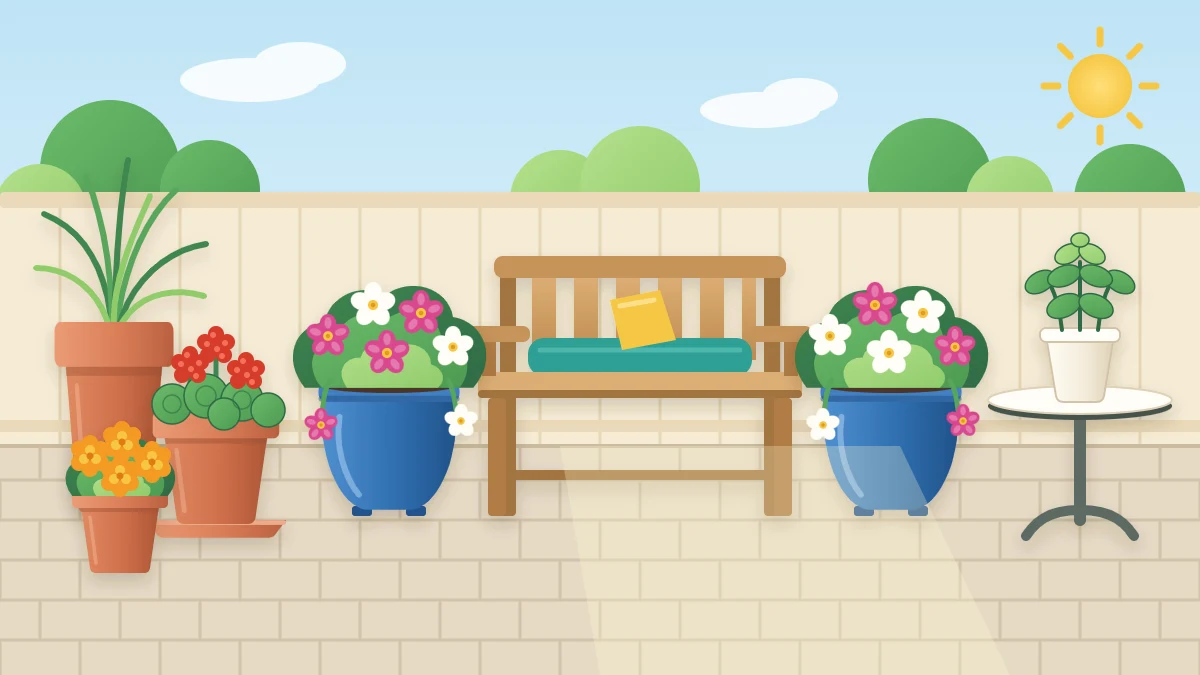
A bare patio, deck or porch can feel like a blank page. It is easy to buy a few pots, set them along the edge and end up with something that looks scattered and gets in the way. A little planning before you shop makes a patio container garden look deliberate and keeps the space pleasant to use.
The ideas below work for any small outdoor area, and most cost nothing.
Start With the Space and the Sun
How you use the space
Before thinking about plants, think about people. Where do you sit? Which way does the door swing? Where do you walk with a tray of food or a basket of laundry?
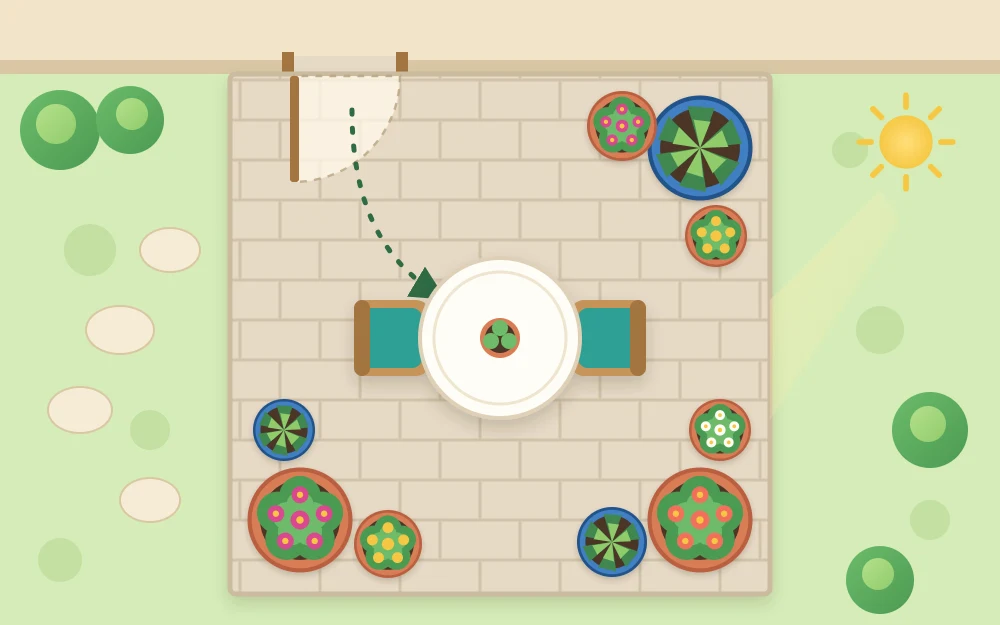
Sketch the space on paper and mark the furniture, the door and the routes you take across it. Whatever is left over is where containers can go: corners, the edges of steps, the wall beside a door, the ends of a bench. Plants should frame the way you live in the space, not compete with it.
Where the sun falls
The second layer of the plan is light. One corner of a patio may bake all afternoon while another sits in the shadow of the house. That decides what can grow where, and it is far easier to find out before you buy plants than after.
Watch the space on a clear day and note which areas get direct sun and for roughly how long. The guide to reading the light for a container garden shows how to do it and what the plant tag terms mean. Mark the sunny and shady zones on your sketch.
Layout Ideas That Work
With the usable spots and the light mapped, these arrangement ideas help pots look like a garden rather than a collection.
Group pots instead of lining them up
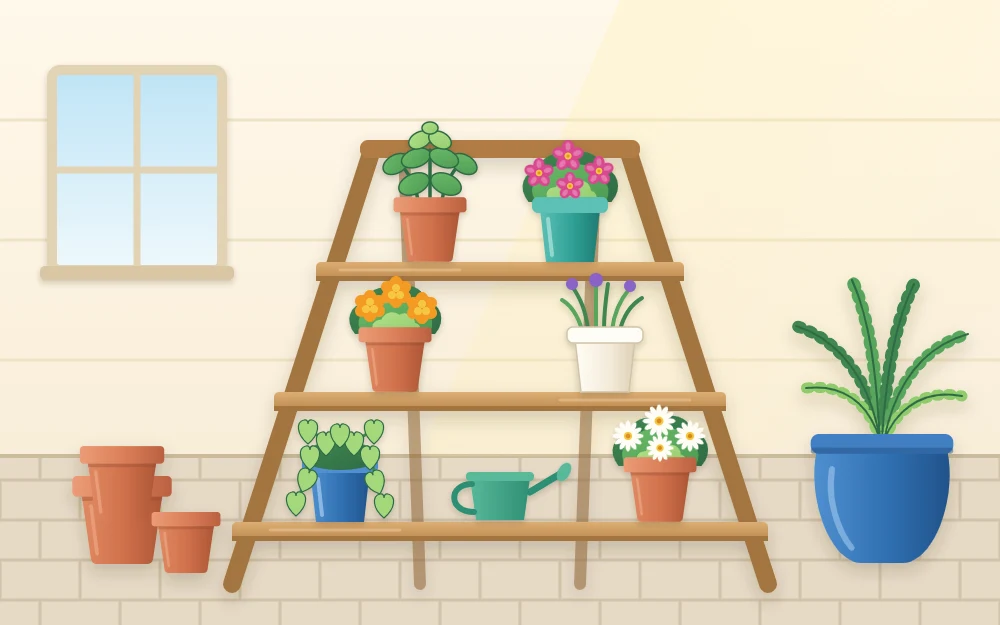
A cluster reads as one feature. Groups of three or five, with pots of different heights and widths, tend to look more natural than pairs or rows. Put the tallest at the back or in the center and let the smaller ones step down toward the front.
Repeat one color or material
Ten pots in ten styles look busy. Repeating one element, such as terracotta throughout or the same blue glaze in each group, ties the whole space together.
Place the largest container first
Your biggest pot is the anchor. Set it in position, empty, before anything else, and arrange the others around it. A large pot full of moist mix is very heavy, so decide where it lives before you fill it.
Frame a door or a seat with a pair
Two matching pots on either side of a door, a bench or the top of the steps give an instant sense of order.
Raise some pots
Height adds interest and saves floor space. A plant stand, an upturned pot or a flight of steps lifts small containers to where they can be seen, and brings herbs within easy reach.
Keep paths and doors clear
Leave comfortable room to walk, and remember that plants grow wider through the summer. A pot that just clears the door in spring may block it by midsummer.
Choose Fewer, Larger Containers
Many small pots are more work than a few big ones. Small volumes of mix dry out quickly, so a patio dotted with little pots means a lot of checking in hot weather. Larger containers hold more water, buffer heat better and give roots more room.
A large pot can also hold several plants at once. The classic approach of a tall plant, mounding plants and trailing plants is explained in the guide to thriller, filler, spiller containers, and one well-planted pot of this kind can do the work of five small ones.
Not everything has to be a round pot. Troughs, window boxes, hanging baskets and grow bags each solve a different layout problem, and the tour of the types of plant containers explains what each is good for. Anything hung or mounted is heavy when wet, so use hardware rated for the load and follow the maker’s instructions.
Make Watering Easy on Yourself
Think about where the water comes from. Carrying a full watering can across the patio several times is a fine routine in spring and a tiresome one in a heat wave.
- Put the thirstiest pots, such as hanging baskets and large vegetables, closest to the tap or hose.
- Keep pots within reach, so you can feel the mix in every one without climbing over the others.
- Group plants with similar needs, so one pass covers them all.
Conditions vary from pot to pot, so a layout that lets you check each one quickly is worth designing in.
Mix Edibles and Flowers
There is no rule that vegetables and herbs must be kept apart from ornamentals. A pot of basil beside a pot of marigolds, or a compact tomato behind a bowl of trailing flowers, looks good and puts the edible plants where you will remember to pick them.
Herbs belong near the kitchen door if the light allows. Fruiting vegetables generally need the sunniest spot you have. For anything you plan to eat, use containers that have not held chemicals or unknown substances, and wash produce before eating.
Protect Decks and Paving
Pots that sit directly on a surface trap moisture underneath, which can stain paving and mark wooden decking over time. Pot feet lift a container slightly, so water drains freely and air can move below it.
Saucers catch drips where staining matters or where water would run somewhere unwelcome. Empty them after watering and after rain so the pot does not stand in water.
A Short Note on Balconies
The same layout ideas apply to a balcony, with a few extra cautions.
Good to know
Before adding heavy pots, check your building’s rules and what the structure is designed to carry. Secure anything placed on or over a railing, following the maker’s instructions. Expect more wind than at ground level, and make sure water does not drip onto the neighbors below.
Begin Small and Adjust
A plan on paper is a starting point. Set out the empty pots and move them until the space feels right, then plant.
If this is your first season, start with one group of three pots and add more once you know how much care they take. The orientation guide to container gardening for beginners covers the basics of pots, mix and watering that every layout depends on.
Frequently asked questions
How many pots should I put on a small patio?
There is no set number. A few large containers usually look calmer and are easier to care for than many small ones. Begin with one group of three pots of different heights, see how much room and attention they take, and add more only if the space still feels comfortable to use.
How do I arrange pots of different sizes?
Cluster them rather than lining them up. Put the tallest pot at the back or in the center and step the smaller ones down in front. Odd-numbered groups tend to look natural, and repeating one pot color or material keeps a mixed group from looking cluttered.
Will pots damage a deck or paving?
They can leave marks over time, because moisture stays trapped under a pot that sits flat on the surface. Raising containers on pot feet lets water drain and air circulate. Saucers catch drips where staining is a concern, as long as you empty them after watering and rain.