Potting Mix for Containers: What It Is and Why Garden Soil Fails
Why soil from the yard packs down and drains poorly in a pot, what the ingredients in a bag of potting mix do, how to read the label and how a good mix should feel in your hand.
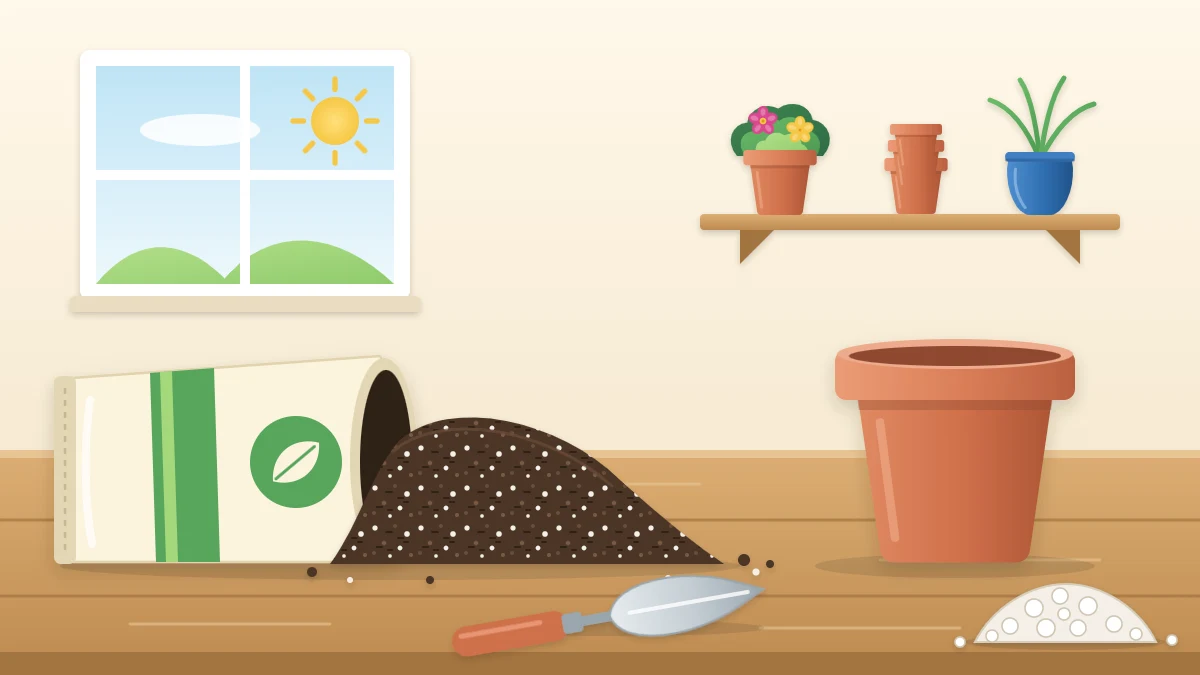
It is a fair question: with a yard full of soil, why pay for a bag of something else? The answer lies in how differently a pot behaves from open ground. Choosing a proper potting mix for containers is one of the few decisions that affects every plant you grow, from a single basil to a tub of tomatoes.
Below is what goes wrong when garden soil is used in a pot, what is actually inside a bag of potting mix, and how to tell the right product from the similar-looking ones stacked beside it.
Why garden soil fails in a pot
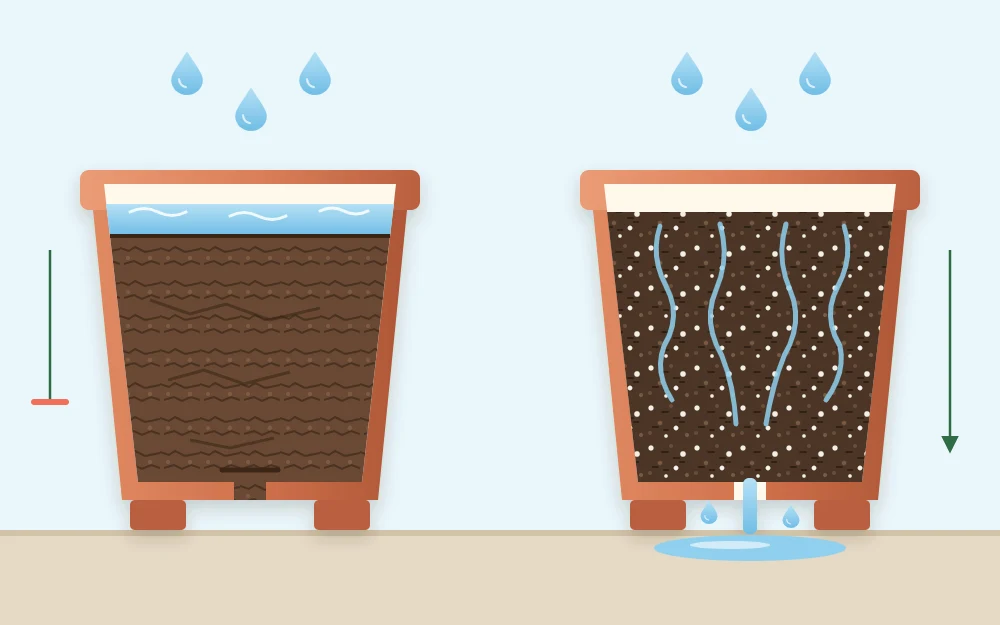
In the ground, soil is part of a deep, connected system. Water drains down through many feet of earth, and worms, roots and weather keep opening channels for air. Scoop that same soil into a container and all of that is lost.
- It packs down. Repeated watering settles the fine particles into a dense mass, especially if the soil contains much clay.
- It drains poorly. A pot is shallow, so water has little depth to drain through. Dense soil stays saturated at the bottom for a long time.
- It starves roots of air. Roots need oxygen. When the spaces between particles stay full of water, roots struggle and can die back.
- It can bring passengers. Soil from the yard may carry weed seeds, insects and disease organisms into the pot.
- It is heavy. A large planter of wet garden soil weighs far more than the same planter filled with potting mix.
What potting mix actually is
Most bagged potting mix contains no soil from the ground at all, which is why it is often described as a soilless mix. It is a blend of light, coarse ingredients designed to do two things that pull against each other: hold enough water for the plant, and still keep air spaces open after watering.
A well-made mix also resists packing down over a season, and it starts out largely free of weed seeds. The University of Illinois Extension explains the reasoning further on its page about soil and potting mixes for containers.
The common ingredients and what they do
Recipes differ, but the same handful of ingredients appears on most bags.
- Peat moss or coconut coir. The fibrous base of most mixes. Both hold a great deal of water while staying light.
- Composted bark. Chunky pieces that give the mix structure, keep it open and break down slowly.
- Perlite. The white, lightweight granules. They create air spaces and help water drain.
- Vermiculite. Soft, shiny flakes that hold moisture and some nutrients; common in seed-starting mixes.
- Compost. Supplies some nutrients and holds water. Mixes with a large share of compost tend to be heavier.
- Additions. Many mixes include a little limestone to balance acidity, a wetting agent to help dry mix take up water, and sometimes a starter charge of fertilizer.

How to read the bag
Product names are where beginners most often go wrong, because bags that look alike are made for different jobs.
| Words on the bag | Made for | Use in pots? |
|---|---|---|
| Potting mix, container mix | Pots, planters, baskets | Yes |
| Potting soil | Varies; some are container mixes, some are heavier | Read the description and feel the weight |
| Garden soil, topsoil | Blending into ground beds | No; too dense by itself |
| Raised bed mix | Large, deep, open-bottomed beds | Usually heavier than ideal for pots |
Look for a statement such as “for containers” or “for pots and planters”. Then lift the bag. Allowing for how damp it is, a container mix feels light for its size, while garden soil and topsoil feel like a sack of earth.
You will also see specialty mixes: finer ones for starting seeds, grittier ones for desert plants, bark-based ones for orchids. For most flowers, herbs and vegetables, a general-purpose mix is the place to start.
How a good mix should feel
Open the bag and take a handful. A good mix is light and springy, with a mixture of fibers and small chunks, not a uniform powder or a sticky paste. Squeeze a damp handful and it should hold together loosely, then crumble when you poke it.
In the pot, water should soak in within moments and begin to run from the drainage holes soon after, yet the mix should still feel damp a couple of inches down some time later. If water pools on top, the mix may be too dense or the holes blocked; the guide to container drainage and why gravel does not help shows how to tell which.
Moisten dry mix before you fill
Mix straight from the bag is often dry, and dry peat or coir sheds water at first. Poured into a pot like that, water can run down the sides and out the bottom while the center stays dry.
Tip the mix into a tub or wheelbarrow, add water a little at a time and turn it with your hands or a trowel until it is evenly damp, like a wrung-out sponge. Then fill your pots. Very big containers need a few extra considerations, which are covered in the steps for filling a large planter without wasting mix.
Good to know
Dry potting mix is dusty. Dampen it before handling, work outdoors or somewhere airy, and avoid breathing the dust. Gloves are a sensible habit, and wash your hands when you finish.
Every mix behaves a little differently
Two bags labeled “potting mix” can perform quite differently. One heavy in peat or coir holds water longer; one heavy in bark and perlite dries faster. That is one reason no fixed watering routine works for every pot: conditions vary from pot to pot, and the mix is part of those conditions. Feel the mix a couple of inches down and adjust to what you find.
Feeding varies too. Some mixes include a starter fertilizer and others have none, and in either case the supply runs down as plants grow and water washes through. Check the bag, then see the guide to fertilizing container plants for how to take over from there.
Finally, potting mix does not last forever. Over a season it settles and loses some of its open structure. That does not always mean throwing it out; the guide on reusing and refreshing old potting mix explains when it can serve again.
Frequently asked questions
Can I mix garden soil with potting mix to make it go further?
It is not a good way to save money. Even a modest share of garden soil makes the blend denser, so it drains more slowly and holds less air, and it may introduce weed seeds or disease. If cost is the concern, refreshing last year's healthy mix with new mix is a better route.
Is potting soil the same as potting mix?
Sometimes. The two names are used loosely, and some products called potting soil are true container mixes while others are heavier. Read the description on the bag for wording such as for containers or for pots and planters, and judge by weight and texture: light, loose and springy is what you want.
Are peat-based and coir-based mixes used the same way?
Broadly, yes. Both form a fibrous base that holds water, and both are blended with coarser ingredients for air and drainage. Individual products behave differently, though, so with any new mix check moisture a couple of inches down for the first few weeks until you learn how quickly it dries.

