How to Water Container Plants: When, How Much and How to Tell
A reliable way to water pots without a calendar: what makes a container dry faster or slower, three quick checks that tell you when it needs water, and how to water so the whole root ball gets wet.
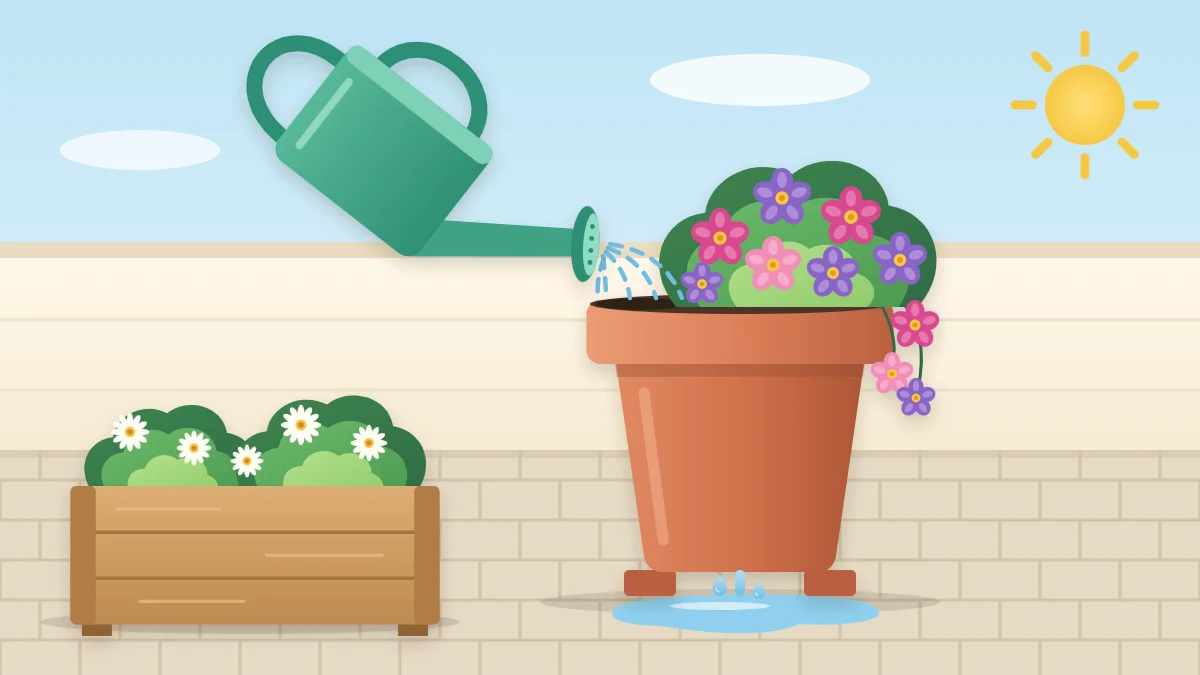
At a glance
What you need
- Watering can with a rose, or a hose with a gentle nozzle
- Thin wooden stick (optional)
- Saucers
- Pot feet
Learning how to water container plants is mostly learning how to check, not how to count days. A pot holds a small, fixed amount of potting mix, and the plant can only draw on what is in there. Once that reserve is used up, nothing underneath will top it up the way ground soil can.
That is why a calendar lets potted plants down. Two containers on the same patio can dry at very different speeds. What works is a simple habit: check the mix, water thoroughly when it is needed, and let the extra drain away.
Why no schedule fits a pot
How quickly a container dries depends on a long list of things, and most of them keep changing. Conditions vary from pot to pot, even between two neighbors on the same step.
- Container size: a small pot holds little mix and runs out fast, while a large one keeps a deeper reserve.
- Container material: unglazed terracotta and fabric grow bags lose moisture through their sides. Plastic, resin and glazed ceramic hold it longer.
- The potting mix: some mixes hold a lot of water, and others drain and dry quickly.
- The plant and how large it has grown: a full, leafy plant uses far more water than the seedling it once was.
- Sun exposure: a pot in full sun dries faster than the same pot in shade.
- Temperature: warm air and warm pot walls speed up drying.
- Wind: moving air pulls moisture from leaves and from the mix.
- Humidity: dry air draws water out of a plant faster than muggy air does.
- Rainfall: a good soaking rain can cover a watering, though it often delivers less than it seems.
- Season: growth and water use rise through summer and fall away as days cool and shorten.
To give a sense of the range: a small hanging basket in hot, windy weather may need water more than once in a day, while a large pot in cool shade can stay moist for many days. Neither is a rule to follow. They are two ends of a wide scale, and your pots sit somewhere along it.
Three ways to tell whether a pot needs water
Feel the mix
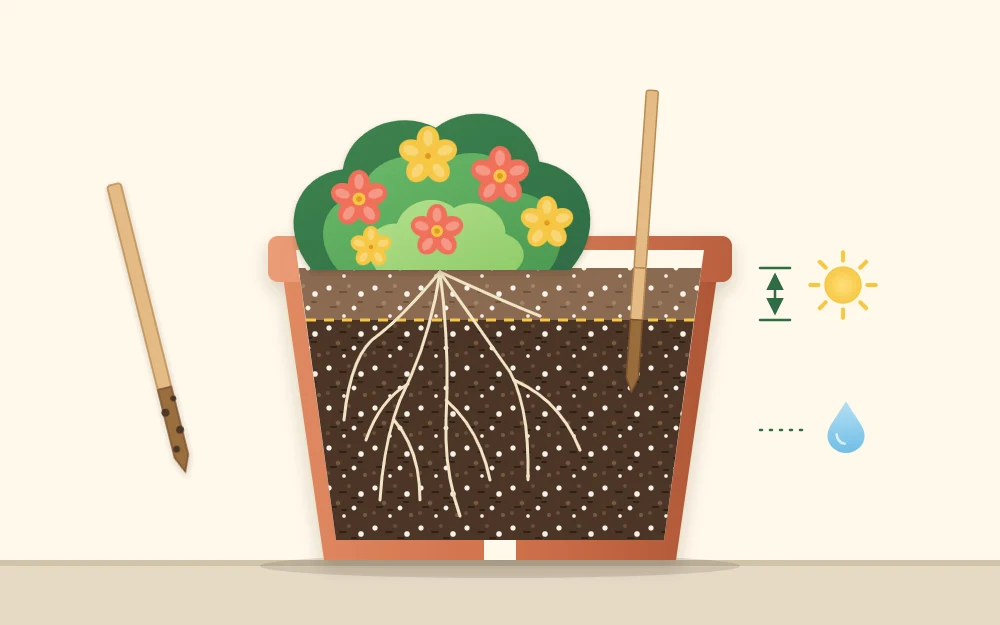
Push a finger a couple of inches (about 5 cm) into the potting mix. The surface dries first and tells you very little, so the reading that counts is the one taken lower down, where the roots are. If the mix feels dry at that depth, most container plants are ready for water. If it feels cool and damp, wait and check again later.
Some plants like to dry a little further between waterings and others prefer steady moisture, so read the plant tag as well. A thin wooden stick pushed into the mix does the same job: damp mix darkens it and clings to it.
Lift or tip the pot
Water is heavy, so a freshly watered container weighs noticeably more than a dry one. Lift a small pot, or tip a large one slightly, right after watering to learn how it feels when full. After a few tries, a quick nudge tells you a lot.
Look at the plant
Leaves that have lost their sheen, look slightly limp or hang lower than usual often point to a dry pot. Appearance alone can mislead, though. A plant can also droop when its mix is soggy and its roots are struggling, so confirm with your finger before you pour. The guide to working out what a symptom may mean covers wilting, yellowing and other signals in detail.
How to water, step by step
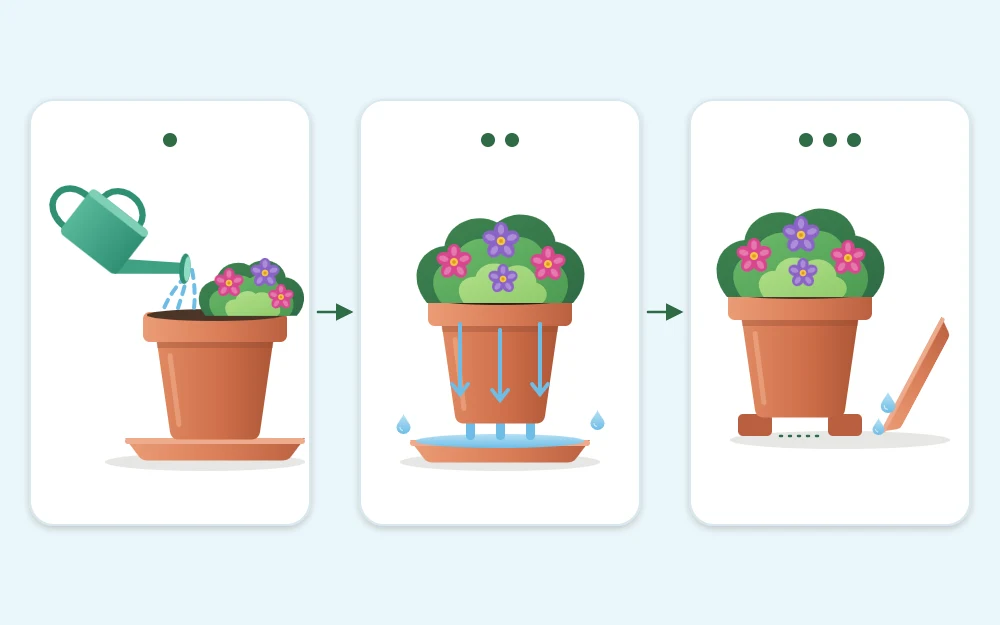
- Check first. Feel the mix or test the weight of the pot.
- Aim at the mix. Pour at the surface of the potting mix, under the leaves, using a watering can with a rose or a hose nozzle set to a gentle shower.
- Go slowly. Keep watering, moving around the pot, until water runs from the drainage holes. That is how you know the whole root ball has been wetted.
- Repeat if it rushed through. Very dry mix shrinks away from the pot wall, and water then races down the gap and straight out. If water appears at the base almost at once, wait a few minutes and water again so the mix can absorb it.
- Let it drain. Tip out anything left standing in the saucer once the dripping stops.
How much water is enough
Enough to moisten the mix all the way down. A quick splash wets only the top inch (2.5 cm), which leaves the lower roots dry and the plant thirsty again within hours.
It helps to leave a gap between the surface and the rim when you plant, so water can pool and sink in instead of spilling over the edge. How fast it sinks depends partly on what the pot is filled with; the article on what goes into a bagged potting mix explains why some hold moisture longer than others.
The best time of day
Morning is a common choice. The plant starts the warmest part of the day with a full reserve, and any splashed leaves dry quickly. Time of day matters far less than need, however. If a pot is dry and the plant is drooping at three in the afternoon, water it then.
Rain and saucers: two things that mislead
Rain often fails to reach the mix. A full canopy of leaves sheds water over the rim like an umbrella, and pots under eaves or close to a wall may get almost none. After a shower, check the mix as usual instead of assuming the job is done.
Saucers cause the opposite trouble. A saucer left full after rain or watering keeps the bottom of the pot sitting in water, and roots there go short of air. Empty saucers, or raise the pot on pot feet so the holes stay clear. There is more on this in the guide to drainage holes, saucers and pot feet.
Good to know
Large containers are very heavy when wet. Tip them a little to judge their weight and do not try to lift them.
When the weather changes
Expect to check more often during hot, bright or windy spells and less often when it turns cool and cloudy. New plantings need extra attention too, because the original root ball can dry out while the fresh mix around it stays damp.
For heat waves in particular, see the advice on keeping pots going through hot weather. For more detail on the basics, see University of Illinois Extension’s page on watering containers.
Frequently asked questions
How often should I water container plants?
There is no single answer, because it depends on the pot, the potting mix, the plant and the weather, and conditions vary from pot to pot. Instead of counting days, feel the mix a couple of inches down and water thoroughly when it is dry at that depth. In hot, windy spells that means checking more often.
Can you overwater a plant in a pot?
Yes. Mix that stays saturated leaves roots short of air, and damaged roots cannot take up water, so the plant may droop even though the pot is wet. Use containers with drainage holes, empty saucers after watering or rain, and feel the mix before adding more instead of watering on habit.
Is it better to water pots from the top or the bottom?
Watering from the top, slowly and at the surface of the mix, suits most outdoor containers and helps flush out built-up fertilizer salts. Standing a pot in a tray of water for a short while is useful for rewetting mix that has dried out completely, as long as you lift the pot out afterward and let it drain.


