Growing Tomatoes in Pots: A Beginner’s Guide
How to grow a tomato plant in a container: choosing a compact type, picking a pot that is big enough, planting deep with a support, and keeping moisture and feeding steady.
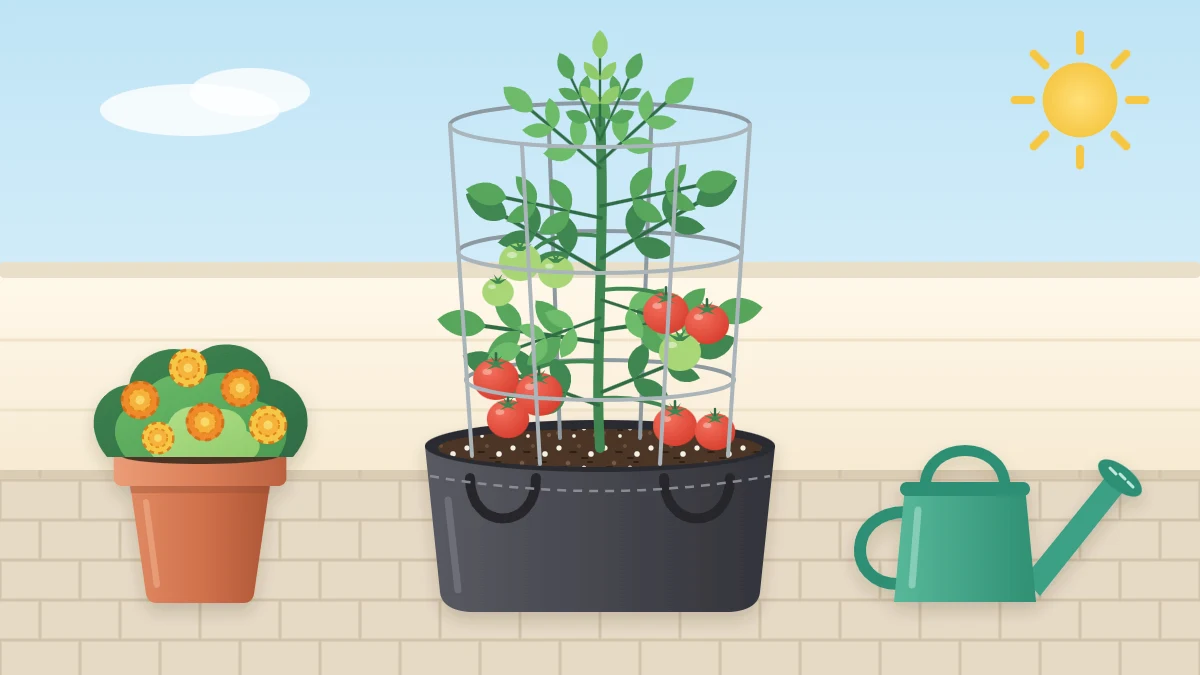
At a glance
What you need
- Tomato plant, ideally a compact type
- Large container with drainage holes
- Potting mix
- Stake or tomato cage
- Soft plant ties
- Hand trowel
- Watering can
Tomatoes have a reputation for being difficult in containers, and it is only partly deserved. A tomato is a large, hungry, thirsty plant, so it shows very quickly when its pot is too small or its moisture swings between soaked and dry. Get those two things right and most of the difficulty goes away.
This guide to growing tomatoes in pots walks through the decisions in the order you will meet them: which type to buy, what to plant it in, how to plant it and how to look after it through the summer.
Choose a type that suits a container
The plant tag or seed packet will usually tell you how a tomato grows, and that matters more than the color or size of the fruit.
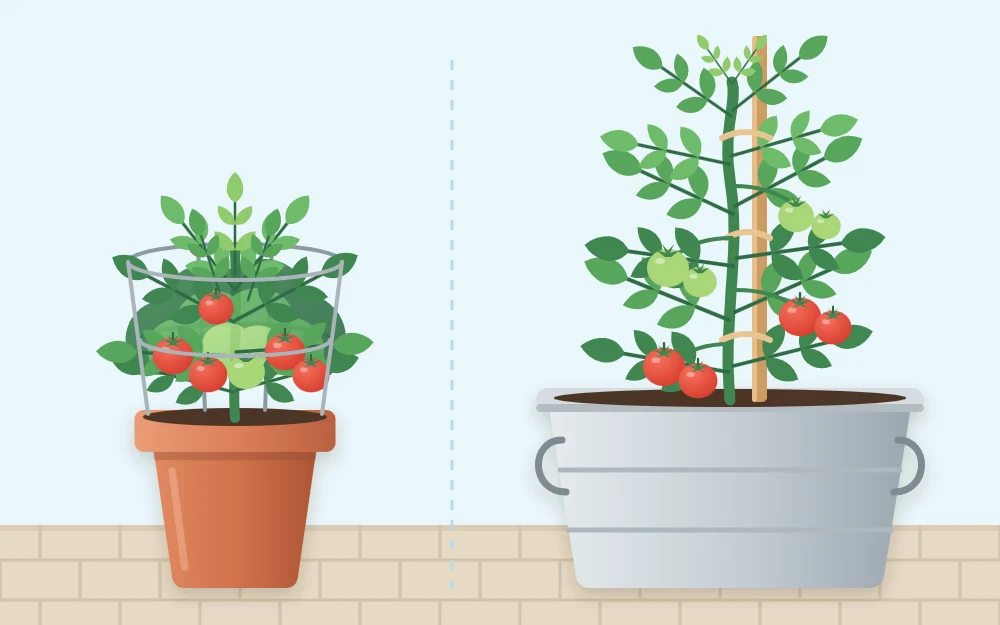
- Determinate (bush) varieties grow to a certain height, then flower and fruit over a fairly short period. They stay compact and need only a cage or short stake.
- Dwarf and “patio” varieties are bred to stay small. Some are short enough for a modest pot or even a hanging basket.
- Indeterminate (vining) varieties keep growing and fruiting until cold weather stops them. They can become very tall, and they need a much larger container and a tall, strong support.
For a first attempt, a determinate, dwarf or patio type is the simpler choice. If you are still deciding what else to grow beside it, the list of vegetables that do well in containers has other candidates.
Pick a big enough container
Small pots are the most common reason container tomatoes struggle. Extension services commonly suggest about 5 gallons (roughly 19 liters) of potting mix as a minimum for one compact plant, and considerably more for large or vining varieties. Treat those figures as starting points and check the tag, because varieties differ a great deal.
Bigger is easier. A larger volume of mix holds more water, stays cooler and gives you more margin on a hot day. The guide to working out what size pot you need explains how pot sizes are sold.
Plastic tubs, large glazed pots, wooden boxes and fabric grow bags all work, provided they have drainage holes. Use containers that have not held chemicals or unknown substances, and plant one tomato per container unless the pot is very large.
Good to know
A big pot full of wet potting mix is heavy and awkward to shift. Put the container where it will spend the season before you fill it. Tomatoes want full sun, which plant tags usually describe as about six hours or more of direct sun.
Wait for warm weather
Tomatoes are tender. Frost kills them, and cold nights stall their growth even when there is no frost. Plant outside only after the danger of frost has passed in your area and nights have turned mild. Your local extension service can tell you the average last frost date where you live.
Plants raised under cover also need hardening off: a week or more of gradually longer spells outdoors before they face full sun and wind.
How to plant a tomato in a pot
- Dampen the potting mix. Dry mix is dusty and hard to wet later, so moisten it first until it feels like a wrung-out sponge.
- Fill the container. Use bagged potting mix, not garden soil, and stop a couple of inches below the rim so there is room to water.
- Remove the lowest leaves. Pinch off the bottom sets of leaves from the stem, leaving the healthy top growth.
- Plant deep. Set the root ball lower than it sat in its nursery pot, so part of the bare stem is buried. Tomatoes are unusual in that the buried stem grows roots of its own, giving the plant a larger root system.
- Add the support now. Push the stake or cage in at planting. Doing it later means driving it through established roots.
- Water in. Water slowly until it runs from the drainage holes, then top up the mix if it settles.

Tie the main stem loosely to its stake as it grows, using soft ties.
Keep moisture even
A tomato in full leaf uses a great deal of water in hot weather, and a pot holds only so much. Check the mix often, feeling a couple of inches below the surface, and water thoroughly when it is drying out. How often that turns out to be varies from pot to pot with the container, the weather and the size of the plant, so check rather than assume. The full method is in the guide to watering container plants.
Aim for steady moisture rather than cycles of bone dry and drenched. Uneven moisture is commonly linked with two frustrating fruit problems, covered below. Water at the surface of the mix rather than over the leaves, and empty any saucer that stays full.
Feed once the plant gets going
Potting mix carries only a limited supply of nutrients, and a fruiting tomato uses them up. Many gardeners begin regular feeding once the first fruit has set, using a fertilizer intended for tomatoes or vegetables. Follow the product label for how much and how often, and do not exceed it. More fertilizer does not mean more tomatoes.
The background on fertilizer types and timing is in the guide to feeding plants in pots.
Common troubles, briefly
- Blossom end rot. A dark, sunken patch on the base of the fruit. It is commonly associated with uneven moisture, and small pots make it more likely.
- Split fruit. Often follows a heavy watering or rain after a dry spell.
- Flowers dropping without fruit. Frequently linked with very hot or cool spells; plants often resume when the weather moderates.
- Yellow lower leaves. This has several possible causes, including waterlogged mix, hunger, disease or simply age. Check drainage and moisture at depth before changing anything.
- Midday wilting. Feel the mix first. Dry mix is one possibility, but large plants can also droop in strong heat while the mix is still moist.
- Chewed leaves or fruit. Look for caterpillars and pick them off by hand.
Picking your tomatoes
Harvest fruit when it has reached its full color and gives slightly to a gentle squeeze. If cold weather is approaching, fruit that has started to color will usually finish ripening indoors at room temperature. Wash tomatoes before eating them.
How much you pick depends on the variety, the season, the pot and the care, so no honest guide can promise a number.
Frequently asked questions
How big a pot does a tomato plant need?
About 5 gallons, or roughly 19 liters, of potting mix is a commonly suggested minimum for one compact plant. Large and vining varieties need considerably more. These are starting points rather than rules, so check the plant tag, and choose the larger container if you are deciding between two.
Why should tomatoes be planted deep?
Tomato stems can grow roots wherever they are buried. Setting the plant lower than it sat in its nursery pot, with the lowest leaves removed, gives it a bigger root system to draw on. Most other plants should go in at the same depth they grew before, so this is a tomato habit, not a general rule.
Can I grow a vining tomato in a container?
Yes, but it is more work. Indeterminate types keep growing all season, so they need a much larger container, a tall and strong support put in at planting, and close attention to moisture in hot weather. A determinate, dwarf or patio variety is usually an easier first plant.

